Do you still think of “fat” as something purely harmful to your health?
If so, it’s time to rethink that idea. Healthy fats are essential for the body to function, playing a role in everything from heart protection to the absorption of important vitamins.
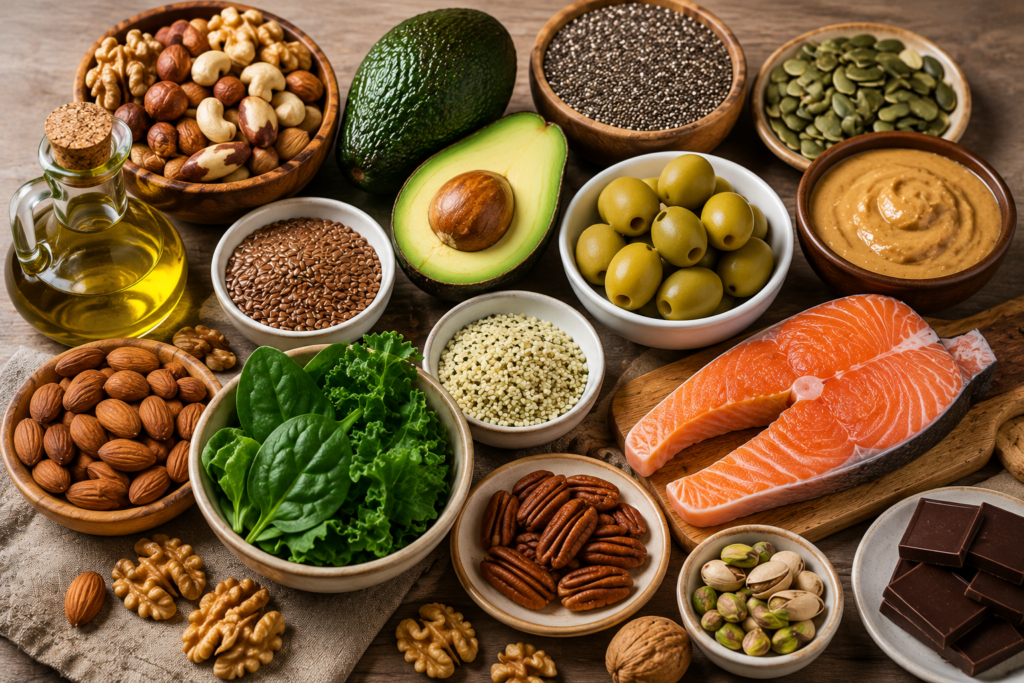
In this article, you’ll learn about 12 foods rich in healthy fats, their main benefits, and how to include them in your routine in a balanced way. Let’s get straight to the point.
So, What Are Healthy Fats, Really?
Healthy fats, also called unsaturated fats, are divided into two main types: monounsaturated and polyunsaturated.
Unlike saturated and trans fats, they help raise “good” cholesterol (HDL) and lower “bad” cholesterol (LDL), supporting cardiovascular health.
Among their main benefits are:
Heart protection, reducing the risk of cardiovascular disease.
Anti-inflammatory action, especially polyunsaturated fats.
Better absorption of fat-soluble vitamins (A, D, E, and K).
Support for brain health, including memory and concentration.
Increased feeling of fullness.
Important: this content is for educational purposes. Even healthy fats should be eaten in moderation, as part of a balanced diet. A nutritionist can help determine the ideal amounts for your case.
12 Foods Rich in Healthy Fats
1. Avocado
Rich in monounsaturated and polyunsaturated fats, avocado helps reduce the risk of heart disease and stimulates blood flow to the brain, supporting memory and concentration. It’s also rich in fiber, increasing fullness.
How to eat it: on its own, in salads, smoothies, or spreads. Avocado oil is also a good option for cooking.
2. Olive Oil
One of the best-known sources of monounsaturated fat, olive oil has a protective effect on the heart and is rich in antioxidants.
How to eat it: drizzled over salads, vegetables, and other dishes, preferably unheated, to preserve its properties.
3. Brazil Nuts and Cashews
Sources of healthy fats, minerals, and antioxidants, they contribute to cardiovascular health.
How to eat them: as a snack, in moderate portions — about a handful a day.
4. Walnuts
Rich in omega-3 and omega-6, walnuts have anti-inflammatory and antioxidant properties.
How to eat them: plain, as a snack, or added to salads and yogurt.
5. Almonds
Besides healthy fats, they offer fiber and protein, contributing to fullness.
How to eat them: as a snack or incorporated into recipes, always in moderation.
6. Olives
Rich in monounsaturated fat, they also offer important antioxidants.
How to eat them: the recommended portion is about 10 olives a day, as a snack or added to salads and sauces.
7. Sesame Seeds
Rich in polyunsaturated and monounsaturated fats, they also contain sesamin, a compound with antioxidant and anti-inflammatory properties.
How to eat them: raw or toasted, in bread-making, or added to rice, yogurt, and salads.
8. Chia Seeds
A good plant-based source of omega-3, plus fiber that supports digestive health.
How to eat them: added to smoothies, yogurt, or as part of recipes like puddings.
9. Flaxseed
Also rich in omega-3, it helps with cholesterol control and gut health.
How to eat it: ground, for better absorption, added to juices, smoothies, or recipes.
10. Salmon
One of the fish highest in omega-3, salmon has strong anti-inflammatory and heart-protective effects.
How to eat it: grilled, baked, or poached, a few times a week.
11. Sardines
An affordable fish rich in omega-3, with benefits similar to salmon for cardiovascular health.
How to eat them: grilled, baked, or in various recipes.
12. Canola Oil
Rich in monounsaturated and polyunsaturated fats, it’s a versatile option for cooking.
How to eat it: in place of oils high in saturated fat, in everyday recipes.
Practical tip: the key is replacing saturated and trans fats with these healthier options — not simply adding more fat to your diet.
How to Include Healthy Fats in Your Diet in a Balanced Way
Now that you know your options, let’s get to the practical part of how to incorporate them into your routine.
1. Replace, Don’t Just Add
Swap oils high in saturated fat for olive oil or canola oil, for example, instead of simply adding more fat to your diet.
2. Watch Your Portions
Even healthy fats are calorie-dense. Moderation remains essential, especially with nuts and olive oil.
3. Prioritize Fish Rich in Omega-3
Including fish like salmon and sardines a few times a week is an efficient way to ensure quality polyunsaturated fats.
4. Combine with a Balanced Diet
Healthy fats work best when they’re part of a varied diet, rich in vegetables, lean protein, and whole grains.
Is It Worth Seeking More Structured Guidance?
Including healthy fats in your routine is already a very important step for heart health and overall wellness. But for those seeking a more complete, personalized strategy, relying on structured, trustworthy guidance, alongside support from a nutritionist, can make this process much easier.
If you’re looking to better balance your diet, it’s worth considering guided support or material made specifically for your stage and goal.
Conclusion: Not All Fat Is the Enemy
Healthy fats are important allies for your health, supporting your heart, brain, and overall body balance.
Start today by including one of these foods in your eating routine. Your body thanks every conscious choice.
Enjoyed this content? Share it with someone who also needs to better balance their diet, and keep following the blog for more practical content on nutrition and health

Leave a Reply