Constant fatigue, pale skin, running out of breath during simple tasks. If that sounds familiar, it might be worth paying attention to your iron levels.
Anemia is one of the most common diet-related conditions, and the good news is that, in most cases, it can be prevented with simple daily habits.
In this article, you’ll discover:
- What anemia is and why it happens
- Warning signs worth paying attention to
- Foods that help prevent and manage anemia
- Practical tips to improve iron absorption
Let’s break it down.
What Exactly Is Anemia?
Anemia happens when your body doesn’t have enough red blood cells or hemoglobin to properly carry oxygen throughout the body.
There are different types of anemia, but by far the most common is iron-deficiency anemia. It occurs when the body isn’t getting enough iron through diet, or when blood loss is higher than normal, such as with heavy menstrual periods.
Warning Signs That May Indicate Anemia
Anemia often develops gradually, which is why symptoms can go unnoticed at first. Some common signs include:
- Persistent fatigue, even after resting
- Pale skin and mucous membranes
- Shortness of breath during light activity
- Dizziness or lightheadedness
- Weak or brittle nails
- Difficulty concentrating
If you’re noticing several of these signs at once, it’s worth getting a simple blood test to investigate.
Why Does Anemia Happen?
A few situations increase the risk of developing anemia:
- A diet low in iron, common with restrictive or unbalanced eating patterns
- Heavy menstrual periods, which increase iron loss
- Pregnancy, a time when iron needs increase significantly
- Intestinal absorption issues, which make it harder to absorb iron from food
- Chronic blood loss, such as from ulcers or other health conditions
Foods That Help Prevent and Manage Anemia
Heme Iron Sources (Animal-Based)
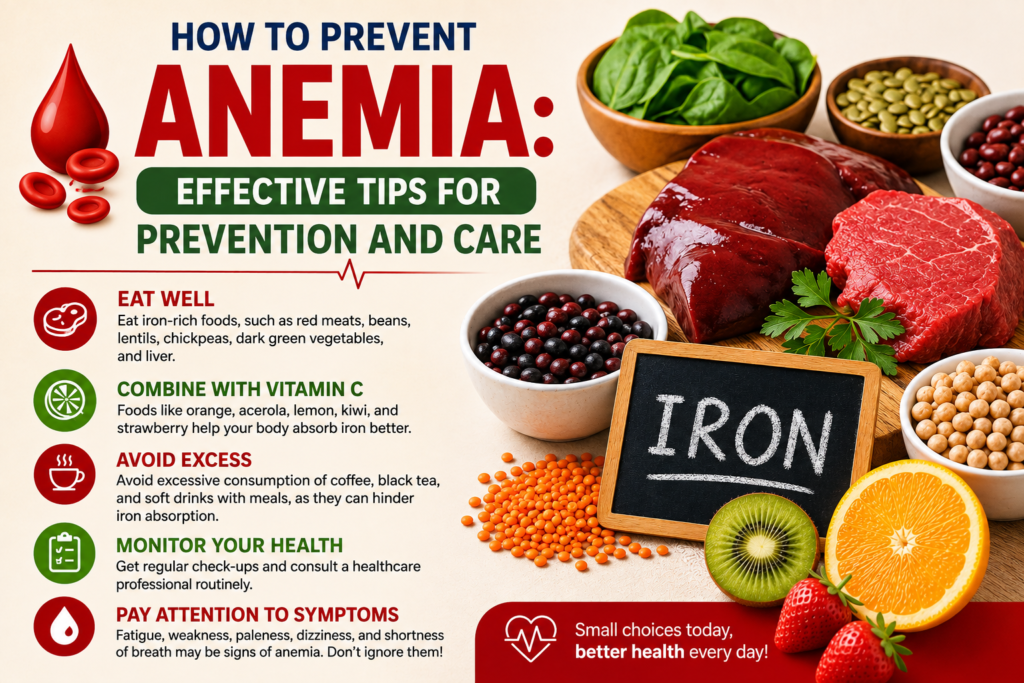
Heme iron, found in animal-based foods, is more easily absorbed by the body. Good sources include:
- Lean red meat
- Liver
- Chicken and turkey
- Fish, like sardines and tuna
Non-Heme Iron Sources (Plant-Based)
Non-heme iron, found in plant foods, also contributes, but it’s absorbed less efficiently by the body. Good options include:
- Beans, lentils, and chickpeas
- Spinach and kale
- Pumpkin seeds
- Quinoa
- Tofu
Foods That Boost Iron Absorption
Certain nutrients help your body absorb iron more effectively, especially non-heme iron:
- Vitamin C: found in oranges, lemons, strawberries, and bell peppers
- Smart pairings: adding a splash of lemon juice to bean or lentil dishes, for example
What Can Get in the Way of Iron Absorption
Just as some foods help, others can interfere with iron absorption, especially when eaten in the same meal:
- Coffee and black tea, rich in compounds that reduce iron absorption
- Calcium-rich foods, like milk and dairy, when eaten alongside iron sources
- Ultra-processed foods, which tend to be low in nutritional value
Practical tip: try leaving a 1-2 hour gap between drinking coffee or tea and your main meals.
How to Prevent Anemia Day to Day
A few simple strategies help keep your iron levels balanced:
- Include an iron source in at least one meal a day
- Pair iron with vitamin C to improve absorption
- Avoid coffee and tea too close to main meals
- Get routine blood tests, especially if you’re in a higher-risk group (women of reproductive age, pregnant women, vegetarians, and vegans)
- Don’t self-medicate with iron supplements without medical guidance, since too much iron also carries health risks
When to Seek Medical Help
While dietary adjustments go a long way in prevention, some cases of anemia require medical follow-up and, potentially, supplementation.
Seek professional guidance if you:
- Have persistent anemia symptoms
- Are pregnant or planning to become pregnant
- Follow a vegetarian or vegan diet and have questions about your iron intake
- Have been previously diagnosed with anemia
The Bottom Line
In most cases, anemia is directly linked to diet, which means small adjustments to what’s on your plate can make a real difference in prevention.
Including good iron sources, pairing them with vitamin C, and paying attention to your body’s signals are simple but powerful steps toward keeping your energy levels where they should be.
👉 If this article helped you, save it for your next grocery run or share it with someone who should also be paying more attention to their iron levels.
This article is for informational purposes only and is not a substitute for professional medical evaluation, diagnosis, or care. To confirm an anemia diagnosis and receive guidance on supplementation, please consult a doctor.
Leave a Reply