
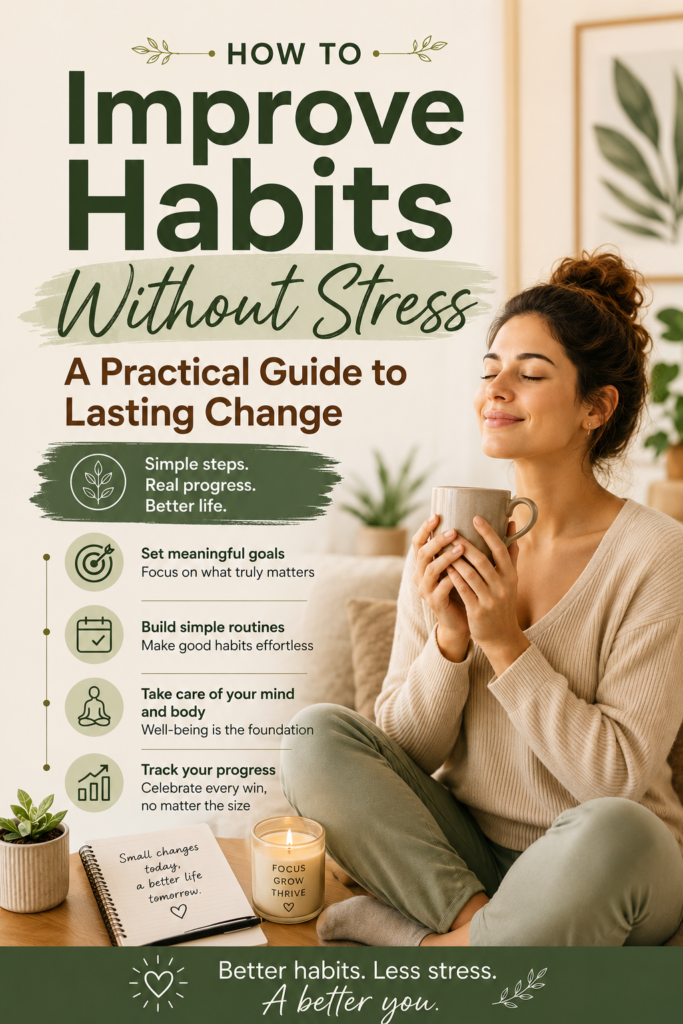
How many times have you tried to change a habit, gone all in from day one, and a few weeks later, ended up right back where you started?
If that sounds familiar, the problem probably isn’t a lack of discipline. It’s that most people try to change habits in the most stressful way possible: with pressure, all-or-nothing thinking, and excessive self-criticism.
In this guide, you’ll learn a different approach, lighter and more sustainable, to improve your habits without turning the process into yet another source of stress.
You’ll discover:
- Why habit changes usually fail
- How to build new habits in a lighter way
- Practical strategies to stay consistent
- What to do when you “slip up” along the way
Let’s get into it.
Why Trying to Change Everything at Once Doesn’t Work
The human brain is wired to resist sudden change. When you try to transform several habits at the same time, your brain interprets it as a threat to your familiar routine, and reacts by pulling you back to “normal.”
That’s why promises like “I’m going to wake up at 5 AM, cut out sugar, work out every day, and meditate” tend not to last long. It’s not a lack of willpower, it’s overload.
The good news is there’s a smarter way to approach change.
The Secret: Small, Specific Habits
Small habits have a huge advantage: they require very little mental energy to start, which reduces your brain’s natural resistance.
Instead of “I want to live a healthier life,” try something like “I’ll drink a glass of water when I wake up.” It sounds small, but that small size is exactly what makes repetition easier, and repetition is what actually builds a habit.
How to Know If a Habit Is Small Enough
A good way to test whether a habit is the right size is to ask yourself: “Could I still do this on a bad day, when I’m tired or short on time?”
If the answer is yes, you’re on the right track.
6 Strategies to Build Habits Without Stress
1. Attach the New Habit to Something You Already Do
Linking a new habit to an action that’s already part of your routine makes it easier to remember and repeat.
Example: “After I brush my teeth, I’ll stretch for 5 minutes.”
2. Start Smaller Than You Think You Need To
It sounds counterintuitive, but starting too small is better than starting too big.
If your goal is to read more, start with 1 page a day, not “30 minutes.” Once the habit is established, it naturally tends to grow on its own.
3. Focus on One Habit at a Time
Trying to change everything simultaneously is a recipe for burnout. Pick one habit, give it a few weeks of focus, and only then move on to the next.
4. Design an Environment That Makes the Right Choice Easier
Your surroundings shape your choices far more than willpower does.
A few practical examples:
- Keeping a water bottle visible on your desk
- Charging your phone in another room at night
- Laying out your walking shoes the night before
5. Track Progress in a Simple Way
Visually marking the days you followed through, whether on a calendar, an app, or even a notebook, creates a sense of progress that helps keep you motivated.
What matters here isn’t the tool, it’s the consistency of tracking it.
6. Treat Slip-Ups as Part of the Process, Not as Failure
Here’s one of the most important points: missing a day doesn’t mean the habit “didn’t work.”
The most common mistake isn’t slipping up once, it’s giving up after slipping up. The most effective rule of thumb is simple: never miss twice in a row.
How to Handle Frustration Along the Way
It’s normal to feel frustrated when progress feels slow. A few ways to push through without quitting:
- Reconsider the size of the habit. Sometimes the issue isn’t you, it’s that the habit is still too big
- Celebrate small wins. Completing a full week is already worth recognizing
- Avoid comparison. Everyone’s pace is different, and that’s perfectly fine
- Reconnect with your original reason. Remembering your “why” helps renew motivation
The Bottom Line
Improving your habits doesn’t have to be a battle against yourself. When the process is built to be light, small, and consistent, change happens more naturally, and lasts much longer.
Pick one small habit to start today. Not tomorrow, not next Monday. Today.
👉 If this guide helped you, save it as a reminder for whenever you need it, or share it with someone else who’s trying to change habits without burning out.
Leave a Reply