
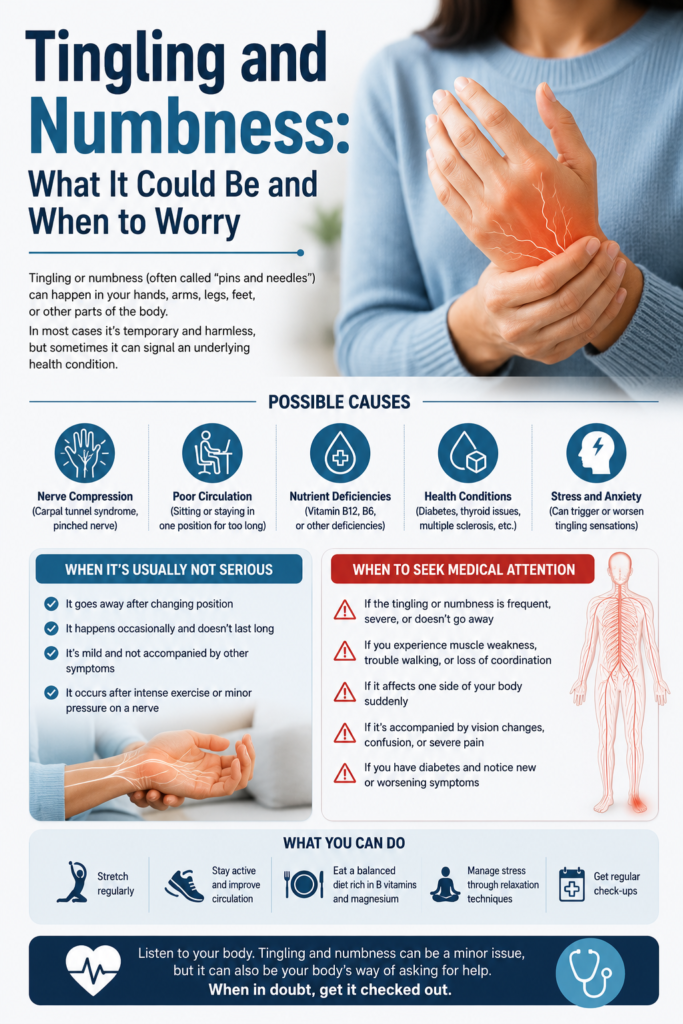
That “pins and needles” feeling in a foot that’s fallen asleep, or a strange numbness in your hand, almost everyone has felt this at some point. In most cases, it’s temporary and harmless.
But when tingling or numbness becomes frequent, persistent, or shows up alongside other symptoms, it’s worth paying attention. These signs can range from simple posture issues to conditions that need medical evaluation.
In this article, you’ll learn:
- What causes tingling and numbness
- When these symptoms are just temporary
- Warning signs that require urgent medical attention
- Practical everyday precautions
Let’s get into it.
What Are Tingling and Numbness?
Tingling (paresthesia) and numbness are sensations related to temporary or persistent changes in how nerves transmit signals to the brain.
Most of the time, this happens due to temporary nerve compression, like when you stay in the same position for too long. In these cases, the sensation goes away quickly once the pressure is relieved.
However, when these symptoms become recurring or last longer, other causes need to be investigated.
Common Causes of Tingling and Numbness
Simpler, Temporary Causes
- Staying in the same position for too long, compressing a nerve
- Sitting with legs crossed for an extended period
- Sleeping in a position that compresses an arm or hand
- Intense cold, which temporarily reduces circulation
Causes That Need More Attention
- Carpal tunnel syndrome: compression of the median nerve at the wrist, common with repetitive movements
- Peripheral neuropathy: nerve damage, often associated with uncontrolled diabetes
- Vitamin B12 deficiency: essential for nerve health, a lack of it can cause persistent tingling
- Herniated disc: can compress nerves in the spine, causing tingling that radiates to the arms or legs
- Circulatory issues: poor blood circulation can cause numbness, especially in the hands and feet
- Anxiety and panic attacks: can cause tingling, especially around the mouth, hands, and feet, due to hyperventilation
When Is Tingling Just Temporary?
In most everyday cases, tingling is temporary and not a cause for concern. Some signs it’s likely nothing serious:
- It happens after staying in a specific position for a while
- It improves quickly once you change position or move the area
- It’s not accompanied by other symptoms
- It doesn’t happen frequently
Warning Signs: When to Seek Emergency Medical Help Immediately
Some signs associated with tingling or numbness require urgent medical attention, as they may indicate a stroke or another emergency:
- Tingling or numbness that appears suddenly on just one side of the body
- Difficulty speaking or understanding what others are saying
- Sudden weakness in an arm or leg
- Vision changes in one or both eyes
- Sudden confusion
- A sudden, severe headache
If you or someone near you shows these signs, seek emergency care immediately. In the case of a possible stroke, every minute counts in reducing lasting damage.
When to See a Doctor (Non-Emergency)
Even outside of an emergency situation, it’s worth scheduling an appointment if tingling or numbness:
- Persists for more than a few days
- Becomes frequent or recurring
- Comes with pain, muscle weakness, or loss of strength
- Affects your daily routine or sleep quality
- You have diabetes or another condition that can affect the nerves
Practical Everyday Precautions
A few simple measures help reduce tingling episodes related to milder causes:
- Avoid staying in the same position for too long, take regular breaks to move around
- Adjust your ergonomics at work, especially if you use a computer or phone for long periods
- Maintain a balanced diet, with good sources of B-complex vitamins
- Manage chronic conditions, like diabetes and high blood pressure, with regular medical care
- Exercise regularly, which supports healthy blood circulation
The Bottom Line
Tingling and numbness are usually temporary and harmless signs, often related to posture or temporary nerve compression. However, when persistent, recurring, or paired with other symptoms, they deserve medical investigation.
Pay especially close attention to signs that appear suddenly and on just one side of the body, they can indicate an emergency and require immediate care.
👉 If this article helped you better understand these symptoms, share it with someone who might also benefit from this information.
This article is for informational purposes only and is not a substitute for evaluation, diagnosis, or treatment from a healthcare professional. If you experience any of the warning signs described in this article, please seek emergency medical care immediately.
Leave a Reply