
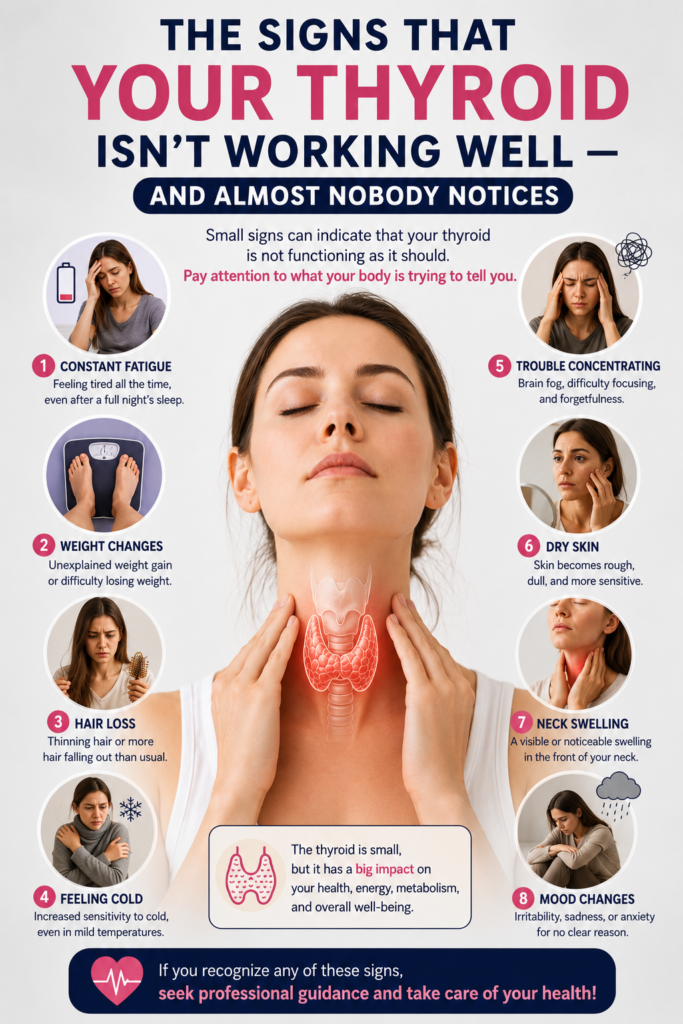
Constant fatigue, unexplained weight gain or loss, mood swings. A lot of people live with these symptoms for years, blaming stress or a busy schedule, never suspecting the cause might be a small gland in their neck: the thyroid.
Thyroid issues are more common than they seem, and a large portion of cases go unnoticed simply because the symptoms are subtle and easy to mistake for something else.
In this article, you’ll learn:
- The thyroid’s role in the body
- The most common (and most overlooked) signs something might be off
- The difference between hypothyroidism and hyperthyroidism
- When to seek medical evaluation
Let’s take a closer look.
What Does the Thyroid Do in the Body?
The thyroid is a small gland located at the front of the neck, responsible for producing hormones that regulate nearly the entire body’s metabolism.
These hormones influence everything from heart rate to body temperature, digestion, energy, mood, and even skin and hair health. When the thyroid produces too much or too little of these hormones, the whole body feels the effects.
Hypothyroidism vs. Hyperthyroidism: What’s the Difference?
Before diving into symptoms, it helps to understand this basic distinction:
- Hypothyroidism: the thyroid produces insufficient hormones, which tends to “slow down” bodily functions
- Hyperthyroidism: the thyroid produces excess hormones, which tends to “speed up” bodily functions
The symptoms of each condition tend to be quite different from one another, which is exactly why recognizing the right pattern helps so much in the investigation process.
Hypothyroidism Signs That Often Go Unnoticed
- Persistent fatigue, even after a good night’s sleep
- Weight gain without significant changes in habits
- Constant feeling of being cold, even in normal environments
- Dry skin and weakened hair
- Frequent constipation
- Difficulty concentrating (“brain fog”)
- A hoarser voice than usual
- Irregular menstrual cycles
Hyperthyroidism Signs That Often Go Unnoticed
- Weight loss without dietary changes
- Heart palpitations or a racing heart
- Anxiety or irritability with no clear cause
- Constant feeling of heat and excessive sweating
- Hand tremors
- Trouble sleeping
- Increased frequency of bowel movements
Why Are These Symptoms So Hard to Notice?
One reason is that the signs appear gradually. Since the body adjusts little by little, many people take a long time to realize something has actually changed.
On top of that, symptoms like fatigue, mood changes, and weight fluctuations are easily blamed on stress, a busy routine, or even the natural aging process, which further delays the search for medical investigation.
Who Should Pay Closer Attention?
Some groups have a higher predisposition to thyroid changes and deserve extra attention:
- Women, especially after age 35
- People with a family history of thyroid disease
- Pregnant women and those in the postpartum period
- People with other autoimmune conditions
- Anyone who has gone through significant hormonal changes
How Diagnosis Is Made
Diagnosing thyroid issues typically involves:
- Blood tests (TSH, free T4), which assess hormone levels
- Thyroid ultrasound, when nodules or structural changes are suspected
- Physical exam, to check for visible signs, like an enlarged gland (goiter)
- Specific antibody tests, in cases suspected to involve autoimmune conditions, like Hashimoto’s or Graves’ disease
An accurate diagnosis depends on medical evaluation, since symptoms alone aren’t enough to confirm the condition.
When to See a Doctor
It’s worth seeking medical evaluation if you persistently experience a combination of symptoms like:
- Fatigue that doesn’t improve with rest
- Unexplained weight changes
- Noticeable changes in mood or energy
- Changes in skin, hair, or nails with no obvious cause
The earlier the diagnosis, the simpler treatment and management of the condition tend to be.
The Bottom Line
Thyroid issues often disguise themselves as “just fatigue” or “just stress,” which delays diagnosis and prolongs discomfort for people living with symptoms without knowing the real cause.
Paying attention to persistent signs, instead of dismissing them as “normal” side effects of a busy life, is the first step toward seeking medical evaluation and, if needed, starting appropriate treatment.
👉 If this article helped you recognize any of these signs, share it with someone who might also benefit from this information.
This article is for informational purposes only and is not a substitute for evaluation, diagnosis, or treatment from a healthcare professional. If you’re experiencing the symptoms described here, please consult an endocrinologist for proper investigation.
Leave a Reply