
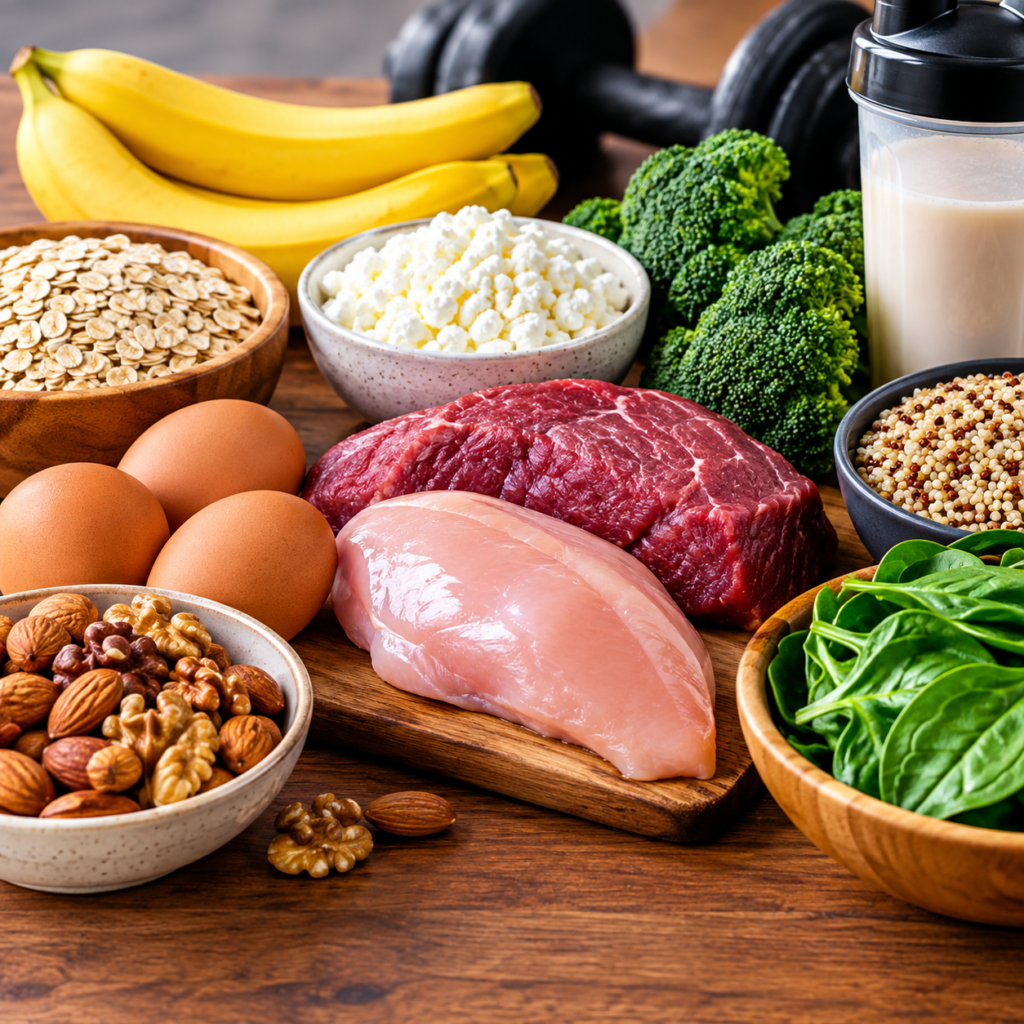
Do you train hard, but feel like your diet isn’t keeping up with the effort you’re putting in at the gym?
Building lean muscle isn’t just about lifting weights — the right diet is what actually supports that process, supplying the nutrients your body needs to build muscle.
In this article, you’ll learn about 6 essential foods for building lean muscle, understand why they matter so much, and how to include them strategically in your diet.
Why Diet Matters So Much for Building Lean Muscle
A lot of people focus only on training, forgetting that muscle is built through two combined factors: stimulus (exercise) and raw materials (nutrition).
Without the right nutrients, especially protein and enough overall calories, the body doesn’t have the resources it needs to repair and build new muscle fibers.
The 6 Essential Foods for Building Lean Muscle
1. Eggs
Eggs are one of the most complete protein sources out there, containing all the essential amino acids needed for muscle building.
Why they work so well:
- High biological value protein
- Easy and quick to prepare
- Also provide healthy fats, important for hormone production
2. Chicken Breast
A classic for anyone building lean muscle, chicken breast is an excellent source of lean protein with low fat content.
Practical tip: vary how you prepare it (grilled, baked, shredded) to avoid getting stuck in a food rut.
3. Sweet Potato
A source of complex carbs, sweet potato provides energy gradually, fueling your workouts and helping avoid insulin spikes.
Why it matters: adequate carb intake is essential for replenishing muscle glycogen and optimizing post-workout recovery.
4. Whey Protein
While not a whole food, whey protein is widely used as a supplement to help meet daily protein needs, especially for convenience, like right after a workout.
Important: supplements should complement your diet, not replace whole foods. The right amount should be guided by a registered dietitian.
5. Quinoa
Unlike most grains, quinoa is a complete plant-based protein, containing all the essential amino acids, plus it’s rich in fiber and minerals.
A great option for: anyone looking to diversify their protein sources or following a diet with less meat.
6. Avocado
Rich in healthy fats, avocado supports hormone production (including hormones linked to muscle building) and provides quality calories for anyone looking to gain weight in a healthy way.
Practical tip: add it to salads, smoothies, or as a side to your main meals.
How to Structure Your Diet for Building Lean Muscle
1. Ensure Adequate Calorie Intake
To build lean muscle, you generally need a slight calorie surplus, meaning consuming a bit more than your body burns.
2. Prioritize Protein at Every Meal
Spreading protein intake throughout the day, instead of concentrating it in one meal, tends to optimize muscle protein synthesis.
3. Don’t Cut Out Carbs
Carbs are essential for sustaining workout intensity and for muscle recovery. Cutting them can directly hurt your results.
4. Include Healthy Fats
Fats are important for hormone production, including hormones directly linked to muscle building.
5. Stay Consistent
Results in building lean muscle are cumulative. Small inconsistencies over time can significantly delay the process.
Common Mistakes That Hold Back Muscle Building
- Not getting enough protein throughout the day
- Cutting carbs, which hurts your energy for training
- Not adjusting your diet as your training progresses
- Focusing only on supplements while neglecting your base diet
- Lack of consistency in your eating routine
Conclusion: Training and Nutrition Go Hand in Hand
Building lean muscle doesn’t depend only on effort at the gym. The right diet is what actually supports and maximizes your training results.
Consistently including these foods, combined with proper training and rest, is the most effective path to building lean muscle in a healthy, lasting way.
Do you already include these foods in your routine? Let us know in the comments!
If this helped you better understand the relationship between diet and building lean muscle, share it with someone else on this journey. 🍗🥑
This content is for informational purposes only and does not replace guidance from a registered dietitian. Always consult a professional for an individualized nutrition plan, especially before using supplements.
Leave a Reply