
Has that ache in your lower back after hours of sitting become a regular part of your day?
The prone lower back extension stretch is one of the simplest and most effective ways to relieve tension in the lumbar region, improve spinal mobility, and prevent discomfort caused by a sedentary lifestyle.
In this article, you’ll learn the correct step-by-step technique for this stretch, understand its benefits, and find out the essential precautions to take before practicing it.
What the Prone Lower Back Extension Stretch Is
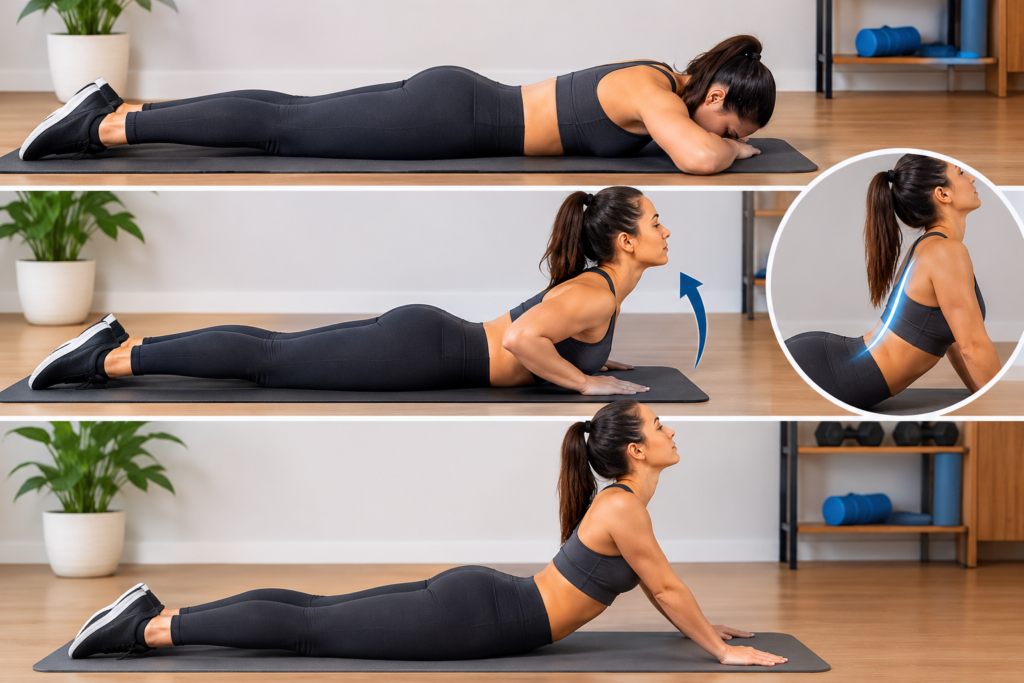
This stretch, also known as “cobra pose” in practices like yoga, involves lying face down and lifting the upper body, creating a controlled extension of the lumbar spine.
It’s widely used in both physical therapy and general stretching routines because of how simple and effective it is.
Benefits of the Lower Back Extension Stretch
- Relieves tension built up in the lower back
- Improves spinal mobility
- Helps with postural correction
- Can reduce discomfort caused by long periods of sitting
- Gently strengthens the spinal extensor muscles
Before You Start: Essential Precautions
Before practicing this stretch, it’s important to consider:
- If you have a herniated disc, spondylolisthesis, or other specific spine conditions, talk to a doctor or physical therapist before doing this movement
- Pregnant individuals should avoid this stretch without specific professional guidance
- If you have acute pain or intense lower back pain, seek medical evaluation before starting any stretching
- The movement should always be gentle and controlled, never forced
Step by Step: How to Do the Stretch Correctly
Step 1: Lie Face Down
Lie face down on a mat or comfortable surface, with your legs extended and feet relaxed.
Step 2: Position Your Hands
Place your palms on the floor near your ribs, with your elbows bent and close to your body.
Step 3: Begin Lifting Your Torso
Gently push into the floor with your hands, gradually lifting your upper torso. Keep your hips and legs relaxed on the floor.
Step 4: Respect Your Range of Motion
Lift your torso only as far as feels comfortable, without pain. Your elbows can stay slightly bent — you don’t need to fully straighten your arms.
Step 5: Hold the Position
Hold the position for about 15 to 30 seconds, breathing calmly and steadily.
Step 6: Lower Slowly
Lower your torso back down in a controlled way, avoiding any sudden movements.
Step 7: Repeat as Needed
This stretch can be repeated 2 to 3 times, with short pauses between repetitions.
Common Mistakes When Doing This Stretch
- Forcing the range of motion, trying to lift the torso beyond what’s comfortable
- Raising your shoulders toward your ears, creating unnecessary tension in the neck
- Holding your breath during the movement
- Performing the movement abruptly, instead of gradually and with control
When to Practice This Stretch
This stretch can be included:
- After long periods of sitting, like at work
- As part of your warm-up or cool-down for a workout
- In morning or evening stretching routines
- As part of general mobility practices
Signs You Should Stop the Movement
Stop the stretch immediately if you feel:
- Sharp or throbbing pain in your lower back
- Tingling or numbness in your legs
- Discomfort that gets worse during the movement
In these cases, seek guidance from a physical therapist or doctor before continuing the practice.
Conclusion: A Simple Stretch With Big Benefits
The prone lower back extension stretch is a simple, accessible, and effective tool for taking care of your spine’s health in everyday life.
Practiced regularly and with proper form, it can be a great ally against the aches and tension caused by a sedentary routine and long hours of sitting.
Do you already include this stretch in your routine? Let us know in the comments!
If this helped you, share it with someone else who deals with lower back pain in their everyday life. 🧘♀️🌿
This content is for informational purposes only and does not replace evaluation and guidance from a physical therapist or doctor. If you have persistent pain or specific spine conditions, seek guidance from a qualified professional before starting any stretching routine.
Leave a Reply