
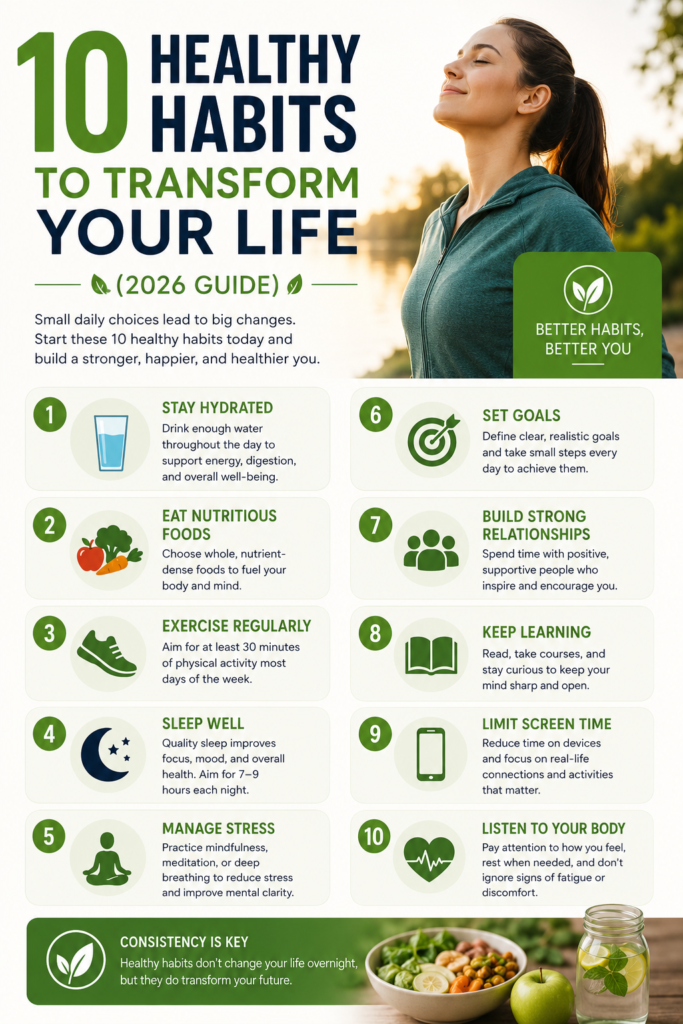
Building a healthier lifestyle does not require expensive equipment, complicated meal plans, or a completely different daily routine. In many cases, meaningful improvements begin with simple decisions that gradually become part of everyday life.
The challenge is not knowing that sleep, physical activity, balanced nutrition, and emotional well-being are important. The real challenge is finding practical ways to include them in a busy schedule and maintain them over time.
This guide explores 10 healthy habits that can support physical health, mental well-being, and a more balanced lifestyle. Each habit includes practical suggestions to help you get started without placing unnecessary pressure on yourself.
Why Everyday Habits Matter for Long-Term Health
Health is influenced by several factors, including daily routines, environment, genetics, access to healthcare, and personal circumstances.
Although no single habit guarantees a particular health outcome, consistent lifestyle choices can contribute to better overall well-being.
For example, regular physical activity supports cardiovascular health, adequate sleep helps maintain normal brain and body functions, and a varied diet provides nutrients needed for everyday activities.
Rather than attempting to change everything at once, it is often more practical to focus on small improvements that fit your current lifestyle.
Here are 10 habits worth incorporating into your routine.
1. Create a Calm and Consistent Morning Routine
How you begin your morning can influence how you organize the rest of your day.
Immediately checking messages, emails, and social media may create unnecessary distractions before you have had time to consider your own priorities.
A more intentional morning routine can provide an opportunity to prepare mentally and physically for the day.
Practical ways to start:
- Spend the first few minutes away from social media.
- Open the curtains and allow natural daylight into your room.
- Drink water according to your thirst and daily needs.
- Take a few minutes to stretch or organize your priorities.
- Choose one important task to focus on during the morning.
Your morning routine does not need to last an hour. Even a few quiet minutes can help you establish a more organized start.
2. Make Regular Physical Activity Part of Your Week
Movement is an important component of a healthy lifestyle. It supports the heart, muscles, bones, balance, and overall physical function.
You do not need to become an athlete or spend hours at the gym to benefit from regular activity.
Walking, cycling, dancing, swimming, gardening, and strength exercises are all possible ways to move more throughout the week.
How to make movement easier:
- Take a short walk during a break.
- Use the stairs when practical.
- Try beginner-friendly strength exercises.
- Choose activities that you genuinely enjoy.
- Increase the duration and intensity gradually.
The World Health Organization recommends that adults aim for 150–300 minutes of moderate-intensity aerobic activity per week, or an equivalent amount of vigorous activity. Muscle-strengthening activities are also recommended on at least two days per week.
However, doing some physical activity is better than doing none. Beginners should start at a comfortable level and gradually increase their activity.
3. Establish a Sleep Routine That Supports Recovery
Sleep is essential for normal physical and mental functioning. During sleep, the body carries out processes involved in tissue repair, immune function, memory, and emotional regulation.
Insufficient or irregular sleep can affect concentration, mood, energy, and everyday performance.
Most adults should aim for at least seven hours of sleep per night, although individual needs can vary.
Consider these practical strategies:
- Maintain reasonably consistent sleeping and waking times.
- Make your bedroom comfortable, quiet, and dark.
- Reduce stimulating activities before bedtime.
- Avoid consuming caffeine late in the day if it interferes with your sleep.
- Develop a relaxing evening routine.
If sleep difficulties persist or regularly interfere with daily activities, consider discussing them with a qualified healthcare professional.
4. Pay Attention to Your Daily Hydration
Water plays several important roles in the body. It helps regulate temperature, transport nutrients, support digestion, and maintain normal bodily functions.
Hydration needs are not identical for everyone. Climate, physical activity, body size, diet, and individual health circumstances can influence how much fluid a person needs.
Instead of following a rigid water target, pay attention to your daily routine and signs that you may need more fluids.
Simple hydration habits include:
- Keeping drinking water accessible throughout the day.
- Drinking water with meals.
- Carrying a reusable bottle when leaving home.
- Drinking additional fluids during prolonged physical activity or hot weather.
- Including water-rich foods such as cucumber, watermelon, and oranges.
People with medical conditions that require fluid restrictions should follow their healthcare professional’s advice rather than general hydration recommendations.
5. Set Healthy Boundaries and Protect Your Time
Well-being is not determined by physical habits alone. How you manage responsibilities, relationships, and personal time can also influence your quality of life.
Constantly accepting additional responsibilities may leave little room for rest, recreation, and activities that matter to you.
Learning to establish reasonable boundaries can help create a more balanced routine.
Try these approaches:
- Pause before accepting new commitments.
- Identify which responsibilities are most important.
- Schedule time for rest and personal activities.
- Communicate your limits respectfully.
- Avoid treating every request as an urgent obligation.
Setting boundaries does not mean avoiding responsibilities. It means recognizing that personal time and recovery are also important.
6. Build Meals Around a Variety of Nutritious Foods
A balanced eating pattern does not need to involve restrictive diets or complicated nutritional rules.
One useful approach is to include different food groups throughout the day, paying attention to variety, portion sizes, and personal nutritional needs.
Fruits, vegetables, whole grains, beans, nuts, seeds, and appropriate protein sources can contribute important nutrients to your diet.
Practical ways to improve everyday meals:
- Include vegetables or fruit in your meals.
- Choose whole grains more frequently when appropriate.
- Include protein sources such as eggs, fish, beans, or poultry.
- Use healthy sources of fat, including nuts, seeds, and olive oil.
- Prepare meals at home when your schedule allows.
- Reduce excessive consumption of foods high in added sugars and sodium.
Healthy eating is not about eliminating every food you enjoy. It is about developing a balanced pattern that is nutritious, realistic, and sustainable.
People with specific dietary requirements or medical conditions may benefit from individualized nutritional guidance.
7. Make Time for Emotional Well-Being
Mental and emotional well-being deserve attention alongside physical health.
Daily responsibilities, financial concerns, relationship difficulties, and work demands can contribute to stress. Although these experiences cannot always be avoided, developing healthy ways to manage everyday pressures can be beneficial.
One useful habit is to create small opportunities for reflection.
You can try:
- Writing down your thoughts at the end of the day.
- Practicing slow, comfortable breathing.
- Spending time on enjoyable activities.
- Talking with someone you trust.
- Taking short breaks during demanding tasks.
Gratitude journaling is another option. For example, you might write down three positive or meaningful moments from your day.
These activities are not substitutes for professional mental healthcare, but they can form part of a broader approach to emotional well-being.
8. Develop a More Intentional Relationship With Technology
Digital devices make communication, education, and work easier. However, constantly switching between notifications, applications, and online content can make it harder to concentrate on certain tasks.
The goal is not necessarily to eliminate screen time. It is to become more intentional about how and when you use technology.
Consider making these adjustments:
- Turn off notifications that are not important.
- Avoid checking your phone during meals.
- Establish periods for focused work without interruptions.
- Take regular breaks from prolonged computer use.
- Keep devices away from your sleeping area when possible.
You can also review your weekly screen-time report to identify applications that consume more time than you intended.
Small adjustments can help create more room for physical activity, hobbies, family time, and rest.
9. Spend More Time Outdoors
Spending time outside can provide opportunities for physical activity, natural daylight, and a change of environment.
For people who spend most of their day indoors, a short outdoor break can be a practical way to interrupt long periods of sitting.
Natural daylight also plays a role in regulating the body’s internal clock, which helps coordinate the sleep-wake cycle.
Ways to include more outdoor time:
- Walk around your neighborhood.
- Eat a meal outside when practical.
- Spend time in a local park.
- Try gardening or another outdoor hobby.
- Take short daylight breaks during the day.
You do not need to plan an elaborate outdoor activity. Even simple opportunities to spend time outside can make your daily routine more varied.
Remember to use appropriate sun protection, particularly during periods of strong sunlight.
10. Review Your Progress and Adjust Your Routine
Healthy habits become easier to maintain when you periodically evaluate whether they are working for your lifestyle.
Instead of waiting until the end of the year to reconsider your goals, set aside a few minutes each week to reflect on your progress.
You can ask yourself:
- Which healthy choices did I manage to maintain this week?
- What made my routine more difficult?
- Did I get enough time for rest and physical activity?
- Which meals or activities made me feel well?
- What is one realistic improvement I can make next week?
The purpose of this reflection is not to criticize yourself. It is to recognize patterns and make adjustments when necessary.
Some weeks will be more productive than others. Flexibility is an important part of maintaining long-term habits.
How to Make Healthy Habits Last
Knowing what to do is only one part of building a healthier lifestyle. Creating a routine that you can realistically maintain is equally important.
Trying to introduce all 10 habits at the same time may become overwhelming, particularly if your schedule is already demanding.
Instead, consider the following approach:
Start with one habit. Choose an improvement that feels manageable, such as taking a short walk or establishing a consistent bedtime.
Connect it to an existing routine. For example, take a walk after lunch or prepare your water bottle when organizing your breakfast.
Make the habit convenient. Keep walking shoes accessible, prepare nutritious ingredients in advance, or reduce distractions in your bedroom.
Track your progress without demanding perfection. A simple calendar or weekly checklist can help you notice consistency.
Adjust when necessary. If a particular habit does not fit your circumstances, modify it rather than abandoning your entire effort.
Remember that sustainable lifestyle changes are built through repetition, patience, and realistic expectations.
Frequently Asked Questions
What is the most important healthy habit to develop first?
There is no single habit that is equally important for everyone. Sleep, regular physical activity, balanced nutrition, and avoiding tobacco are all important areas to consider. A practical starting point is to choose the habit that would be most useful and manageable in your current circumstances.
How long does it take to develop a healthy habit?
The time required varies depending on the behavior, the individual, and the surrounding environment. Some habits become easier within a few weeks, while others require several months of consistent practice. There is no universal deadline for forming a habit.
Can small lifestyle changes improve overall well-being?
Yes. Consistent changes in areas such as physical activity, sleep, nutrition, and daily routines can support overall health. The effects depend on individual circumstances, and no single lifestyle change guarantees a specific result.
Do I need to follow all 10 habits every day?
No. Some habits are daily practices, while others are better approached as weekly goals. Focus on building a balanced routine that accommodates your responsibilities, health needs, and personal circumstances.
Final Thoughts: Build a Healthier Lifestyle One Step at a Time
A healthier lifestyle is not created through extreme routines or short periods of intense motivation. It develops through everyday decisions that support your physical, mental, and emotional well-being.
The 10 habits in this guide offer practical starting points, from improving sleep and nutrition to spending more time outdoors and managing daily responsibilities.
You do not need to adopt everything immediately. Choose one realistic change, give yourself time to practice it, and gradually introduce other improvements as your routine develops.
Small, consistent actions can become meaningful parts of a healthier and more balanced life.
HealthFitBlog provides general educational information about health, nutrition, fitness, and well-being. Its content is intended to support healthy lifestyle awareness and is not a substitute for professional medical advice, diagnosis, or treatment.
Leave a Reply