
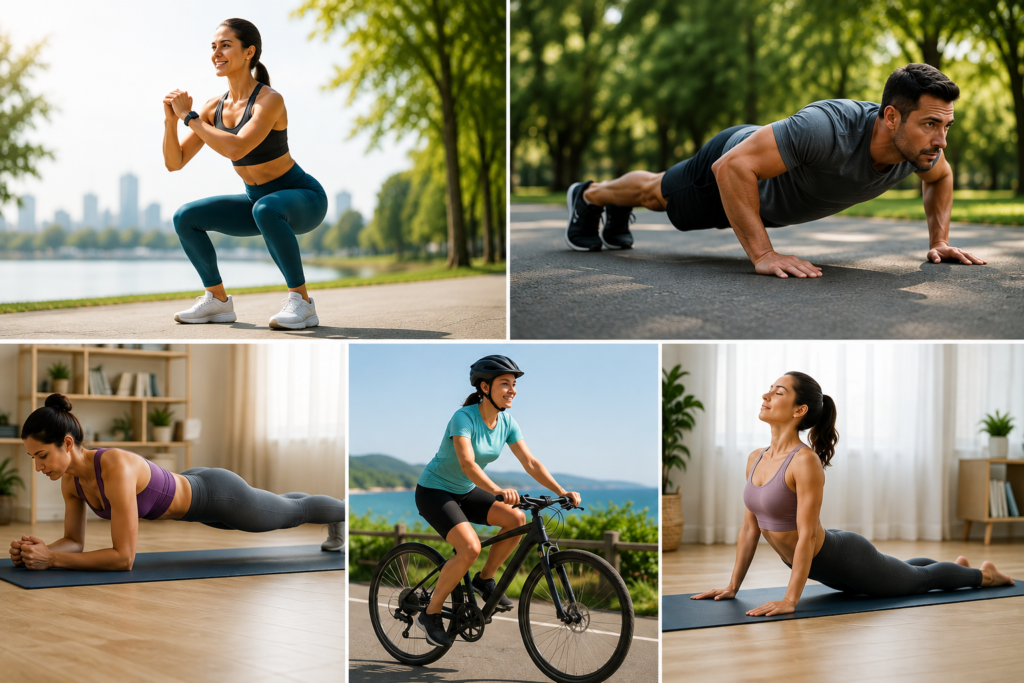
Do you love the idea of staying active, but running just isn’t for you — whether it’s the impact on your joints, the routine, or simply not connecting with the sport?
The good news is that running isn’t the only way to take care of your health through movement. There are several equally effective exercises that work your body in different ways and might fit your lifestyle much better.
In this article, you’ll learn about 5 physical exercises that help keep your health in check, without running needing to be the center of your movement routine.
Why Look for Alternatives to Running?
Running is a great exercise, but it isn’t the ideal option for everyone.
Some people face:
- Joint pain caused by high impact
- Trouble staying motivated with a repetitive exercise
- Physical limitations that make running inadvisable
- Simply not connecting with this type of activity
Staying healthy doesn’t depend on one specific exercise — it depends on consistent, enjoyable movement, adapted to each person’s reality.
1. Swimming
Swimming is considered one of the most complete exercises out there, working nearly every muscle group at the same time.
Main benefits:
- Extremely low impact on the joints
- Significant improvement in cardiorespiratory fitness
- Balanced muscle strengthening
- A great option for people with joint pain or injuries
2. Cycling
Biking is an excellent alternative for anyone looking for an efficient cardiovascular workout with less impact than running.
Main benefits:
- Strengthens the legs and improves cardiovascular endurance
- Can be done outdoors or on a stationary bike
- Lower joint impact compared to running
- Flexible in terms of intensity and duration
3. Functional Training
Functional training uses natural body movements (squatting, pushing, pulling, twisting) to improve strength, balance, and mobility in an integrated way.
Main benefits:
- Improves performance in everyday activities
- Works multiple muscle groups at once
- Can be adapted to different fitness levels
- Reduces injury risk by strengthening the body in a balanced way
4. Water Aerobics
For anyone looking for even more joint-friendly options, water aerobics is an excellent choice, especially for beginners or people with physical limitations.
Main benefits:
- Water resistance intensifies muscle work without straining the joints
- Improves blood circulation
- Low injury risk
- A great option for all ages
5. Strength Training
Strength training goes far beyond aesthetics. It plays an essential role in maintaining long-term health.
Main benefits:
- Strengthens bones and reduces the risk of osteoporosis
- Preserves muscle mass over the years
- Improves basal metabolism
- Supports joint health when properly guided
How to Choose the Right Exercise for You
There’s no single “best” exercise across the board. It’s worth considering:
- Your current fitness level
- Any restrictions or joint pain
- What you actually enjoy doing (this directly impacts consistency)
- Your specific goals (general health, strength, endurance, rehabilitation)
The Importance of Variety for Long-Term Health
Combining different types of exercise throughout the week tends to bring more complete benefits than focusing on just one activity.
That’s because each exercise stimulates the body in a specific way — strength, endurance, mobility, balance — and combining these stimuli is what supports good physical health over the long run.
Conclusion: Movement Is What Matters, Not the Type
If running isn’t for you, that’s completely fine. What matters most is finding forms of movement that fit your routine, your body, and your enjoyment of exercising.
Health doesn’t depend on following a single formula — it depends on consistency, adaptation, and, most importantly, finding something you actually want to keep doing.
Which of these exercises fits your lifestyle best? Let us know in the comments!
If this helped you see other options besides running, share it with someone else looking to move more. 🏊♀️🚴♂️💪
This content is for informational purposes only and does not replace guidance from a fitness professional. Always consult a specialist before starting any exercise program.
Leave a Reply