
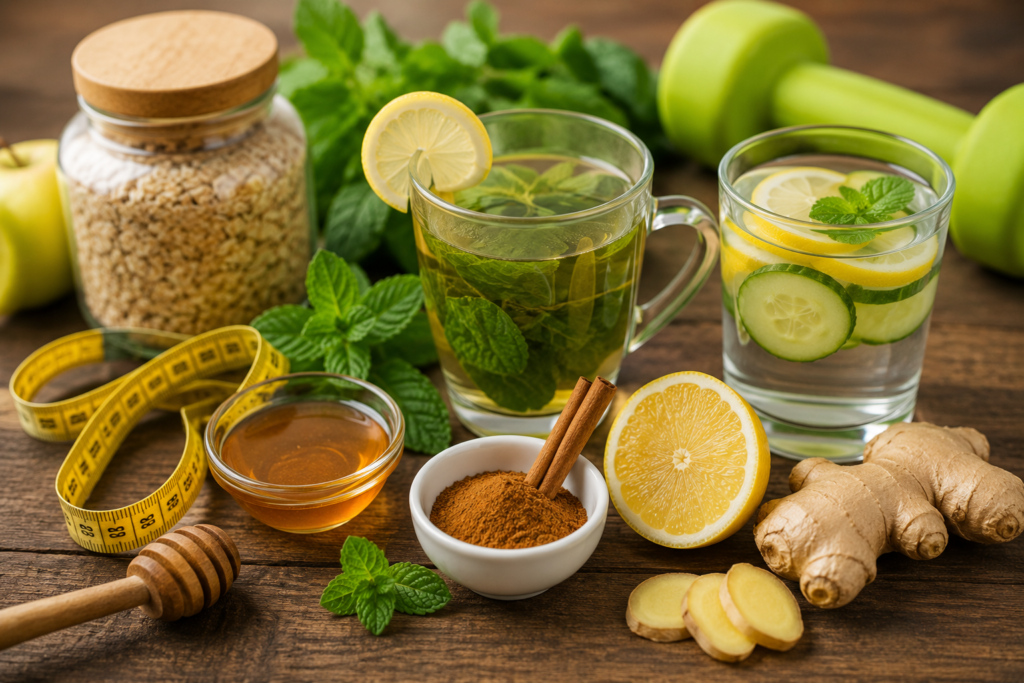
Have you ever searched “home remedy for weight loss” and come across dozens of recipes promising miracle results?
Fat-burning teas, detox waters, “belly-blasting” juices… the internet is full of promises. But do these home remedies actually cause weight loss on their own, or is there more myth than truth behind these recipes?
In this article, you’ll learn what science actually says about home remedies for weight loss, which ones can be helpful complements, and why none of them replace consistent healthy habits. Let’s go through this with clear information and no exaggerated promises.
The Truth About Home Remedies for Weight Loss
Before anything else, it’s important to make one point very clear: home remedies don’t cause weight loss on their own.
What they can do is help indirectly — by increasing hydration, replacing high-calorie drinks, or contributing modestly to a feeling of fullness. But real weight loss depends on a combination of factors, such as calorie deficit, physical activity, and overall diet quality.
Important: this content is for educational purposes. No home recipe replaces nutritional or medical guidance, especially for those looking to lose weight safely.
Home Remedies That Can Be Helpful Complements
Some home remedies, when used in moderation and as part of a healthy routine, can offer complementary benefits to the weight loss process.
1. Green Tea
Green tea is rich in bioactive compounds and caffeine, which can modestly contribute to increased energy expenditure. Even so, its isolated effect is small — the real benefit shows up when it replaces sugary drinks in your routine.
2. Ginger Water
Ginger has anti-inflammatory and antioxidant properties, and can aid digestion. It’s worth noting that people with gastritis, ulcers, or reflux should be cautious with its consumption, since it can irritate the stomach lining.
3. Yerba Mate Tea
Because it contains caffeine, yerba mate tea can have a mild stimulant effect on metabolism. Like any caffeinated drink, it should be consumed in moderation, especially at night.
4. Eggplant Water
Rich in fiber, eggplant water can contribute to a feeling of fullness. However, there’s no evidence that it “burns fat,” as is often claimed — its benefit is more related to fiber than to any miraculous effect.
5. Water Before Meals
Drinking water before meals is one of the simplest strategies with real backing: it helps distinguish signals of hunger from thirst, avoiding unnecessary overeating.
Practical tip: the benefit of these remedies lies mainly in replacing high-calorie or sugary drinks with healthier options — not in some magic “fat-burning” effect.
Common Myths About Home Remedies for Weight Loss
A lot of information circulating on this topic doesn’t have solid scientific backing. Let’s clear up some common myths:
Myth: “Detox teas eliminate toxins and fat”
Reality: the body already has organs responsible for eliminating toxins, like the liver and kidneys. Teas have no proven ability to “detoxify” the body or eliminate body fat.
Myth: “Food X significantly speeds up metabolism”
Reality: some foods have a mild thermogenic effect, but this impact tends to be small compared to your total daily calorie burn. No single food can produce significant weight loss on its own.
Myth: “If it’s natural, there’s no risk”
Reality: this is one of the most common misconceptions. Excessive or improper use of medicinal plants can cause side effects, drug interactions, and even toxicity, especially without professional guidance.
Who Should Be Extra Cautious
Some groups deserve special attention before consuming home remedies for weight loss purposes:
- Pregnant and breastfeeding women: several compounds can cross the placenta or be excreted in breast milk.
- People with gastritis, ulcers, or reflux: ingredients like ginger, lemon, and apple cider vinegar can worsen symptoms.
- People with kidney or heart problems: some natural compounds can interfere with pre-existing conditions.
- Those already on ongoing medication: there’s a risk of interaction between medicinal plants and prescribed drugs.
Note: diuretic teas should never replace regular hydration with water, since this can lead to dehydration and the loss of important electrolytes, like sodium and potassium.
What Actually Works for Weight Loss
Instead of relying on home remedies as the main solution, experts emphasize that healthy weight loss depends on a combination of factors:
- Adequate calorie deficit, guided by a professional.
- Balanced diet, prioritizing natural foods.
- Regular physical activity.
- Quality sleep.
- Adequate hydration throughout the day.
Home remedies can, at most, complement this process — never replace it.
Is It Worth Seeking Professional Guidance?
As the experts consulted point out, chasing fast results with home remedies or miracle recipes can lead to frustration, since healthy weight loss is always gradual.
If you’re looking to lose weight in a safe, effective way, it’s much more worthwhile to rely on guidance from a nutritionist or doctor, who can build a real, personalized strategy for your case.
Conclusion: There’s No Miracle, Only Consistency
Home remedies can be modest allies in the weight loss process, but they don’t replace a balanced diet, physical activity, and professional guidance.
Be wary of promises of fast, miraculous results — the safest (and most effective) path remains consistency in healthy daily habits.
Enjoyed this content? Share it with someone who also has questions about home remedies for weight loss, and keep following the blog for more trustworthy content on health and nutrition.
Leave a Reply