
Have you heard of the low carb diet but still have questions about what actually can or can’t go on your plate?
This is one of the most popular eating strategies today, known for reducing carbohydrate intake and increasing consumption of protein and healthy fats. But for it to work safely, it’s essential to understand what to prioritize — and what to avoid.
In this article, you’ll learn how the low carb meal plan works, which foods are welcome, which ones deserve attention, and why professional guidance matters so much in this process. Let’s get straight to the point.
What the Low Carb Diet Really Is
The low carb diet is an eating strategy based on reducing carbohydrate intake, with a proportional increase in protein and fat.
While a conventional diet usually consists of 50% to 55% carbohydrates, in low carb this percentage can range between 5% and 45%, depending on the level of restriction adopted — always determined with professional support.
The logic behind the strategy is that, by reducing available carbohydrates, the body starts using more stored fat as an energy source, which can support weight loss.
Important: this content is for educational purposes. The low carb diet should always be guided by a nutritionist, nutrologist, or doctor, who will adjust the level of restriction according to your individual needs.
What to Eat on a Low Carb Diet
Now let’s go through the foods that typically make up a balanced low carb meal plan.
1. Good-Quality Protein
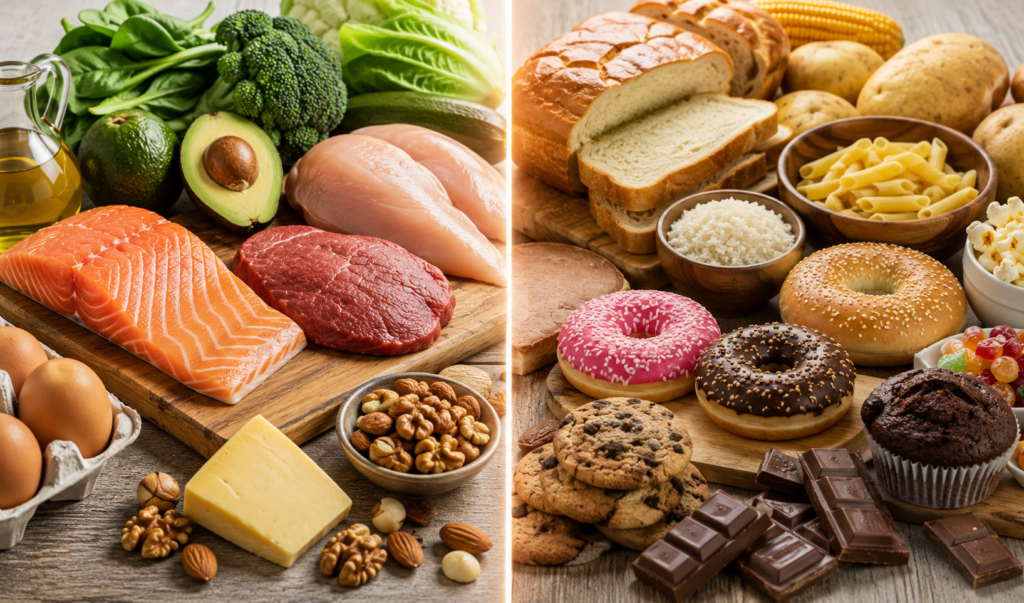
Lean meats, poultry, fish, and eggs form the protein base of the low carb diet. Fish like salmon, sardines, and tuna are also rich in omega-3, a fat with anti-inflammatory properties.
2. Healthy Fats
Olive oil, butter, and avocado are good sources of quality fat. According to experts, the quality of the fat consumed matters more than the quantity in this type of diet.
3. Low-Carb Vegetables
Leafy greens, broccoli, cauliflower, zucchini, and cucumber are good options, since they have low carbohydrate content and are rich in fiber and nutrients.
4. Nuts, in Moderation
Cashews, almonds, and walnuts contain healthy fats and fiber, but they’re quite calorie-dense — so it’s best to eat them in small daily portions, about a closed handful.
5. Eggs
Versatile and nutritious, eggs are an excellent source of protein and contain virtually no carbohydrates.
6. Some Fruits, with Caution
Fruits like strawberries and other lower-sugar options can be included in moderation, always keeping an eye on the daily carbohydrate allowance in your specific plan.
7. Natural Seasonings
Herbs and spices like garlic, ginger, cinnamon, and oregano add flavor to meals without adding carbohydrates.
What to Avoid on a Low Carb Diet
More important than memorizing a long list of forbidden foods is understanding the general principle: avoid foods with high carbohydrate content, especially refined and ultra-processed ones.
1. Sugar and Sweets
Refined sugar, honey, soft drinks, packaged juices, and sweets in general should be avoided, since they cause rapid blood sugar spikes.
2. Refined Flour and Its Products
Bread, pasta, cakes, cookies, and products made with white flour are concentrated sources of refined carbohydrates, which should be reduced or eliminated depending on the diet’s level of restriction.
3. Starchy Root Vegetables and Grains
Potatoes, sweet potatoes, cassava, rice, and corn have high starch content. Depending on the plan set with your nutritionist, they may be avoided or eaten in very small portions.
4. Ultra-Processed Foods
Chips, processed meats, ready-made sauces, and industrialized foods often contain sugars and additives that offer no nutritional benefit.
5. Meats High in Saturated Fat
Bacon, sausage, ham, and cuts with visible fat should be eaten in moderation, prioritizing leaner options day to day.
Practical tip: the most important thing isn’t memorizing lists of forbidden foods, but understanding the general pattern: reduce refined carbs and prioritize natural, nutritious foods.
Who Should Be Extra Cautious with Low Carb
While it’s an effective strategy for many people, the low carb diet isn’t suitable for everyone. Those who deserve special attention include:
- People with certain kidney conditions
- Pregnant and breastfeeding women
- High-performance athletes, who have specific carbohydrate needs
- People with a history of eating disorders
That’s why individual evaluation with a healthcare professional is always essential before starting this type of diet.
How to Build a Safe Low Carb Meal Plan
Instead of following generic meal plans found online, it’s best to build a personalized eating plan, taking into account:
- Your current health status and medical history.
- Your specific goals, such as weight loss or blood sugar control.
- Your physical activity level.
- Your food preferences, to ensure the plan is sustainable.
Note: avoid following ready-made “7-day” meal plans or promises of rapid weight loss found online. Individualized guidance is what ensures safety and real results.
Is It Worth Seeking Professional Guidance?
As specialized nutritionists point out, the low carb diet can produce good results, but it needs to be built individually, taking your specific needs and goals into account.
If you’re looking to adopt this eating pattern in a safe, effective way, it’s worth considering structured nutritional guidance, made specifically for your stage and goal.
Conclusion: Balance Is the Key to Success
The low carb diet can be an effective strategy when well structured, prioritizing natural, nutritious foods and avoiding refined and ultra-processed products.
The safest path remains seeking professional guidance to adapt this strategy to your reality and specific needs.
Enjoyed this content? Share it with someone who also has questions about the low carb diet, and keep following the blog for more trustworthy content on nutrition and health.
Leave a Reply