
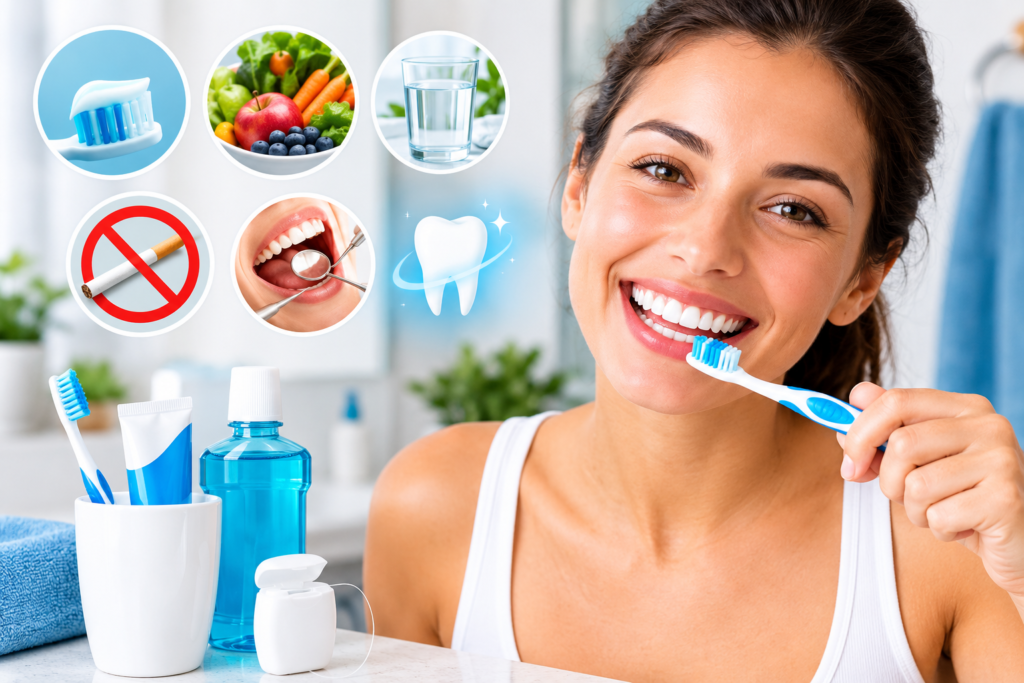
Do you brush your teeth every day, but still feel like something might be missing from your oral care routine?
Oral health goes far beyond basic brushing. It directly impacts your self-esteem, your diet, and even your overall health — since the mouth is the gateway to several processes in the body.
In this article, you’ll understand why oral health deserves more attention, which habits actually make a difference, and how to take care of your smile in a simple, consistent way. Let’s get straight to the point.
Why Oral Health Matters So Much
Taking care of your mouth isn’t about looks. Good oral health is directly related to several aspects of overall well-being.
Here are some reasons to pay more attention to this care:
- Prevents issues like cavities and gum disease.
- Supports good digestion, since chewing is the first step in that process.
- Impacts self-esteem and confidence, especially when smiling and speaking.
- Is connected to overall body health, since untreated oral problems can influence other areas of health.
- Prevents pain and discomfort that can significantly affect quality of life.
Important: this content is for educational purposes. Regular checkups with a dentist remain essential for diagnosing and treating any oral condition.
Signs Your Oral Health May Need More Attention
Before moving on, it’s worth asking yourself: could this be about me?
Some common signs worth paying attention to include:
- Frequent bleeding while brushing
- Persistent bad breath
- Tooth sensitivity
- Gum pain or discomfort
- Stains or changes in tooth color
If you identified with any of these points, it’s worth scheduling a dental appointment for a more detailed evaluation.
Essential Habits for Taking Care of Oral Health
Now let’s get to the practical part. Small, consistent habits make all the difference for long-term oral health.
1. Brush Your Teeth the Right Way
More important than frequency is technique. Brushing for at least two minutes, covering every tooth surface, is essential for effective cleaning.
2. Don’t Forget to Floss
Brushing alone doesn’t reach the spaces between teeth. Daily flossing helps remove debris the brush can’t reach.
3. Use Mouthwash as a Complement
Mouthwash helps reduce bacteria and freshen breath, but it doesn’t replace brushing and flossing.
4. Replace Your Toothbrush Regularly
Worn-out toothbrushes lose effectiveness. It’s best to replace yours every three months, or sooner if the bristles are damaged.
5. Watch Your Diet
Cutting back on sugar and ultra-processed foods helps prevent cavities and other oral problems.
6. Stay Properly Hydrated
Water helps with saliva production, which plays an important role in the natural protection of teeth and gums.
7. Avoid Smoking
Smoking is directly linked to several oral health problems, including gum disease and tooth staining.
Practical tip: small daily habits, kept consistently, make much more of a difference than intense but occasional care.
The Importance of Regular Dentist Visits
Even with good habits at home, regular dentist visits remain essential. They allow for:
- Early identification of problems, before they get worse
- Professional cleanings, removing built-up tartar and plaque
- Personalized guidance based on your specific oral health
- Ongoing monitoring of your teeth and gum health
Generally speaking, the recommendation is usually every six months, but this can vary based on your dentist’s guidance.
How to Make These Habits Part of Your Routine
We know that in the rush of daily life, some care can end up being neglected. But small routine changes already help a lot.
Some strategies that work:
- Tie brushing and flossing to fixed times of day.
- Keep oral care items visible and accessible.
- Don’t skip routine checkups, even without obvious symptoms.
- Remember: prevention is always simpler than treatment.
Maintaining good oral health involves more than just brushing and flossing. Some people also consider oral probiotics as part of their daily oral care routine.
Conclusion: Small Care, Big Impact
Oral health is one of the pillars of overall well-being, and taking care of it doesn’t have to be complicated.
Start today by reviewing your oral hygiene routine and scheduling that checkup you may have been putting off. Your smile thanks every conscious step of care.
Enjoyed this content? Share it with someone who also needs to take better care of their oral health, and keep following the blog for more practical content on health and well-being.
Leave a Reply