
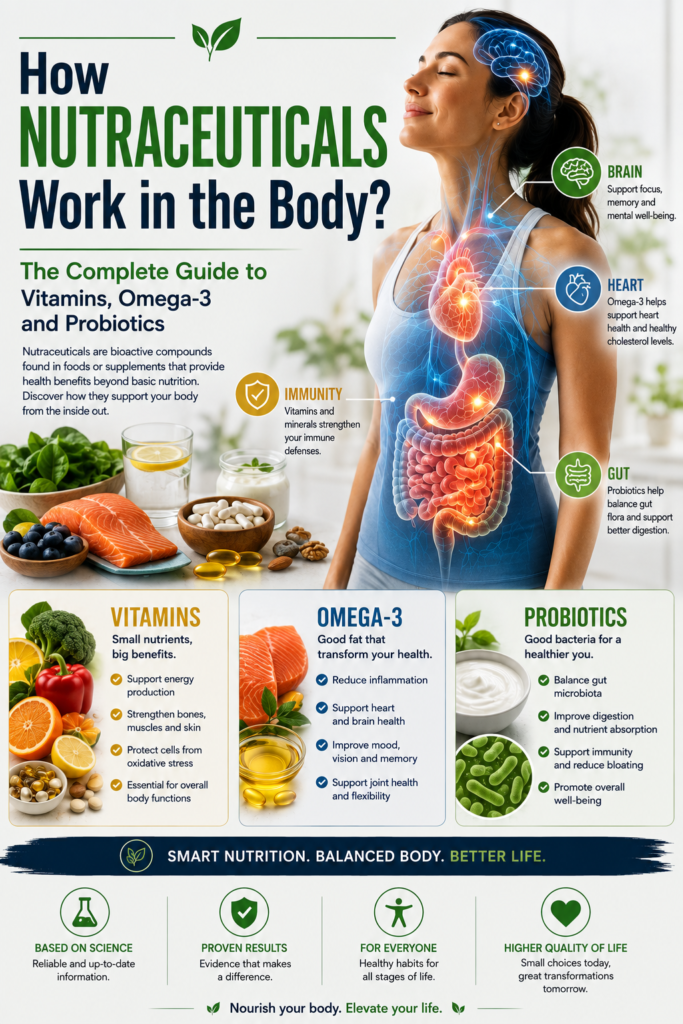
You’ve probably heard the word “nutraceutical” before, but aren’t quite sure what it actually does inside your body.
You’re not alone. It’s one of the most used, and least explained, terms in the health and wellness world.
In this guide, we’ll break it down simply, no fluff:
- What nutraceuticals actually are
- How vitamins and minerals work in the body
- The role omega-3 plays in your health
- How probiotics influence your gut
- How to choose a supplement more safely
Let’s get straight to it.
What Are Nutraceuticals?
The term “nutraceutical” comes from combining “nutrition” with “pharmaceutical.” In practice, it refers to substances derived from food that offer health benefits beyond basic nutrition.
This includes vitamins, minerals, fatty acids like omega-3, probiotics, antioxidants, and other bioactive compounds. The core idea is simple: these are nutrients that, beyond just nourishing the body, also help prevent or support treatment for certain health conditions.
How Do Vitamins and Minerals Work in the Body?
Vitamins and minerals are essential micronutrients, meaning the body only needs them in small amounts, but can’t function properly without them.
Each one plays a specific role:
- Vitamin C: supports immune function and collagen production
- Vitamin D: essential for bone health and also linked to immunity
- B-complex vitamins: involved in energy production and nervous system function
- Iron: essential for transporting oxygen in the blood
- Magnesium: involved in hundreds of reactions in the body, including muscle and nerve function
- Zinc: important for immunity and wound healing
When your diet doesn’t provide enough of these nutrients, whether due to a busy routine, a restrictive diet, or increased bodily needs, supplementation can help fill that gap.
The Role of Omega-3 in the Body
Omega-3 is an essential type of fat, meaning your body can’t produce it on its own, you have to get it through food or supplementation.
It’s mainly known for:
- Supporting cardiovascular health, helping balance triglyceride levels
- Supporting brain health, since it’s part of the structure of nerve cells
- Having anti-inflammatory properties, which benefit joints and other tissues
- Supporting eye health, as an important component of the retina
The main natural sources of omega-3 are fatty fish, like salmon and sardines, along with flaxseed and chia seeds. For anyone who doesn’t eat these foods often, supplementation tends to be a practical alternative.
Probiotics: Your Gut’s Best Friend
Probiotics are live microorganisms that, when consumed in adequate amounts, provide benefits to gut health.
They mainly work by:
- Helping balance your gut microbiome
- Supporting the digestion of certain nutrients
- Supporting immune function, since a large portion of it is concentrated in the gut
- Assisting in the production of certain vitamins, like some B vitamins
Fermented foods, like plain yogurt, kefir, and sauerkraut, are natural sources of probiotics. Probiotic supplements are also an option for anyone looking for more targeted support.
How Do You Know If You Need Supplementation?
Not everyone needs to supplement all of these nutrients all the time. A few signs may suggest it’s worth looking into:
- Frequent fatigue with no obvious cause
- Recurring digestive changes
- Restrictive diets (vegetarian, vegan, or weight-loss focused)
- A routine with limited sun exposure (relevant for vitamin D)
- Medical recommendation following blood work
Ideally, you’d combine a professional health evaluation with lab tests that confirm any actual deficiencies, rather than supplementing “just in case” without real need.
How to Choose a Good Supplement
When choosing a nutraceutical, a few factors make a real difference in quality and effectiveness:
- Check the sourcing and whether the product follows good manufacturing practices
- Look at the dosage, comparing it to daily recommended amounts
- Prioritize formulas with good bioavailability, meaning the body absorbs them easily
- Be skeptical of miracle claims, supplements support health, they don’t replace a balanced diet
If you’re looking for a practical option to add to your routine, it’s worth checking out the supplement we’ve put together with a thoughtful combination of essential everyday nutrients.
👉 [Check out the supplement here and see how it fits into your routine]
Do Nutraceuticals Replace a Healthy Diet?
No. This is an important point to make clear: nutraceuticals are a complement, not a replacement.
The foundation of good health remains a balanced diet, quality sleep, physical activity, and regular medical care. Supplementation comes in as extra support, especially in specific situations of higher need or a confirmed deficiency.
The Bottom Line
Nutraceuticals, like vitamins, minerals, omega-3, and probiotics, play specific and important roles in the body. Understanding how each one works helps you make more informed choices about what’s actually worth adding to your routine.
The next step is simple: evaluate your individual needs, ideally with professional guidance, and choose quality products that actually deliver on what they promise.
👉 If you want to start with a complete, practical option, [check out the supplement we’ve put together to support your wellness routine here].
This article is for informational purposes only and is not a substitute for professional medical or nutritional evaluation, diagnosis, or care. Consult a specialist before starting any supplementation.
Leave a Reply