
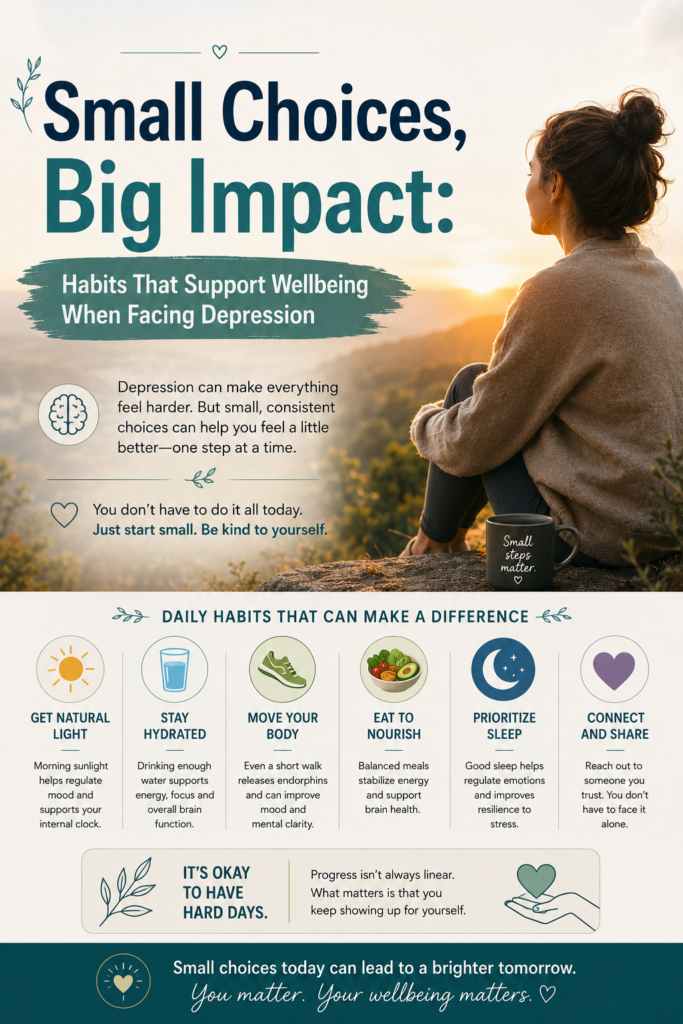
If you’re going through a hard time right now, here’s the first thing we want you to know: you’re not alone, and reaching out for help is a sign of strength, not weakness.
Depression is a serious mental health condition, and there’s no magic formula or single “simple choice” that resolves it on its own. But research shows that certain habits, when combined with professional care, can support the treatment process and contribute to overall wellbeing.
In this article, we’ll cover:
- Why daily habits matter as part of the treatment process
- Small choices that can support emotional wellbeing
- How to balance self-care with professional help
- When and how to seek specialized support
Let’s take this one step at a time.
Habits Don’t Replace Treatment, But They Can Support It
It’s important to be clear about this from the start: no habit, however good, replaces therapy, medical care, or, when appropriate, medication.
What scientific research shows is that certain lifestyle habits can act as complementary support to treatment, helping build a more stable foundation for recovery. Think of them as part of a broader support system, not a standalone solution.
Small Choices That Can Support Wellbeing
1. Movement, Even in Small Doses
Physical activity has been linked to the release of substances that positively influence mood. That doesn’t mean exercise “cures” depression, but it can be a real source of support.
Start small: a 10-minute walk counts. On harder days, even standing up and stretching is a win.
2. Keeping a Sleep Routine
Depression often affects sleep, sometimes making it hard to fall asleep, other times causing excessive sleep. Trying to keep more regular sleep and wake times, even imperfectly, helps add structure to your days.
3. Social Connection, At Your Own Pace
Isolation is common during periods of depression, but social connection, even in small amounts, tends to help.
That can look like:
- A text message to someone you trust
- A short call with a family member
- Simply being around other people, even without much conversation
There’s no “right amount.” What matters is not withdrawing completely.
4. Easing Up on Productivity Pressure
One of the biggest mistakes when dealing with depression is holding yourself to the same standard as on a regular day. Lowering expectations during harder periods isn’t laziness, it’s self-care.
Important reminder: doing the bare minimum on a tough day is still progress.
5. Getting Natural Light
Exposure to sunlight, even for just a few minutes, has been linked to benefits for mood and your circadian rhythm.
Simple tip: opening a window in the morning or sitting near a natural light source can already help.
6. Writing Down Thoughts and Feelings
Writing about what you’re feeling, without judgment, can help organize your thoughts and spot patterns over time.
It doesn’t need to be polished. Even a few scattered sentences can serve that purpose.
How to Balance Self-Care With Professional Help
Healthy habits are an important complement, but professional care remains essential in treating depression. Psychologists and psychiatrists have specific tools, like therapy and, when needed, medication, to support each person’s individual situation.
If you haven’t started professional support yet, consider it just as important as any daily habit, if not more so.
When to Seek Specialized Help
Consider reaching out to a mental health professional if you:
- Feel persistent sadness for more than two weeks
- Have lost interest in activities you used to enjoy
- Are struggling to complete basic daily tasks
- Have thoughts of hopelessness or feeling like life isn’t worth living
If, at any point, you have thoughts of hurting yourself or not wanting to live, it’s essential to get help immediately, whether from a professional, an emergency service, or someone you trust.
The Bottom Line
Small daily choices can genuinely support wellbeing during depression treatment. But they work best as part of a broader kind of care, one that includes professional support and, often, time and patience with the process itself.
If you’re going through this right now, be gentle with yourself. Progress here is rarely a straight line, and that’s completely normal.
👉 If this article helped you in any way, consider sharing it with someone who might need to read it today too.
This article is for informational purposes only and is not a substitute for evaluation, diagnosis, or care from a mental health professional. If you’re experiencing symptoms of depression, consider reaching out to a therapist or psychiatrist. If you’re in crisis or having thoughts of harming yourself, please seek immediate help by calling or texting 988 (the Suicide & Crisis Lifeline), available 24/7 in the US.
Leave a Reply