
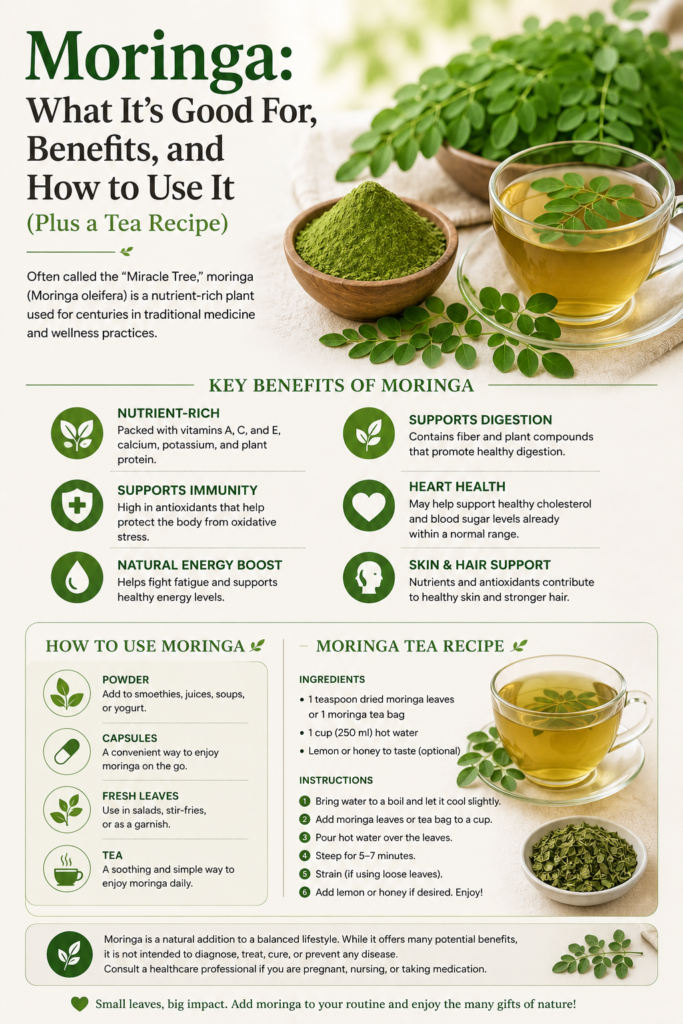
You’ve probably heard of moringa, but maybe you’re still not sure why it’s become such a popular topic in the health and wellness world.
Moringa is a plant native to Asia, known for its impressive nutritional profile, so much so that some researchers call it the “miracle tree.” Its leaves are packed with vitamins, minerals, and antioxidants in amounts that stand out.
In this article, you’ll discover:
- What moringa is good for and its main benefits
- What science has found so far about the plant
- How to use moringa in your daily routine
- A step-by-step recipe for moringa tea
- Important precautions before consuming it
Let’s take a closer look at this plant.
What Is Moringa?
Moringa oleifera is a tree native to northern India, now grown in tropical regions around the world, including Brazil. Nearly every part of the plant is used, leaves, seeds, pods, and roots, but the leaves are the most commonly consumed part due to their concentration of nutrients.
Components found in moringa include vitamins A, C, and E, calcium, potassium, iron, and several antioxidant compounds, like quercetin and chlorogenic acid.
What Is Moringa Good For? Main Benefits
1. Rich in Antioxidants
The antioxidants in moringa help neutralize free radicals, molecules linked to cellular aging and inflammatory processes in the body.
2. May Support Blood Sugar Control
Some studies suggest that compounds in moringa may help support blood sugar regulation, though more research in humans is needed to confirm this effect more broadly.
3. A Good Source of Iron and Vitamins
Moringa is an interesting option for anyone looking to naturally increase their iron and vitamin intake, especially through leafy greens in their diet.
4. Anti-Inflammatory Properties
Compounds found in the plant have been studied for their potential to help reduce inflammation markers in the body.
5. Supports Digestive Health
Moringa is also rich in fiber, which supports healthy digestion and helps you feel fuller for longer.
How to Use Moringa Day to Day
Moringa comes in different forms, each with its own convenience:
- Moringa powder: easy to add to juices, smoothies, and recipes
- Capsules: a practical option for those who prefer a more concentrated, tasteless form
- Fresh or dried leaves: used to make tea or even sautéed dishes
- Moringa oil: mostly used for cosmetic purposes, like moisturizing skin and hair
Practical tip: start with small amounts, around half a teaspoon of powder per day, and see how your body responds before increasing the dose.
How to Make Moringa Tea (Step by Step)
Tea is one of the simplest and most popular ways to consume moringa. Here’s how to make it:
Ingredients
- 1 teaspoon of dried moringa leaves (or moringa powder)
- 1 cup (250 ml) of hot water (not boiling)
- Honey or lemon to taste (optional)
Instructions
- Heat the water until it’s just below boiling, then turn off the heat
- Add the dried leaves or moringa powder
- Let it steep for 5-7 minutes
- Strain (if using leaves) and serve
- Add honey or lemon, if desired
Tip: avoid pouring boiling water directly over moringa, since very high temperatures can break down some of its nutrients.
Important Precautions Before Consuming Moringa
Despite its benefits, a few precautions matter:
- Pregnant women should avoid certain parts of the plant, like the root and bark, which may have effects not recommended during pregnancy
- People taking medication for diabetes or blood pressure should check with a doctor before regularly consuming moringa, since the plant may enhance these effects
- Moderate your intake. More isn’t necessarily better, sticking to recommended amounts helps avoid digestive discomfort
- Choose products from a trustworthy source, especially when buying powder or capsules
Does Moringa Replace a Balanced Diet?
No. Like other so-called superfoods, moringa should be seen as a complement to your diet, not a replacement for varied, balanced eating.
It can be an interesting addition to your routine, but the most consistent health results come from combining good eating habits, quality sleep, and regular physical activity.
Are you looking for a supplement that supports overall well-being, metabolic health, and quality of life? Discover an option designed to complement a healthy lifestyle. Learn more →
The Bottom Line
Moringa is a plant with an impressive nutritional profile, rich in vitamins, minerals, and antioxidants that may support different aspects of health. Whether as powder, capsules, or tea, it’s an accessible option for anyone looking to naturally add more nutrients to their routine.
As with any new dietary habit, it’s best to start slowly, and if you have a specific health condition, talk to a professional before adding moringa to your diet.
👉 If this article helped you learn more about moringa, save it for the next time you make tea, or share it with someone who’d also like to discover this plant.
This article is for informational purposes only and is not a substitute for guidance from a registered dietitian or healthcare professional. Consult a specialist before adding new supplements or medicinal plants to your routine, especially if you’re pregnant, breastfeeding, or undergoing medical treatment.
Leave a Reply