
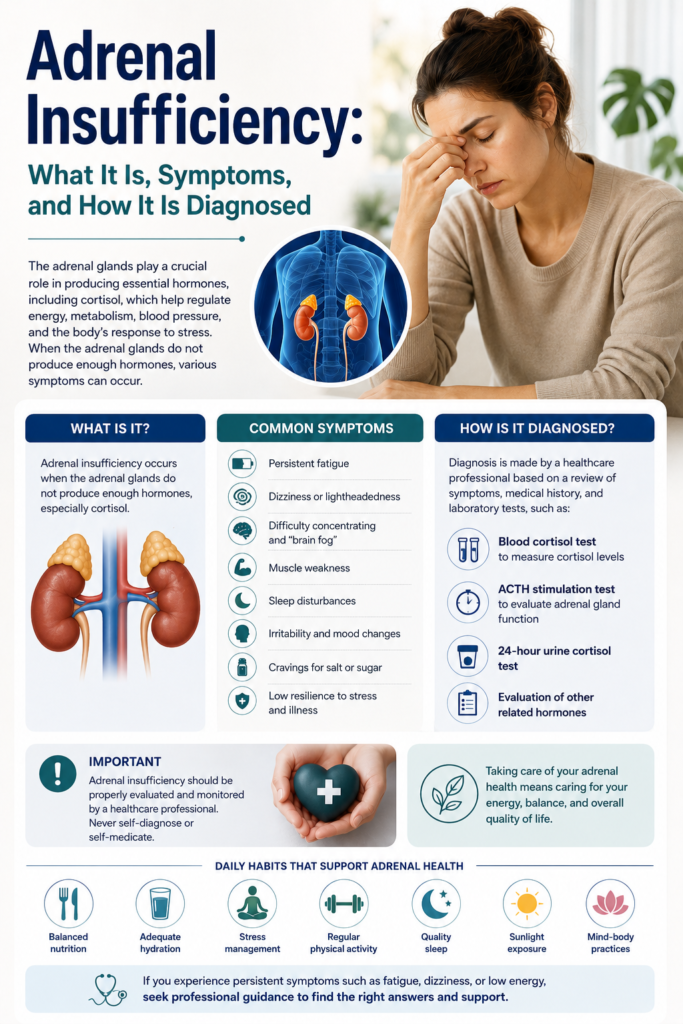
Extreme fatigue that doesn’t improve with rest, dizziness when standing up, unexplained weight loss. These signs can have many causes, and one lesser-known one is adrenal insufficiency.
While it’s a relatively rare condition, understanding how it works helps you recognize warning signs and seek the right diagnosis at the right time.
In this article, you’ll learn:
- What adrenal insufficiency is and how it happens
- The main symptoms to watch for
- How diagnosis is made
- The difference between adrenal insufficiency and the popular term “adrenal fatigue”
Let’s break it down.
What Is Adrenal Insufficiency?
The adrenal glands, located on top of the kidneys, are responsible for producing essential hormones like cortisol and aldosterone. These hormones regulate functions like stress response, metabolism, blood pressure, and salt balance in the body.
Adrenal insufficiency happens when these glands can’t produce enough of those hormones. This can occur for two main reasons:
- Primary adrenal insufficiency (Addison’s disease): the adrenal glands themselves are damaged, often due to autoimmune conditions
- Secondary adrenal insufficiency: the issue lies in the pituitary gland, which signals the adrenals to produce cortisol
Main Symptoms of Adrenal Insufficiency
Symptoms tend to develop gradually, which can delay diagnosis. Common signs include:
- Persistent, intense fatigue
- Muscle weakness
- Unintentional weight loss
- Dizziness, especially when standing up (low blood pressure)
- Cravings for salty foods
- Darkening of the skin in certain areas (more common in primary insufficiency)
- Nausea, vomiting, or abdominal pain
- Mood changes
Since many of these symptoms also show up in other conditions, diagnosis depends on medical evaluation and specific tests, not just symptom observation.
How Diagnosis Is Made
Diagnosing adrenal insufficiency involves a combination of clinical history, physical exam, and lab testing. Key methods include:
- Blood cortisol testing, usually in the morning, when levels tend to be highest
- ACTH stimulation test, which evaluates how the adrenal glands respond to a stimulating hormone
- Electrolyte testing, since changes in sodium and potassium levels can indicate adrenal dysfunction
- Imaging tests, like CT scans, in cases that require deeper investigation into the underlying cause
This process should always be guided by an endocrinologist, since the results require specialized interpretation.
Adrenal Insufficiency vs. “Adrenal Fatigue”: What’s the Difference?
This is an important point to clarify. You may have heard of “adrenal fatigue,” a popular term used to describe chronic tiredness attributed to supposed adrenal burnout from prolonged stress.
However, “adrenal fatigue” is not recognized as a medical diagnosis by major endocrinology societies. That doesn’t mean the fatigue people describe isn’t real, it means the underlying causes are usually related to other factors, like sleep disorders, nutritional deficiencies, chronic stress, or other health conditions, rather than actual adrenal gland dysfunction.
Because of this, if you’re experiencing extreme, persistent fatigue, the safest path is to seek medical evaluation to investigate the real cause, rather than assuming it’s “adrenal fatigue” and turning to supplements without guidance.
How Adrenal Insufficiency Is Treated
True adrenal insufficiency is treated primarily with hormone replacement therapy, under strict medical supervision. This typically includes:
- Corticosteroid replacement, to substitute the cortisol the body no longer produces adequately
- Mineralocorticoid replacement, in cases of primary insufficiency, to help balance sodium and potassium
- Dose adjustments during physical stress, such as surgery, infections, or trauma, since cortisol needs increase during these times
This treatment must be continuously monitored by an endocrinologist, since incorrect dosing can carry serious health risks.
When to See a Doctor
Seek medical evaluation if you persistently experience:
- Extreme fatigue that doesn’t improve with rest
- Frequent dizziness, especially when standing up
- Unexplained weight loss
- Unusual darkening of the skin
In more severe cases, untreated adrenal insufficiency can lead to an adrenal crisis, a medical emergency requiring immediate care. Signs like intense vomiting, confusion, very low blood pressure, and fainting require urgent medical attention.
The Bottom Line
Adrenal insufficiency is a serious but treatable condition when properly diagnosed and monitored by a specialist. Recognizing the symptoms and seeking medical evaluation at the right time makes all the difference in managing the condition.
It’s worth repeating: chronic fatigue has many possible causes, and an accurate diagnosis can only be made by a healthcare professional through specific testing.
👉 If this article helped you better understand the topic, share it with someone who might also benefit from this information.
This article is for informational purposes only and is not a substitute for evaluation, diagnosis, or treatment from a healthcare professional. If you’re experiencing the symptoms described here, please consult an endocrinologist for proper investigation.
Leave a Reply