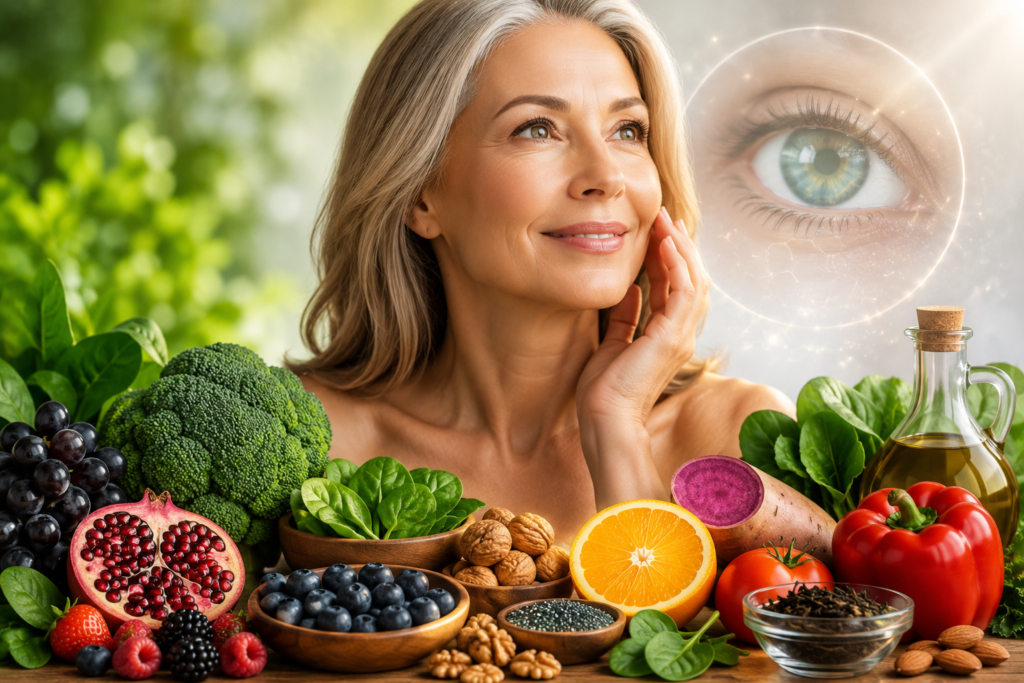
Have you noticed that after 40, your skin seems to ask for more care, and your eyesight just isn’t quite what it used to be?
That’s normal — but the good news is that a big part of this process can be managed (and even slowed down) with an ally that often goes unnoticed: an antioxidant-rich diet.
In this article, you’ll learn why antioxidants become so important after 40, which foods to add to your routine, and how to naturally protect your skin and eye health.
Why 40 Marks This Shift
Starting around this age, the body naturally begins producing more free radicals — unstable molecules that contribute to cellular aging.
This process, called oxidative stress, is directly linked to:
Loss of skin elasticity and firmness
The appearance of fine lines
Gradual decline in eye health
Increased sensitivity to environmental factors, like sun and pollution
That’s where antioxidants come in: compounds that help neutralize free radicals and reduce this wear and tear over time.
What Antioxidants Are and How They Work
Put simply, antioxidants are substances that protect the body’s cells from damage caused by free radicals.
They act as a kind of “natural shield,” helping preserve the health of your skin, eyes, and several other body systems.
Essential Antioxidant Nutrients for Your Skin
- Vitamin C
Essential for collagen production, the protein responsible for skin firmness and elasticity.
Where to find it: citrus fruits, strawberries, kiwi, bell peppers.
- Vitamin E
Helps protect skin against damage from sun exposure and pollution, and supports the skin’s natural hydration.
Where to find it: nuts (walnuts, almonds), seeds, avocado.
- Beta-Carotene
A precursor to vitamin A, it supports skin cell renewal and helps protect against external damage.
Where to find it: carrots, sweet potatoes, pumpkin.
- Polyphenols
Found in many plant-based foods, they help fight inflammation and premature skin aging.
Where to find them: green tea, grapes, cocoa, berries.
Essential Antioxidant Nutrients for Your Eyes
- Lutein and Zeaxanthin
These two antioxidants concentrate in the retina and help filter harmful blue light, while also protecting against the natural, age-related decline in vision.
Where to find them: dark leafy greens (kale, spinach), corn, egg yolk.
- Vitamin A
Essential for corneal health and for visual adaptation in low-light environments.
Where to find it: carrots, sweet potatoes, liver, dark leafy greens.
- Omega-3
Supports retinal health and helps prevent dry eyes, which becomes more common from this stage of life onward.
Where to find it: fatty fish (salmon, sardines), chia seeds, flaxseeds.
- Zinc
Works alongside vitamin A, supporting overall eye health.
Where to find it: lean meats, pumpkin seeds, legumes.
How to Build an Antioxidant-Rich Diet Day to Day
You don’t need to overhaul your entire diet at once. Small changes already make a difference:
Add colorful fruits to breakfast or snacks (strawberries, oranges, kiwi)
Include dark leafy greens at lunch and dinner (spinach, kale, broccoli)
Snack on nuts (walnuts, almonds, cashews)
Prioritize fatty fish at least twice a week
Drink green tea as an alternative to coffee at certain times of day
Habits That Boost the Benefits of Antioxidants
A good diet won’t do much if other habits cancel out that effort. It’s worth reinforcing:
Wear sunscreen daily
Stay well hydrated throughout the day
Get enough sleep, since it also affects cellular renewal
Cut back on ultra-processed foods, which increase oxidative stress
Conclusion: Prevention Starts on Your Plate
Taking care of your skin and eyes after 40 doesn’t rely only on products or doctor visits — though both remain important.
An antioxidant-rich diet is a natural, accessible, and effective way to strengthen that protection from the inside out.
Small dietary changes today can mean more health and quality of life in the decades ahead.
Do you already include antioxidant-rich foods in your routine? Let us know in the comments!
If this helped you rethink your diet, share it with someone entering (or already living through) this new stage. 🥕👁️
This content is for informational purposes only and does not replace guidance from a registered dietitian, dermatologist, or ophthalmologist. Always consult a specialist for a personalized evaluation.
Leave a Reply