
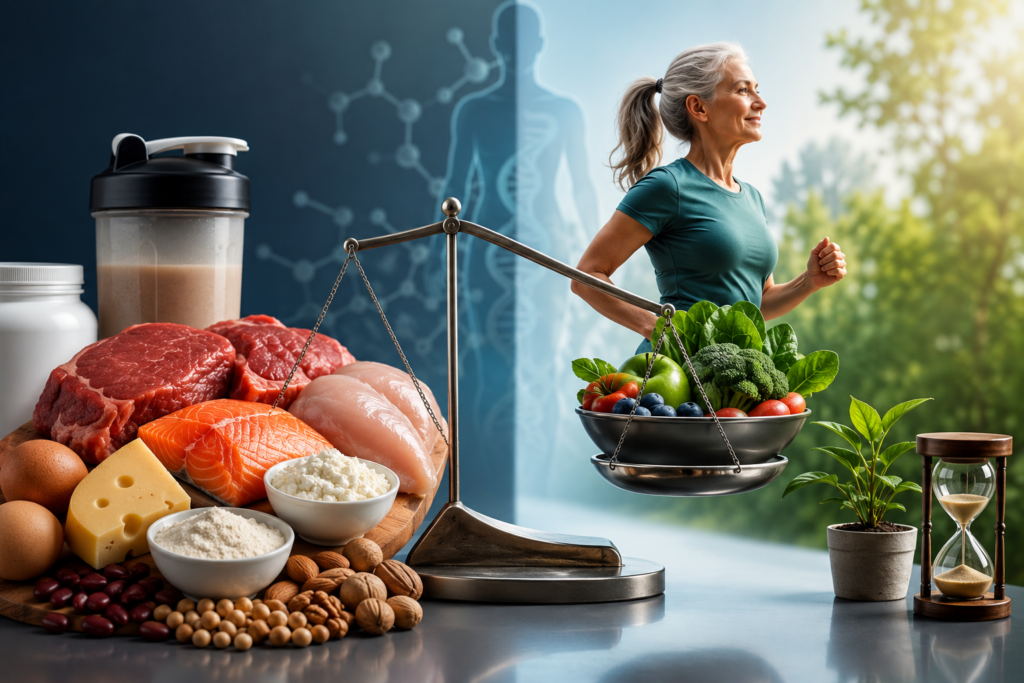
If you work out or pay attention to nutrition, you’ve probably heard that “the more protein, the better.”
But in recent years, a debate has been gaining traction: could excess protein actually hurt longevity?
In this article, we’ll dig into what current science shows on this topic, without exaggeration or alarmism, so you can understand how to balance your protein intake intelligently.
Why This Debate Exists
Protein is essential for practically every function in the body: building muscle, producing hormones, repairing tissue, and much more.
However, some studies — mainly in animal models — have raised the hypothesis that very high protein intake over a lifetime could be linked to biological pathways associated with cellular aging, such as the mTOR and IGF-1 pathways, which are related to cell growth.
It’s important to be clear: this doesn’t mean protein is the “villain.” It means that extreme, prolonged excess, especially in certain contexts, is still being studied cautiously by science.
What the Studies Actually Show
1. Most of the Evidence Comes From Observational Studies
Much of the research linking excess protein to health risks is observational, meaning it shows correlation, not necessarily direct cause.
This means other factors (like overall diet quality, sedentary lifestyle, or the source of the protein consumed) can also influence the results.
2. The Source of Protein Seems to Matter a Lot
Studies indicate that the type of protein consumed may have a different long-term impact on health:
- Plant-based protein tends to be associated with more favorable health profiles in population studies
- Excess processed animal protein (like cured meats) shows up more often linked to health risks
- Lean, unprocessed animal protein (fish, chicken, eggs) tends to show a more neutral or positive profile
In other words, the discussion isn’t just about “quantity” — it’s also about the quality and source of the protein consumed.
3. Context Matters More Than Isolated Numbers
The relationship between protein and longevity also seems to vary depending on factors like:
- Age (older adults tend to benefit from more protein, not less, to prevent muscle loss)
- Physical activity level
- Individual goals (muscle gain, maintenance, weight loss)
- Overall dietary pattern, not just one isolated nutrient
Does This Mean I Should Cut Back on Protein?
Not necessarily. The takeaway isn’t “eat less protein” — it’s about finding balance and prioritizing quality.
Health organizations generally recommend protein ranges adapted to factors like age, activity level, and individual goals — and these ranges should be determined with the help of a nutrition professional, not on your own.
Signs It’s Worth Reassessing Your Protein Intake
A few things worth paying attention to (and discussing with a professional):
- Extremely high, constant use of protein supplements without guidance
- A diet based almost entirely on processed animal protein
- Lack of vegetables, fiber, and healthy fats in your diet
- Protein intake far above what’s needed for your activity level
How to Balance Protein Intelligently
- Prioritize varied sources, including plant-based proteins (legumes, grains, nuts)
- Cut back on processed protein, like cured and ultra-processed meats
- Adjust the amount to your context, not just internet trends
- Pair it with a diet rich in vegetables, fiber, and healthy fats
- Seek professional guidance to determine the right amount for your situation
Conclusion: Balance, Not Extremes
Science is still studying the relationship between protein, longevity, and the biological pathways of aging — and this is a field that’s constantly evolving.
What’s clearer at this point is that balance, variety, and overall diet quality tend to matter more than obsessing over a single nutrient.
Protein isn’t a villain or a magic solution. Like almost everything in nutrition, context is what makes the difference.
Have you ever stopped to think about the quality of the protein sources you eat day to day? Let us know in the comments!
If this helped you look at this topic in a more balanced way, share it with someone who has the same question. 🥦🍗
This content is for informational purposes only, is based on current scientific evidence, and does not replace guidance from a registered dietitian or doctor. The science on this topic is still evolving, and individual recommendations should be made by a qualified professional.
Leave a Reply