
Do you want to move more, strengthen your body, and improve your balance, but feel like traditional exercises seem too intense or risky?
Chair Pilates is one of the safest and most effective ways to start (or get back into) physical activity, especially for people over 60 or beginners looking to strengthen their deep muscles without stressing the joints.
In this article, you’ll learn about 10 chair Pilates exercises, understand the benefits of this practice, and learn how to get started safely.
Why Chair Pilates Is So Well Suited for This
Chair Pilates uses the chair as support, which brings some important advantages:
- Reduces the risk of falls during practice
- Lowers impact on sensitive joints
- Makes it easier for people with limited mobility to participate
- Allows for progressive, safe body strengthening
On top of that, Pilates works directly on your deep muscles — the ones responsible for supporting your spine, improving posture, and giving your body more stability in everyday life.
Benefits of Chair Pilates for Adults Over 60
- Strengthens the core and stabilizing muscles
- Improves balance and motor coordination
- Reduces the risk of falls
- Relieves joint and muscle discomfort
- Improves posture and overall mobility
- Encourages mindful breathing and mental well-being
Before You Start: Essential Precautions
Before starting any exercise practice, especially after 60, it’s essential to:
- Get a medical evaluation, especially if there are any pre-existing conditions
- Seek guidance from a qualified professional (Pilates instructor or physical therapist) to learn proper movement execution
- Use a sturdy chair with no wheels, placed on a stable surface
- Respect your body’s limits, without forcing range of motion or repetitions
The 10 Chair Pilates Exercises
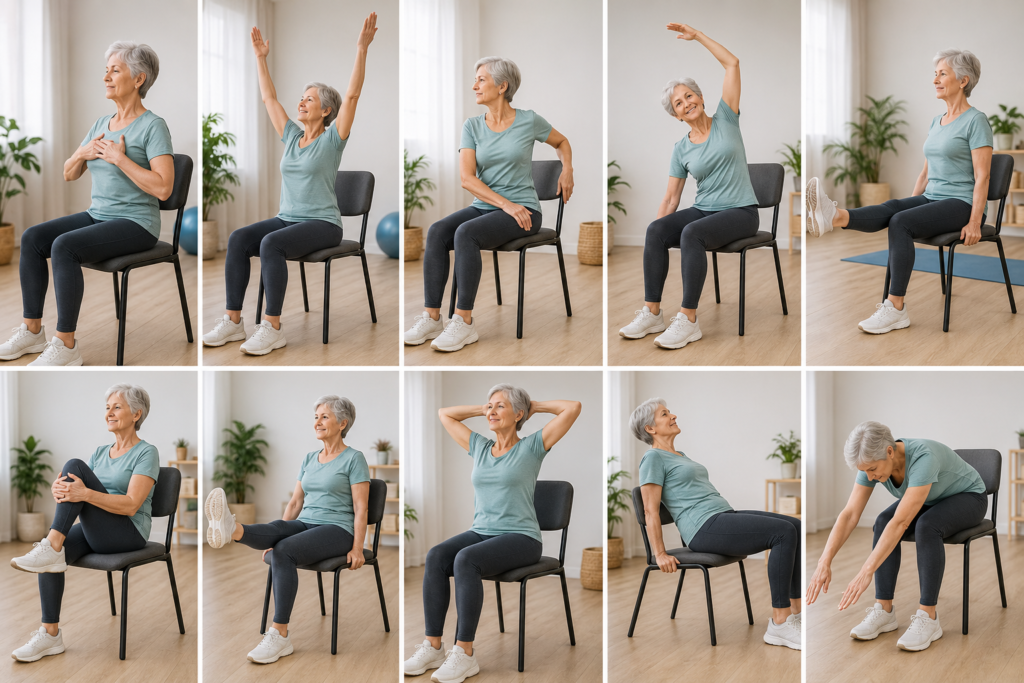
Below is a general overview of exercises commonly used in chair Pilates classes for this age group. Detailed, safe execution should be learned in person from a qualified professional, taking each person’s individual condition into account.
1. Seated Diaphragmatic Breathing
Builds the foundation of Pilates breathing, gently activating the core before starting the movements.
2. Arm Raises Coordinated With Breathing
Strengthens the shoulders and improves chest mobility, always coordinating movement with breath.
3. Seated Marching
Stimulates coordination between the upper and lower body while activating the deep abdominal muscles.
4. Seated Knee Extension
Strengthens the thigh muscles (quadriceps), important for stability when walking and climbing stairs.
5. Supported Trunk Rotation
Works spinal mobility and strengthens the rotator muscles of the trunk, always with support from the chair.
6. Heel Raises (Calf Work)
Improves blood circulation in the legs and strengthens the calf muscles.
7. Seated Side Bend
Helps strengthen the oblique muscles and improve lateral spinal mobility.
8. Arm Raises With Light Resistance
Can be done using just body weight or small, light accessories, strengthening the arms and shoulders.
9. Seated Spinal Extension
Helps improve posture and strengthen the back muscles.
10. Final Seated Stretch
Wraps up the session by promoting muscle relaxation and gradually improving flexibility.
How to Build a Safe Routine
- Frequency: 2 to 3 times a week already brings consistent benefits
- Duration: 20- to 30-minute sessions tend to be enough for beginners
- Progression: only increase intensity with professional guidance
- Consistency: results come from regularity, not from pushing too hard
Signs It’s Time to Stop or Adjust the Exercise
During practice, it’s important to watch for signs like:
- Sharp pain (different from natural muscle effort)
- Dizziness or excessive shortness of breath
- Persistent joint discomfort
If any of these happen, stop the exercise and talk to a healthcare professional.
Conclusion: It’s Never Too Late to Strengthen Your Body
Chair Pilates shows that strengthening your body, improving balance, and taking care of your health doesn’t require complex or high-impact movements.
With proper guidance and consistency, this practice can transform quality of life, independence, and confidence in your own body — at any age.
Do you already practice any form of Pilates, or are you thinking about starting? Let us know in the comments!
If this helped you, share it with someone who’d also like to move more safely. 🪑💪
This content is for informational purposes only and does not replace evaluation and guidance from a qualified doctor, physical therapist, or fitness professional. Always consult a specialist before starting any exercise program, especially after age 60 or with pre-existing health conditions.
Leave a Reply