
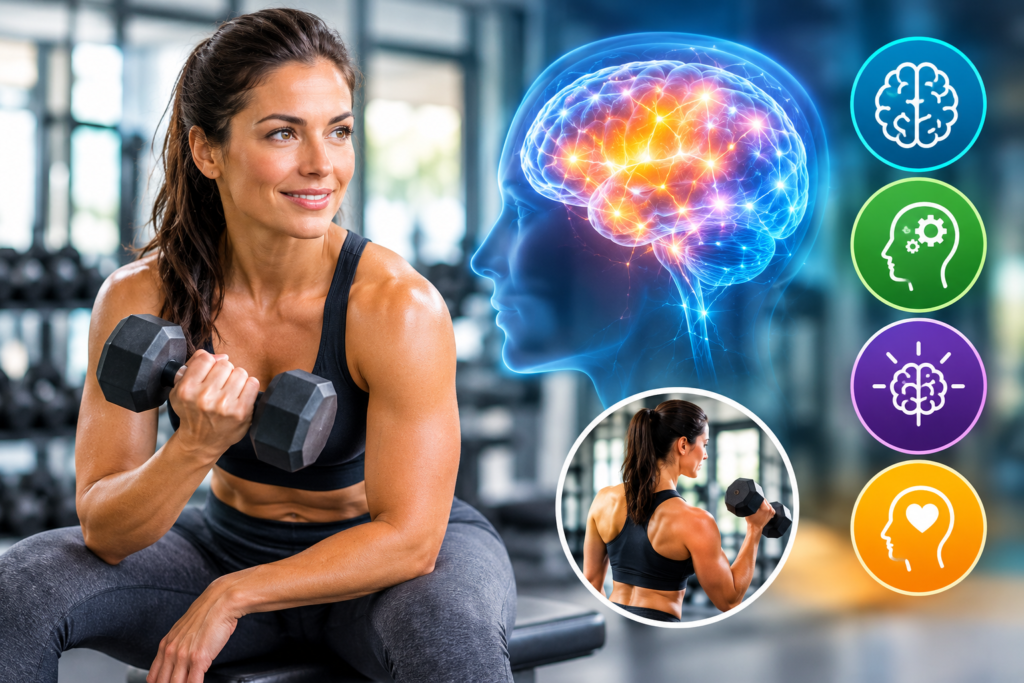
Did you know that lifting weights can be good not just for your muscles, but for your brain too?
A recent study reinforced something exercise science has been observing for a few years now: strength training can improve cognition and protect brain health, especially as we age.
In this article, you’ll learn what this research found, how strength training influences the brain, and why this type of exercise deserves a permanent spot in your routine.
What the Recent Study Found
Research published in the scientific journal GeroScience followed a group of older adults who did strength training for six months.
The results showed that participants who did strength training experienced:
- Improved ability to recall recent events and information (episodic memory)
- Less shrinkage in brain regions associated with Alzheimer’s disease
Meanwhile, the group that didn’t do the training showed signs of decline in those same brain parameters over the study period.
According to the researchers, these findings suggest that strength training may not only improve cognition, but also help slow the progression of age-related brain changes.
Why Strength Training Affects the Brain
It might seem strange that exercises aimed at your muscles would directly influence your brain, but the explanation lies in the communication between these two systems.
1. Release of Neuroprotective Factors
During strength training, muscles release substances like irisin and other myokines, which travel through the bloodstream to the brain and are linked to improved memory and cognitive function.
2. Stimulation of BDNF (Brain-Derived Neurotrophic Factor)
Strength exercise is linked to increased BDNF, a protein that supports the formation of new neural connections, learning, and memory.
3. Improved Insulin Sensitivity
Strength training helps improve glucose control in the body, which also positively impacts brain health, since metabolic changes are linked to cognitive decline.
4. Reduced Chronic Inflammation
Low-grade chronic inflammation is one of the factors associated with accelerated brain aging. Strength training helps lower these inflammatory markers in the body.
Which Exercises Seem to Bring the Most Benefits
Recent studies highlight that exercises involving large leg muscle groups — like squats and step-ups — tend to generate even stronger cognitive responses, possibly because they trigger a broader muscular and hormonal response.
This doesn’t mean other strength exercises aren’t valuable, but it does reinforce the importance of including multi-joint movements in your training routine.
How to Apply This in Practice
You don’t need to become a bodybuilder to benefit from this. Some key points observed in research include:
- Frequency: 2 to 3 strength training sessions per week already show good results
- Duration: sessions of about 40 to 45 minutes are enough
- Focus on large muscle groups: prioritize exercises like squats, lunges, and step-ups
- Long-term consistency: cognitive benefits tend to build up with regular, ongoing practice
Is Strength Training Only for Older Adults?
Not at all. While most of the research focuses on older adults (a population more vulnerable to cognitive decline), the biological mechanisms involved — BDNF release, metabolic improvement, reduced inflammation — benefit the brain at any stage of life.
Building this habit earlier could mean more brain protection down the road.
Conclusion: Training Your Body Is Also Training Your Brain
The connection between muscles and brain is closer than most people realize. Strength training goes far beyond looks or physical strength — it appears to play a real role in protecting cognitive health throughout life.
Adding this type of training to your routine could be one of the most valuable investments you can make, for both your body and your mind.
Do you already train for strength with brain health in mind too? Let us know in the comments!
If this helped you see strength training in a new light, share it with someone who needs to hear this too. 🧠🏋️♀️
This content is for informational purposes only, is based on recent scientific research, and does not replace guidance from a doctor or fitness professional. Always consult a specialist before starting any exercise program.
Leave a Reply