You train hard during the week, keep your diet in check, but also enjoy a beer or a glass of wine on the weekend — and find yourself wondering if that’s sabotaging your results at the gym.
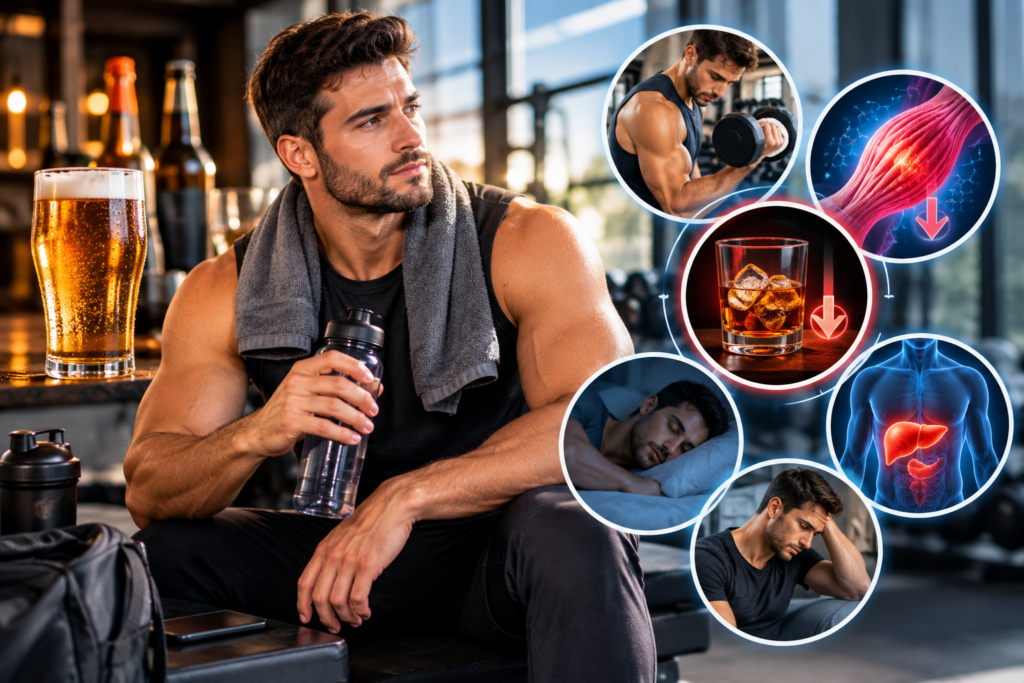
This is a common question for anyone pursuing muscle hypertrophy, and the evidence-based answer is: yes, alcohol can negatively impact your muscle gains, although how much depends on a few factors.
In this article, you’ll learn exactly how alcohol interferes with muscle growth, what science has shown on this topic, and how to find balance without guilt or extremes.
How Alcohol Interferes With Muscle Growth
1. It Reduces Muscle Protein Synthesis
Muscle protein synthesis is the process by which the body rebuilds and strengthens muscle fibers after training. Studies show that alcohol consumption can significantly reduce this process, even when protein intake is adequate.
This means that even if you’re eating right, alcohol can compromise how well your body uses those nutrients for muscle building.
2. It Impairs Muscle Recovery
Muscles repair and grow during rest. Alcohol interferes with sleep quality, especially the deeper stages, which are essential for releasing hormones linked to recovery, like growth hormone (GH).
3. It May Lower Testosterone Levels
Some studies link alcohol consumption, particularly in high amounts, to a temporary drop in testosterone levels — a hormone that plays an important role in muscle building.
4. It Affects Hydration
Alcohol has a diuretic effect, which can contribute to dehydration. This negatively impacts physical performance and muscle recovery.
5. It May Promote Fat Storage
Calories from alcohol have no nutritional value and, in excess, can contribute to a calorie surplus, making it harder to both build lean mass and get more defined.
The Impact Depends on Amount and Frequency
It’s important to point out: studies indicate that alcohol’s impact on muscle growth is directly related to how much and how often it’s consumed.
Excessive, frequent drinking tends to cause much more significant harm than occasional, moderate drinking.
Even so, moderate consumption can still cause some degree of interference with recovery and protein synthesis, especially when consumed close to your workout time.
Is There a “Right Time” to Drink?
If drinking alcohol is part of your social routine, a few things can help reduce its impact on your results:
- Avoid drinking right after your workout, when protein synthesis is most active
- Prioritize hydration before, during, and after drinking
- Keep your protein intake adequate for the day, even on days you drink socially
- Avoid combining intense training with heavy drinking nights, since this significantly compromises recovery
- Pay attention to your own sleep patterns after drinking, and adjust as needed
Does Alcohol Completely Block Muscle Gains?
Not necessarily. Occasional, moderate drinking, within a broader context of consistent training, good nutrition, and adequate sleep, tends to have a limited impact on long-term results.
The problem mainly arises when drinking is frequent, excessive, or combined with other habits that already compromise recovery, like insufficient sleep or poor nutrition.
Finding Balance, Without Extremes
This doesn’t mean you need to completely cut alcohol out of your life to reach your goals. It’s about finding a conscious balance between your social life and your physical goals.
What matters is understanding the real impact of this choice and consciously deciding what makes sense for you.
Conclusion: Information for More Mindful Decisions
Alcohol really can interfere with muscle growth, affecting everything from protein synthesis to sleep quality and hormone levels.
This isn’t about prohibition — it’s about understanding the consequences of your choices and finding a balance that respects both your physical goals and your quality of life.
Do you feel like alcohol has affected your training results? Let us know in the comments!
If this helped you better understand this relationship, share it with someone who has the same question. 🍷💪
This content is for informational purposes only, is based on scientific evidence, and does not replace guidance from a doctor or registered dietitian. If you have concerns about alcohol consumption, please reach out to a qualified healthcare professional.
Leave a Reply