
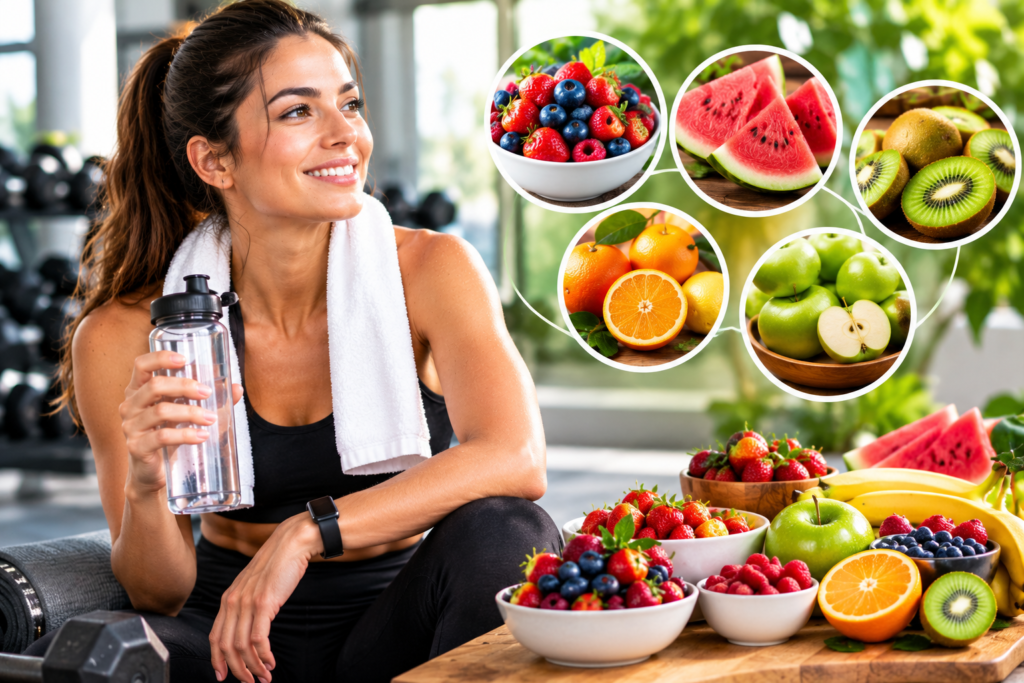
Do you love fruit, but aren’t sure which ones to pick so you don’t throw off your calorie deficit or your training goals?
The good news is that most fruits are naturally low in calories, rich in fiber, vitamins, and water — which makes them allies, not villains, even if you’re keeping an eye on calories.
In this article, you’ll learn about the lowest-calorie fruits for people who work out, understand why they’re so important in the diet of anyone who exercises, and how to include them strategically in your routine.
Why Fruit Matters for People Who Work Out
Before we get to the list, it’s worth understanding why cutting fruit out of your diet (a common mistake among people trying to lose weight) isn’t a good strategy.
Fruits offer:
- Essential vitamins and minerals for muscle recovery
- Fiber, which supports satiety and digestion
- Antioxidants, which help fight the inflammation caused by exercise
- Natural carbohydrates, an important energy source for training
In other words, even on a calorie-controlled diet, fruit remains a valuable ally.
The Lowest-Calorie Fruits (Approximate Values per 100g)
1. Watermelon — about 30 calories
Besides being one of the lowest-calorie fruits, watermelon has a high water content, which helps with hydration and satiety.
2. Strawberries — about 32 calories
Rich in vitamin C and antioxidants, strawberries are a great option for snacks or light desserts.
3. Cantaloupe — about 34 calories
Like watermelon, cantaloupe has a high water content and is a refreshing, low-calorie option.
4. Papaya — about 43 calories
Besides being low in calories, papaya supports digestion thanks to its natural digestive enzymes.
5. Peaches — about 39 calories
A good source of fiber and vitamins, ideal for breakfast or snacks.
6. Oranges — about 47 calories
Rich in vitamin C, oranges also support hydration, since they have a high water content.
7. Pineapple — about 50 calories
Contains bromelain, an enzyme associated with anti-inflammatory properties, which can be helpful for post-workout recovery.
8. Kiwi — about 61 calories
Even with a slightly higher calorie count, kiwi is extremely rich in vitamin C and fiber, making it well worth including in your diet.
How to Include Fruit Strategically Around Your Training
Before Training
Fruits with fast-absorbing carbs, like watermelon or pineapple, can provide quick energy for your workout.
After Training
Antioxidant-rich fruits, like strawberries and kiwi, can support muscle recovery and help reduce exercise-induced inflammation.
Throughout the Day
Including a variety of fruits as snacks between meals helps maintain satiety and provides essential nutrients without a big calorie impact.
The Mistake of Demonizing Fruit
A common mistake, especially among people trying to lose weight, is cutting or drastically reducing fruit intake out of fear of the natural sugar it contains.
This is usually a misconception: the sugar in fruit comes packaged with fiber, vitamins, and water, which creates a very different metabolic impact compared to added sugars in processed foods.
Lowest-Calorie Fruits vs. Higher-Calorie Fruits: Should I Avoid the Others?
No. Fruits like bananas, mangoes, and grapes have a somewhat higher calorie count, but they’re still excellent sources of nutrients and energy, especially for people training with higher intensity or aiming to build muscle mass.
Choosing which fruit to eat should be based on your individual goals, not just an isolated calorie number.
Conclusion: Fruit Is an Ally, Not a Villain
Including fruit in your diet, even during a weight loss or calorie-controlled phase, is a smart, healthy strategy.
The lowest-calorie fruits are great options for anyone looking to balance flavor, nutrition, and calorie control, without giving up the pleasure of eating well.
Which fruit do you enjoy including in your routine the most? Let us know in the comments!
If this helped you rethink your relationship with fruit, share it with someone who has the same question. 🍓🍉
This content is for informational purposes only and does not replace guidance from a registered dietitian. Always consult a professional for an individualized nutrition plan.
Leave a Reply