
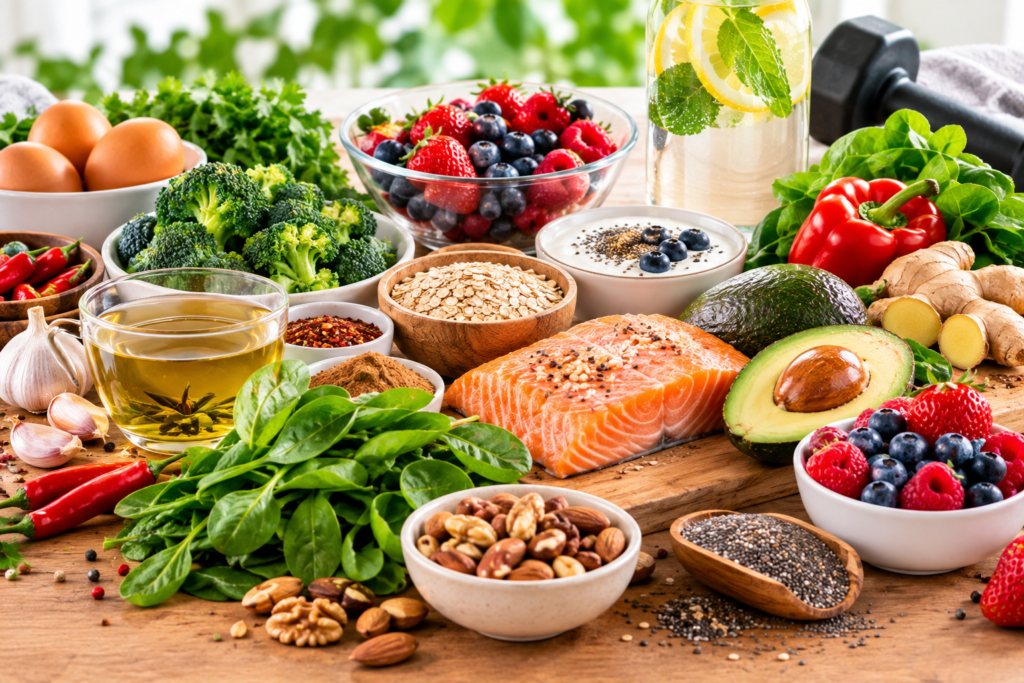
You’ve probably heard about chili peppers, ginger, and green tea as metabolism allies — but feel like you’ve exhausted the “classic” options and want more variety in your routine?
The good news is there are plenty of other foods that boost your metabolism, with the same potential to optimize your body’s calorie burn, just less talked about.
In this article, you’ll discover 10 alternative thermogenic foods to add to your routine, understand why they work, and learn how to get the most out of each one.
Why Diversify Your Thermogenic Foods
Eating the same foods over and over can make your diet feel monotonous and, over time, reduce long-term adherence.
Diversifying your sources of thermogenic nutrients gives you:
- More variety in flavors and recipes
- Different, complementary nutritional profiles
- Better long-term adherence to healthy eating
Let’s get into the list.
1. Garlic
Garlic contains allicin, a compound linked to a mild thermogenic effect and anti-inflammatory properties.
How to add it: include it in sautés, sauces, and everyday seasoning.
2. Turmeric
Curcumin, turmeric’s active compound, has been linked in studies to reduced inflammation and support for fat metabolism.
Practical tip: pair it with black pepper, which boosts its absorption in the body.
3. Greek Yogurt
Rich in protein and probiotics, Greek yogurt requires more energy to digest (the thermic effect of food) and also supports gut health, a factor that also influences metabolism.
Suggested use: breakfast or a snack, paired with fruit.
4. Nuts and Almonds
A source of protein, healthy fats, and magnesium, nuts require extra energy to digest and help you stay full longer.
Heads up: since they’re calorie-dense, portion control matters — a small handful is enough.
5. Quinoa
Unlike most grains, quinoa is a complete protein, meaning it contains all the essential amino acids. That translates to a higher energy cost during digestion compared to simple carbs.
How to add it: swap white rice for quinoa in a few meals during the week.
6. Broccoli
Cruciferous vegetables like broccoli are rich in fiber and calcium, two factors linked to metabolic support and lasting satiety.
Practical tip: include it at lunch or dinner, steamed or sautéed with olive oil.
7. Apples With the Skin On
Pectin, a soluble fiber found mainly in apple skin, supports satiety and a slower, more efficient digestive process.
Suggestion: eat the whole fruit, with the skin well washed, instead of strained juices.
8. Spinach
Rich in iron, spinach is essential for oxygen transport in the body — a process directly linked to how efficiently your metabolism runs.
How to add it: include it in salads, green juices, or sautés.
9. Coconut Water
Besides being hydrating, coconut water is rich in electrolytes, which help maintain the body’s fluid balance — an important factor for proper metabolic function, especially on training days.
Tip: a great natural option for replenishing fluids after exercise.
10. Chicken Breast (or Other Lean Proteins)
Just like eggs, lean protein sources like chicken breast require more energy to digest, thanks to the thermic effect of food mentioned earlier.
Suggested use: include it in at least two main meals a day.
How to Apply These Foods in Practice
- Swap, don’t just add: replace less nutritious options with these thermogenic alternatives
- Combine different groups: pair proteins, fiber, and thermogenic seasonings in your meals
- Vary throughout the week: this avoids monotony and broadens the range of nutrients you consume
- Stay consistent: the effect of these foods builds up over time, it’s not a one-time thing
Do Thermogenic Foods Replace Other Healthy Habits?
No. Just like with the first group of foods we covered earlier, these foods work as complementary support, not a standalone solution.
They need to go hand in hand with:
- An overall balanced diet
- Regular physical activity
- Quality sleep
- Proper hydration
Conclusion: More Variety, More Sustainability
Diversifying the thermogenic foods in your routine is a smart way to keep healthy eating interesting and sustainable long-term.
You don’t need to keep eating the same “classic” foods to support your metabolism — the options are much broader than they seem.
Which of these foods do you already include in your routine? Let us know in the comments!
If this helped you expand your options, share it with someone else looking to add more variety to their diet. 🥦🧄
This content is for informational purposes only and does not replace guidance from a registered dietitian. Always consult a professional for an individualized nutrition plan.
Leave a Reply