
Did you get results back from a routine exam and come across the word “steatosis” on the report, without quite understanding what it means?
This is a more common situation than it seems. Fatty liver, technically called hepatic steatosis, tends to develop silently, without obvious symptoms — and the good news is that diet plays a key role in reversing this condition.
In this article, you’ll understand what fatty liver is, which foods help with this process, and which ones should be avoided. Let’s get straight to the point.
What Fatty Liver Really Is
Fatty liver, or hepatic steatosis, is a condition caused by an excessive buildup of fat in the liver’s cells. Having a small amount of fat in the organ is normal, but excess fat can trigger an inflammatory process that, if left untreated, can progress to more serious conditions, such as steatohepatitis, fibrosis, and even cirrhosis.
The condition is usually related to factors like obesity, insulin resistance, diets high in sugar and fat, a sedentary lifestyle, and, in some cases, prolonged use of certain medications.
Important: this content is for educational purposes. Diagnosis and management of fatty liver should always be done by a doctor and, preferably, also by a nutritionist.
The Good News: The Liver Can Recover
Unlike other chronic conditions, the liver has a real ability to recover when the diet is properly adjusted. This makes diet one of the most effective tools in treating hepatic steatosis.
Generally speaking, losing between 7% and 10% of body weight is cited as a goal capable of reversing the condition in most cases, always with proper professional guidance.
The Most Recommended Eating Pattern
International hepatology and endocrinology guidelines point to the Mediterranean diet as the preferred eating pattern for reducing fatty liver.
This pattern is based on:
- Olive oil
- Fish rich in omega-3
- Vegetables and legumes
- Whole grains
- Legumes
These foods help reduce inflammation and directly contribute to reducing liver fat.
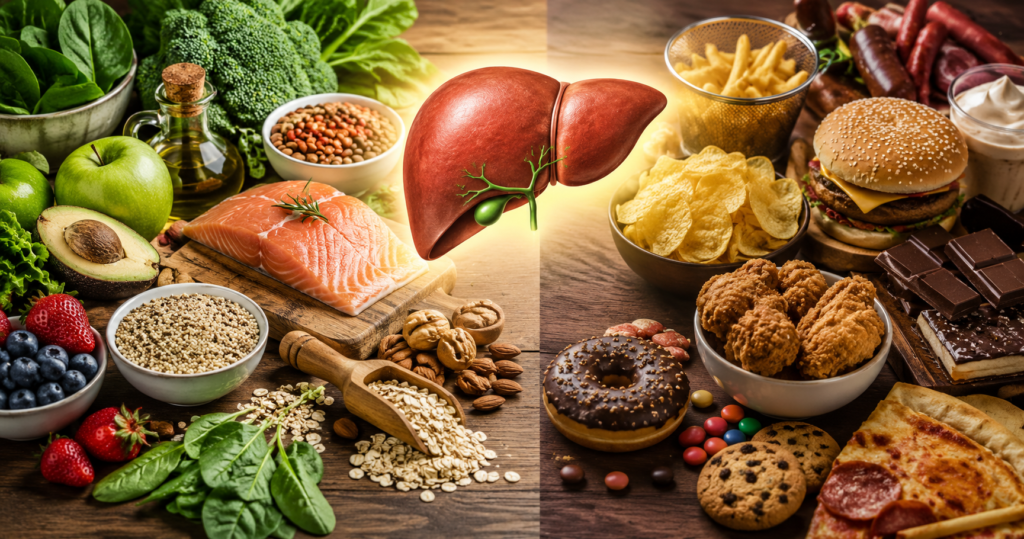
What to Eat: Foods That Help
Now let’s go through the foods that are typically recommended for those looking to take care of their liver health.
1. Vegetables and Greens
Rich in fiber and antioxidants, they help with weight control and reducing inflammation.
2. Fish Rich in Omega-3
Salmon, sardines, and tuna are good sources of fats that help reduce inflammatory processes in the liver.
3. Whole Grains
Brown rice, oats, and quinoa provide fiber and help with blood sugar control, an important factor in this process.
4. Olive Oil
A source of monounsaturated fat, it’s one of the pillars of the Mediterranean diet and is directly associated with reducing liver fat.
5. Fruits, in Moderation
They provide important fiber and nutrients. Lower-sugar fruits tend to be more recommended, but moderate consumption of fruit in general is generally welcome.
6. Legumes
Beans, lentils, and chickpeas are good sources of plant-based protein and fiber.
Practical tip: generally speaking, practically all foods can be part of the diet, as long as they’re consumed in moderation. What matters most is the consistency of a balanced diet most of the time.
What to Avoid: Foods That Deserve Attention
Just as some foods help, others deserve extra attention because of their direct impact on liver health.
1. Refined Sugars and Industrial Fructose
Soft drinks, sweets, and ultra-processed foods high in sugar are identified as one of the main factors that overload liver metabolism, driving fat storage in the organ.
2. Refined Carbohydrates
White rice, bread, and refined pasta should be eaten in moderation, prioritizing whole-grain versions whenever possible.
3. Saturated and Trans Fats
Fried foods, processed meats, fatty cuts of meat, and industrialized foods high in saturated fat can worsen the liver’s inflammatory state.
4. Alcohol
Alcohol consumption puts even more strain on the liver, making it one of the most important factors to control or avoid in this process.
5. Ultra-Processed Foods in General
Processed meats, canned goods, and industrialized products tend to be high in sugar, sodium, and low-quality fats, hindering the liver’s recovery process.
Note: there is no tea, supplement, or home remedy with scientific evidence of reducing fatty liver. Some concentrated extracts, like green tea extract, have actually been associated with cases of liver injury. Effective treatment remains dietary change and weight loss, always with professional guidance.
How to Structure This Change in Practice
We know adjusting your diet takes planning and consistency. Some strategies that help:
- Prioritize natural, minimally processed foods for most meals.
- Gradually reduce sugar and ultra-processed food intake, rather than making abrupt cuts.
- Include regular physical activity, since it enhances the results of dietary changes.
- Be patient with the process — reversing steatosis tends to be gradual.
- Avoid extreme interpretations, always seeking professional guidance to adjust the diet to your specific case.
Is It Worth Seeking Professional Guidance?
As the experts consulted emphasize, effective treatment of fatty liver requires an individualized approach, taking into account your health history, exam results, and routine.
If you’ve received this diagnosis, it’s well worth relying on guidance from a doctor and a nutritionist to build a dietary strategy that’s safe and truly effective for your case.
Conclusion: Diet Is Your Greatest Ally
Fatty liver is a common condition, but one that responds very well to dietary changes. With proper guidance, consistency, and patience, it’s possible to reverse the condition in most cases.
Start today by adjusting one of the points covered in your eating routine, and seek professional guidance for a more complete plan.
Enjoyed this content? Share it with someone who also needs to learn more about liver health, and keep following the blog for more trustworthy content on nutrition and health.
Leave a Reply