
Have you ever felt that “rusty” body sensation when you wake up? Or that annoying back pain after a full day sitting down?
If you answered yes, you’re not alone. And the good news is: there’s a solution.
In this article, we’ll talk about stretching and mobility, two essential pillars for anyone who wants to move better, feel less pain, and live with more quality of life. Let’s get straight to the point, no fluff.
What is Mobility (and Why It’s Different from Flexibility)
Many people confuse these two terms, but they’re not the same thing.
- Flexibility is the ability of a muscle to stretch.
- Mobility is the ability of a joint to move freely, with control, through its full range of motion.
In other words: you can even be flexible, but if you don’t have mobility, your body won’t be able to use that flexibility functionally in everyday life.
That’s why training both together makes all the difference.
Why Stretching and Working on Mobility is So Important
Here are some practical reasons to take this seriously:
- Reduces pain and muscle tension built up from everyday stress.
- Improves posture, especially for those who spend hours sitting.
- Prevents injuries during physical activities and even in simple tasks.
- Increases range of motion, making everyday actions easier.
- Contributes to mental well-being, since stretching helps relax the nervous system.
Notice how this goes far beyond “touching your toes”? Mobility is about living better.
Signs That Your Body Needs More Mobility
Before moving on to the exercises, it’s worth asking yourself: could this be about me?
Some common signs of low mobility include:
- Difficulty squatting all the way down
- Pain or discomfort when rotating the torso
- Locked shoulders when raising your arms
- Feeling of stiffness upon waking up
- Frequent lower back pain
If you identified with at least one of these points, it’s time to take action.
Simple Exercises to Improve Flexibility and Body Movement
Now let’s get to the practical part. You don’t need expensive equipment or hours of free time in your schedule — just consistency.
1. Hip Mobility
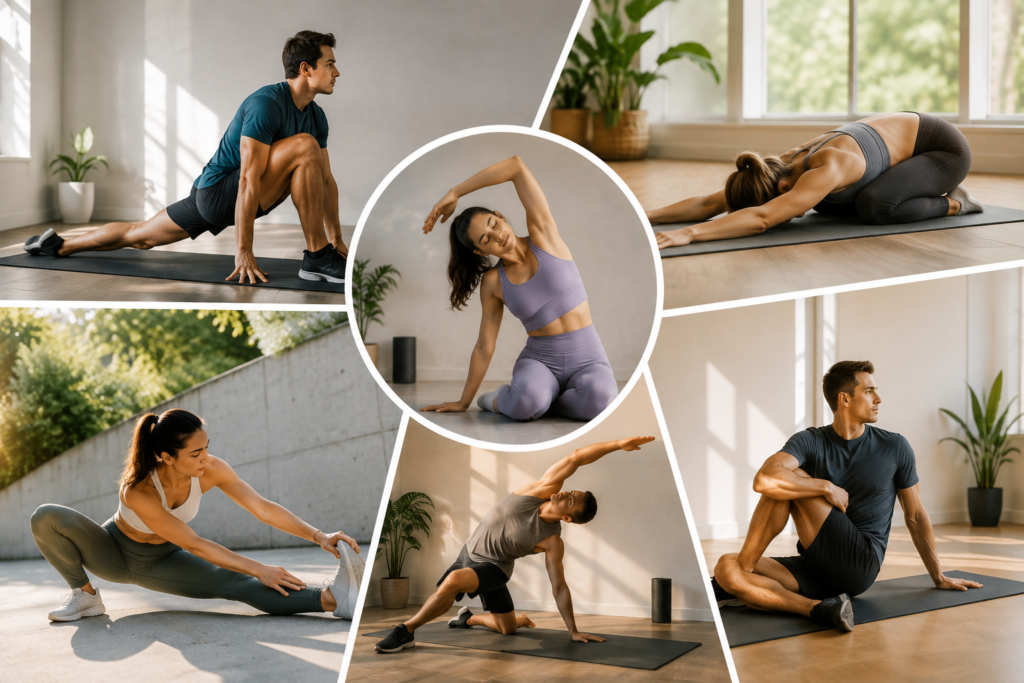
The hip is one of the joints most affected by a sedentary lifestyle. A simple exercise is the 90/90, where you sit on the floor with your legs forming 90-degree angles and alternate rotation between sides.
2. Shoulder Mobility
Great for those who work long hours at the computer. Circular arm movements, combined with chest stretches, help unlock this area.
3. Hamstring Stretch
These muscles, located at the back of the thigh, tend to get tight in people who sit for long periods. A gradual stretch, without forcing, already brings noticeable relief.
4. Thoracic Rotation
Ideal for improving posture and reducing back pain. In a four-point kneeling position, rotate your torso by lifting one arm up while keeping the other on the ground.
5. Deep Squat
An excellent test — and exercise — for overall body mobility. Try to go down as comfortably as possible, keeping your feet planted on the ground.
Practical tip: you don’t need to do all the exercises every day. The secret lies in consistency, not intensity.
How to Build the Habit of Stretching (Without Quitting After 3 Days)
We know starting is easy. Sticking with it is the hard part.
Some strategies that work:
- Pair stretching with an existing habit (e.g., right after brushing your teeth).
- Start with just 5 minutes a day.
- Use phone reminders until it becomes routine.
- Track your progress — this keeps you motivated to continue.
Small, consistent steps bring much more lasting results than isolated big efforts.
Is It Worth Having a Structured Guide?
Following random exercises online can help at first. But for those who want consistent results and want to avoid execution mistakes, relying on a structured method, with proper progression and clear guidance, tends to speed up results significantly.
If you’re looking to progress in a more organized way, without relying on trial and error, it’s worth considering a guided program made specifically for your level and goal.
Conclusion: Your Body Deserves This Care
Stretching and mobility aren’t a luxury — they’re a necessity for anyone who wants to move freely, without pain, for many years to come.
Start today, even if it’s just a few minutes. Your body thanks every small movement.
Enjoyed this content? Share it with someone who also needs to take better care of their own body, and keep following the blog for more practical tips on health and movement.
Leave a Reply