
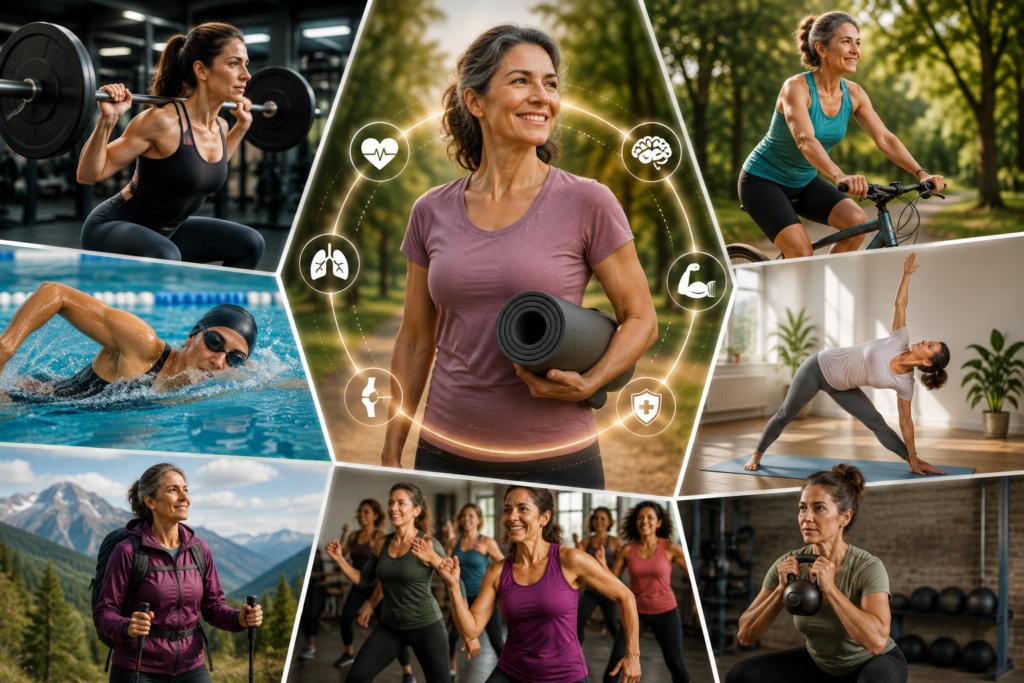
Do you always do the same type of exercise, the same way, for months (or even years)?
If the answer is yes, you might be missing out on one of the simplest and most effective secrets to a longer, healthier life: exercise variety.
In this article, you’ll learn why combining different types of physical activity can be more beneficial than repeating the same workout over and over, and how to apply this to your routine without complicating things.
The Problem With Always Doing the Same Exercise
Repeating the same workout every day might feel convenient, but it comes with some important limitations:
- Your body adapts to the stimulus and stops progressing
- Only certain muscle groups get worked
- It increases the risk of injury from repetitive movement
- Other physical abilities (balance, flexibility, coordination) get left behind
This is known as a training plateau — when your body no longer responds the same way to a repeated stimulus.
Why Exercise Variety Is Linked to Longevity
Living longer and better doesn’t depend on strength or endurance alone. It depends on a combination of physical abilities working together.
1. It Works Different Systems in Your Body
Each type of exercise stimulates the body in a different way:
- Aerobic exercise (walking, running, cycling) strengthens the cardiovascular system
- Strength training preserves muscle mass and bone density
- Mobility exercises keep your joints healthy
- Balance activities reduce the risk of falls, especially as you get older
Combining these stimuli creates a much more complete physical foundation than focusing on just one type of training.
2. It Reduces the Risk of Injury
When you vary your movements, you avoid repetitive strain on the same joints and muscles, which significantly lowers your long-term injury risk.
3. It Keeps Motivation High
One of the biggest reasons people quit exercising is boredom. Varying your workouts helps keep things interesting and enjoyable — both essential for staying consistent over the years.
4. It Preserves Functionality Over Time
Strength, balance, flexibility, and cardiovascular endurance are abilities that directly impact quality of life later in life.
People who keep these abilities trained tend to maintain more independence and mobility as they age.
Which Types of Exercise to Combine
You don’t need to become an athlete in multiple sports. The goal is to include varied stimuli throughout the week.
- Aerobic exercise: walking, light running, cycling, swimming
- Strength training: weightlifting, bodyweight exercises
- Mobility and flexibility: stretching, yoga, pilates
- Balance and coordination: functional training, dancing, proprioceptive exercises
How to Build a Varied Routine (Without Overcomplicating It)
You don’t need to do every type of exercise every single day. The secret is spreading them out across the week.
Simple example of a weekly split:
- 2 days of strength training
- 2 days of aerobic exercise
- 1 day of mobility or stretching
- 1 day of light activity or balance work
- 1 rest day
This is just one model. The best approach is adjusting it based on your fitness level and goals.
The Mistake of Focusing on Just One Type of Exercise
A lot of people focus exclusively on one type of training — usually cardio or strength training — thinking that’s enough for a long, healthy life.
In practice, neglecting other physical abilities (like mobility and balance) can hurt quality of life down the road, even for someone with great cardiovascular fitness or muscle strength.
Conclusion: Diversity Is the Real Secret to Longevity
There’s no single “miracle” exercise. The real key to a longer, more functional life lies in combining different types of movement throughout your life.
Small changes in your training routine can make a huge difference in your health and quality of life over the coming decades.
Do you usually vary your workouts, or do you always do the same type of exercise? Let us know in the comments!
If this helped you rethink your training routine, share it with someone who needs to hear this too. 🏃♀️💪🧘
This content is for informational purposes only and does not replace guidance from a doctor or fitness professional. Always consult a specialist before starting or changing your exercise program.
Leave a Reply