
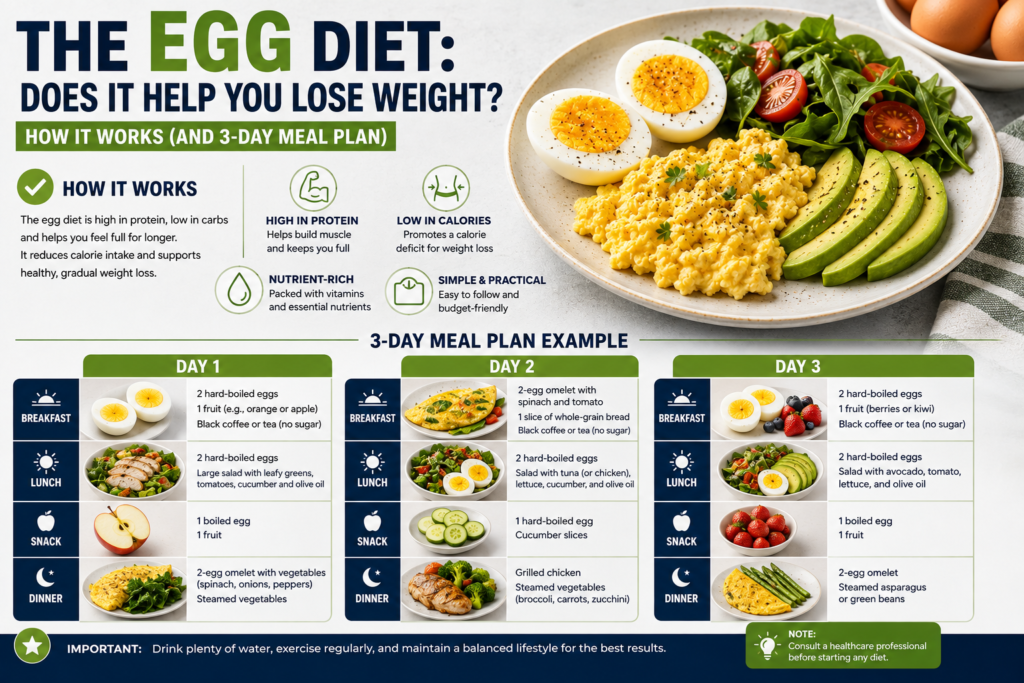
Have you seen the egg diet circulating on social media, promising fast results on the scale?
This trend has picked up steam again recently, fueled by reports of rapid weight loss. But does it actually work — and, more importantly, is it safe for your health?
In this article, you’ll learn how the egg diet works, what science and experts say about its effectiveness, the risks involved, and a sample meal plan, for informational purposes only. Let’s go through this with clear information and no exaggerated promises.
What the Egg Diet Really Is
The egg diet’s proposal is simple: base your meals mainly around eggs, combined with low-carb vegetables, a few low-glycemic-index fruits, and low-fat cheeses, while heavily restricting carbohydrates like rice, bread, potatoes, and legumes.
The most common promise, associated with the method’s creator, is weight loss of up to 5.5 kg (about 12 lbs) in one week. However, there is no scientific evidence supporting that specific result.
Important: this content is for informational purposes and is not intended to recommend or encourage restrictive diets without professional guidance.
Why the Scale Drops So Fast at First
According to nutritionist Patrícia Mirisola, a specialist in Precision Nutrition, the rapid weight loss seen in the first few days has a specific metabolic explanation — and it isn’t related to some special property of eggs.
According to the specialist, the sharp reduction in calories and carbohydrates makes the body quickly respond with fluid loss and the depletion of energy reserves stored in the muscles (glycogen), which creates the sensation of rapid weight loss.
She emphasizes: “It’s an acute metabolic response, not a sign of sustainable fat reduction.”
In other words: the initial result is largely water loss — not necessarily fat loss.
What Science Says About the Risks
Since the egg diet is highly restrictive, it raises several concerns from a nutritional standpoint:
1. Low Nutritional Variety
Grains, legumes, and root vegetables — all excluded from the plan — are important sources of fiber, vitamins, and minerals. Their prolonged absence can lead to nutritional deficiencies.
2. Risks Associated with Excessive Egg Consumption
Studies indicate that high egg consumption (more than one per day, on a regular basis) may be associated with an increased risk of developing type 2 diabetes, in addition to impacting cholesterol levels in predisposed individuals.
3. Excessive Calorie Restriction
A very sharp reduction in calories can cause fatigue, weakened immunity, reduced bone density, and menstrual cycle changes, especially when the diet is followed for extended periods.
Note: people predisposed to diabetes or with high cholesterol should be especially cautious with diets based on high egg consumption, and should seek medical guidance before making any significant dietary changes.
Does the Egg Diet Really Cause Weight Loss?
According to experts consulted by health outlets, weight loss can indeed happen — but it’s related to the overall calorie deficit created by the dietary restriction, not to some exclusive property of eggs themselves.
In other words: any diet with a significant calorie reduction tends to produce short-term weight loss. The challenge lies in the sustainability and safety of that loss over time.
Sample Meal Plan (For Informational Purposes Only)
The table below shows an example of how this type of diet is typically structured, for illustrative and informational purposes only — not as a recommendation to follow without professional guidance.
| Meal | Day 1 | Day 2 | Day 3 |
|---|---|---|---|
| Breakfast | 2 boiled eggs + tomato | 2 scrambled eggs + spinach | 2 boiled eggs + 1/2 avocado |
| Morning snack | 1 low-glycemic fruit (strawberries or pear) | A handful of nuts | 1 low-glycemic fruit |
| Lunch | Egg + green salad with olive oil | Egg + grilled vegetables | Egg + colorful salad with olive oil |
| Afternoon snack | Low-fat cheese | Low-glycemic fruit | Low-fat cheese |
| Dinner | Egg + cooked vegetables | Egg + green salad | Egg + steamed vegetables |
Important: this meal plan is just a generic, illustrative example, without specified quantities or calories, since every body has different nutritional needs. It should not be followed without guidance from a nutritionist.
Why Professional Guidance Is Essential
As several experts point out, named diets with strict restrictions — like the egg diet — require careful nutritional guidance, especially because:
- Every person has different calorie and nutritional needs.
- Very strict restrictions tend to be unsustainable long-term.
- The so-called “yo-yo effect” (rapidly losing and regaining weight) is common after highly restrictive diets.
- Specific health conditions, like a predisposition to diabetes, require individualized care.
What to Do After a Restrictive Diet
If the diet is followed for a short period, experts recommend returning to a varied diet right after, prioritizing:
- Fruits, vegetables, and greens
- Legumes and whole grains
- Lean proteins
- Regular physical activity, to help maintain weight
Healthy, sustainable weight loss tends to be gradual — around 0.5 kg to 1 kg (roughly 1 to 2 lbs) per week, which helps avoid the rebound effect.
What to Consider Before Following Any Restrictive Diet
Before jumping into any trendy diet, it’s worth reflecting on:
- Is the promised result backed by real scientific evidence?
- Is the diet sustainable long-term, or just a temporary fix?
- Is there professional guidance involved?
- Is the focus on health, or just on fast results on the scale?
Is It Worth Seeking Professional Guidance?
As the experts consulted emphasize, the safest way to lose weight is through an individualized eating plan, built with support from a nutritionist, who takes into account your health history, routine, and specific goals.
If you’re looking to lose weight in a healthy, lasting way, it’s much more worthwhile to invest in professional guidance than to follow restrictive diets on your own.
Conclusion: Fast Results Aren’t the Same as Healthy Results
The egg diet may indeed produce a quick drop on the scale, but that initial loss is largely water — not necessarily body fat.
For real, lasting results, the safest path remains a balanced, varied diet guided by a professional.
Enjoyed this content? Share it with someone who also has questions about trendy diets, and keep following the blog for more trustworthy content on nutrition and health.
Leave a Reply