
Do you train hard, but feel like your muscle mass gains aren’t showing up the way they should?
If so, the problem might not be your workout, but your diet. After all, building muscle depends just as much on the exercise stimulus as on the nutrients you give your body to rebuild that tissue.
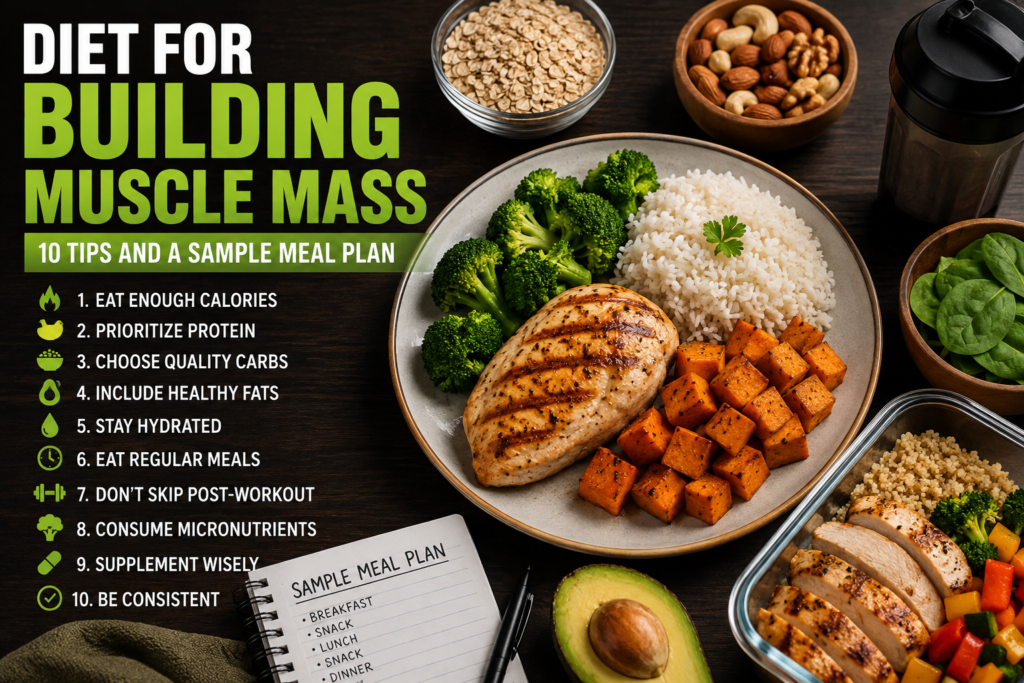
In this article, you’ll find 10 practical tips for structuring a diet focused on muscle mass gain, along with a sample meal plan to help you visualize how to apply these guidelines day to day. Let’s get straight to the point.
Why Nutrition Matters So Much for Muscle Gain
Strength training creates small tears in muscle fibers. It’s during rest, with the right nutrients available, that the body rebuilds that tissue — making it stronger and larger.
Without proper nutrition, even the most intense training may not produce the results you’re expecting.
Important: this content is for educational purposes. Nutritional needs vary from person to person. For a personalized eating plan, it’s best to consult a nutritionist.
10 Tips for Structuring Your Muscle-Gain Diet
1. Get Enough Protein
Protein is essential for muscle rebuilding. Widely used references suggest between 1.6g and 2g of protein per kg of body weight for those seeking muscle gain, but the ideal amount should be adjusted with professional guidance.
2. Don’t Neglect Carbohydrates
Carbohydrates are the main energy source for workouts, and they also help with muscle recovery. Cutting carbs excessively can hurt both performance and results.
3. Include Healthy Fats in Your Diet
Quality fats, like those found in avocado, olive oil, and nuts, play a role in hormone production, including hormones related to muscle growth.
4. Eat Regular Meals Throughout the Day
Spreading meals out evenly helps maintain a steady supply of nutrients, supporting muscle recovery and growth.
5. Prioritize Post-Workout Nutrition
After training, the body is more receptive to nutrient absorption. A meal with protein and carbs during this window supports muscle recovery.
6. Drink Enough Water
Hydration directly impacts workout performance and muscle recovery processes.
7. Get Good Sleep
Sleep is when much of muscle recovery and growth happens. Neglecting sleep can hold back results, even with a proper diet.
8. Avoid Overdoing Ultra-Processed Foods
Even though muscle gain requires adequate calorie intake, that doesn’t mean eating just anything. Prioritize natural foods, which offer more nutrients per calorie consumed.
9. Be Consistent
Muscle mass gains are cumulative and take time. Staying consistent with your diet matters more than chasing quick fixes.
10. Adjust Your Diet Based on Results
Tracking your progress helps you identify whether your diet adjustments are producing the expected results, allowing for changes along the way.
Practical tip: you don’t need to apply all these changes at once. Start with the points that make the most sense for your current routine.
Sample Meal Plan for Muscle Gain
This is just a general example, meant to serve as an initial reference. It’s always best to adjust portions and food choices based on your individual needs, with support from a nutritionist.
Breakfast
- Scrambled eggs
- Whole grain bread
- Fruit (banana or papaya)
Morning Snack
- Plain yogurt with oats
- Nuts
Lunch
- Brown rice
- Beans
- Grilled chicken breast
- Green salad with olive oil
Afternoon Snack (Pre-Workout)
- Fruit with peanut butter
- Or a banana and milk smoothie
Post-Workout
- Protein source (chicken, egg, or whey protein)
- Carb source (sweet potato, rice, or fruit)
Dinner
- Lean protein (fish, meat, or chicken)
- Mixed vegetables
- A complex carbohydrate source
Important: portions and macronutrient distribution vary based on each person’s weight, goals, and activity level. This meal plan is for illustration only.
How to Make This Diet Sustainable Day to Day
We know adjusting your diet takes planning and consistency. Some strategies that help:
- Plan meals ahead of time, avoiding last-minute decisions.
- Prep meals or portions in advance to make daily life easier.
- Adjust your diet gradually, without trying to change everything at once.
- Remember: consistent results come from consistent habits over time.
Is It Worth Seeking More Structured Guidance?
Applying these general tips is already a great start. But for those seeking more consistent results aligned with their specific goals, relying on structured, trustworthy guidance, alongside support from a nutritionist, can make this process much easier.
If you’re looking to build muscle mass in a more organized, efficient way, it’s worth considering guided support or material made specifically for your stage and goal.
Conclusion: Training and Nutrition Go Hand in Hand
Building muscle mass doesn’t depend only on effort at the gym — nutrition is an essential part of this process.
Start today by adjusting one of the points covered in your eating routine. Your body thanks every conscious choice.
Enjoyed this content? Share it with someone who’s also working on building muscle mass, and keep following the blog for more practical content on nutrition, training, and health.
Leave a Reply