
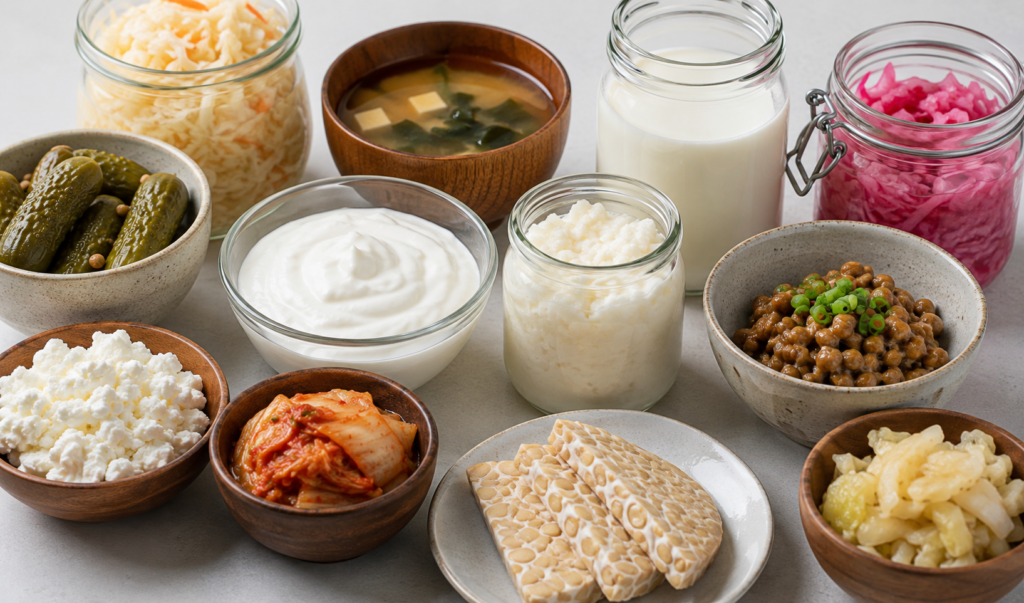
Did you know that much of your immune and digestive health starts inside your own gut?
The secret lies in the gut microbiota — the community of bacteria living in your digestive system. And one of the simplest ways to take care of it is through diet, by including probiotic foods in your routine.
In this article, you’ll learn about 10 foods rich in probiotics, their main benefits, and how to include them in your daily life. Let’s get straight to the point.
What Probiotics Really Are
Probiotics are live microorganisms that, when consumed in adequate amounts, bring real health benefits — especially for balancing the gut microbiota.
They work by helping maintain the balance between good and harmful bacteria in the gut, contributing to:
- Improved digestion.
- A stronger immune system.
- Reduced gas and bloating.
- Overall balance of the gut microbiota.
Important: this content is for educational purposes. People with specific intestinal conditions, allergies, or very low immunity should consult a doctor or nutritionist before regularly including fermented foods in their routine.
10 Probiotic Foods to Include in Your Diet
1. Plain Yogurt
Yogurt is one of the best-known and most accessible foods when it comes to probiotics. Besides helping balance gut flora and strengthen immunity, it’s a good source of calcium and protein, also supporting bone health.
2. Kefir
Kefir is produced by fermenting milk (or water) with kefir grains, a combination of yeast and beneficial bacteria. It tends to offer an even greater variety of probiotics compared to yogurt, and is generally well tolerated by people with mild lactose intolerance.
3. Sauerkraut
Made from fermented cabbage, sauerkraut is rich in probiotics and fiber, making it a great option for those looking to diversify their fermented food sources.
4. Kimchi
A traditional Korean dish made mainly from fermented cabbage and radish, seasoned with spices. Besides probiotics, it offers a good amount of fiber and compounds with digestive properties.
5. Kombucha
A drink made by fermenting tea with a symbiotic culture of bacteria and yeast (known as SCOBY). It’s valued both for its probiotic effect and its antioxidant properties.
6. Miso
A fermented soybean paste widely used in Japanese cuisine, especially in soups. It provides probiotics that aid digestion, along with important nutrients.
7. Tempeh
Also made from fermented soybeans, tempeh is rich in protein and probiotics, making it an interesting option for those looking for more nutritious plant-based choices.
8. Naturally Fermented Pickles
Vegetables preserved through fermentation in brine (without vinegar in the process) are a natural source of probiotics, and are practical to include in various meals.
9. Fermented Milk Drinks
Fermented dairy beverages, similar to yogurt, are also good sources of probiotics and tend to be quite accessible day to day.
10. Naturally Fermented Cheeses
Some types of cheese, produced through natural fermentation processes, can also contain probiotics, varying according to the production method.
Practical tip: homemade or unpasteurized fermented foods tend to preserve more live probiotics than industrialized versions, which often go through pasteurization.
How to Include Probiotics in Your Routine Simply
Now that you know your options, let’s get to the practical part of how to incorporate them into daily life.
1. Start Gradually
If you’re not used to eating fermented foods, introduce them gradually, paying attention to how your body responds.
2. Pair Probiotics with Fiber
Fiber-rich foods (fruits, vegetables, and whole grains) help nourish the good bacteria in your gut, enhancing the benefits of probiotics.
3. Vary Your Sources
Alternating between different fermented foods helps offer a greater diversity of beneficial microorganisms to your gut.
4. Prioritize Natural Versions
Whenever possible, choose versions without added sugar and excess preservatives, to get the most out of the benefits.
Is It Worth Seeking More Structured Guidance?
Including probiotic foods in your routine is already a very important step for gut health. But for those seeking a more complete, personalized strategy, relying on structured, trustworthy guidance, alongside support from a nutritionist, can make this process much easier.
If you’re looking to take care of your gut health in a more organized way, it’s worth considering guided support or material made specifically for your stage and goal.
Conclusion: Small Changes, Big Benefits
Including probiotic foods in your diet is a simple, tasty way to take care of your gut and immune health.
Start today by choosing one of these foods to add to your routine. Your gut thanks every conscious choice.
Enjoyed this content? Share it with someone who also needs to take better care of their gut health, and keep following the blog for more practical content on nutrition and well-being.
Leave a Reply