
How this article was made. [Edit so it is true before publishing.] It summarizes health-agency pages and published research listed at the end. It was drafted with AI assistance, and [Your name] checked each claim against those sources. [Your name] is not a doctor. This is general information, not medical advice, and it cannot tell you whether your pancreas has a problem.
The pancreas works quietly until something goes wrong. Most of the serious problems that disrupt it fall under pancreatitis, which is inflammation of the pancreas. Some causes, such as gallstones, genes or medicines, are not about habits at all, so a problem does not mean you did something wrong. This article covers what the pancreas does, what is known to harm it, which warning signs matter, and when to get medical help.
What the pancreas does
The pancreas has two main jobs. It makes digestive enzymes that help break down food, and it makes hormones, mainly insulin and glucagon, that regulate blood sugar (Patient.info). When it is inflamed or damaged, digestion and blood sugar control can both be affected.
What can disrupt pancreas function
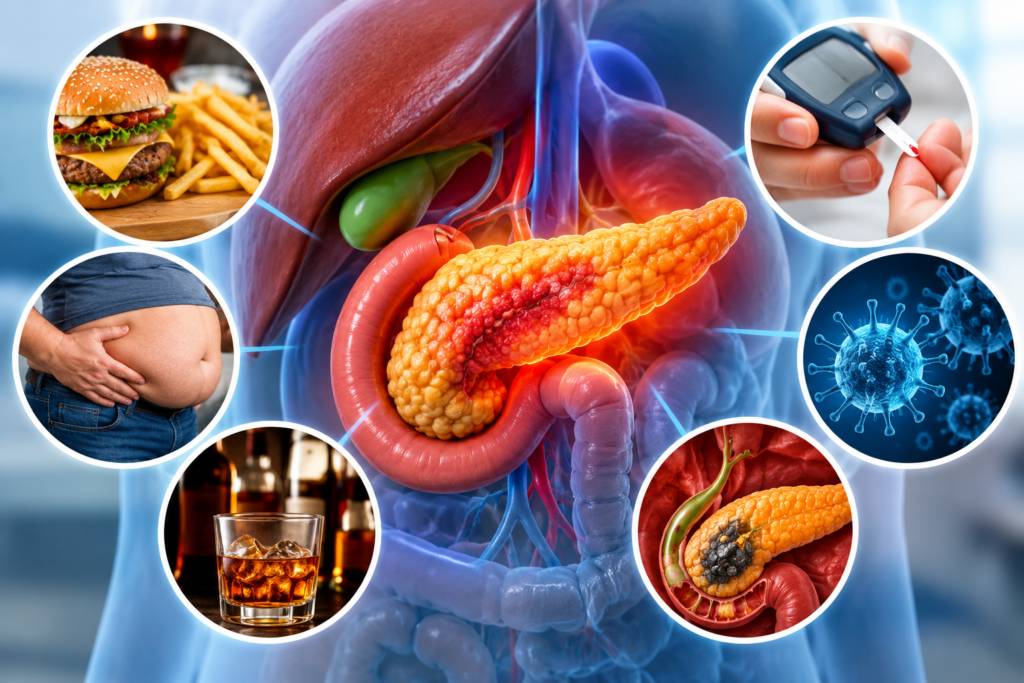
The most common causes of both acute (sudden) and chronic (long-term) pancreatitis are gallstones, heavy alcohol use, genetic disorders of the pancreas and some medicines (NIDDK). The table adds what other sources say about each factor.
| Factor | What the sources say |
|---|---|
| Gallstones | Stones can slip out of the gallbladder and block the bile duct, a common cause of pancreatitis (Mayo Clinic). |
| Heavy alcohol use | A leading cause of both types. People who have more than four drinks a day are at higher risk (Mayo Clinic). |
| Smoking | Smokers are about three times more likely to develop pancreatitis, and quitting can lower the risk (Mayo Clinic). |
| High blood triglycerides | A known cause of pancreatitis (Mayo Clinic). |
| Weight | A 2020 meta-analysis found the risk of acute pancreatitis rose by 18% for every 5 kg/m² increase in BMI, and by 36% for every 10 cm increase in waist size (Aune et al. 2020). |
| Medicines and genes | Some medicines and inherited pancreas disorders can cause it (NIDDK). |
Two points worth noting:
- Chronic pancreatitis is inflammation that does not heal, gets worse over time and can lead to permanent damage (MedlinePlus, archived copy).
- We did not find a source showing that fried or ultra-processed foods wear out a healthy pancreas directly. Diet matters mainly through the factors above: body weight, triglycerides and gallstones. The risk of gallstones, for example, is linked to weight and diet (Mayo Clinic).
Warning signs
The main symptom of both acute and chronic pancreatitis is pain in the upper abdomen that may spread to the back. People with chronic pancreatitis may have no symptoms until complications appear (NIDDK).
| Type | Symptoms that may occur (Mayo Clinic) |
|---|---|
| Acute | Upper belly pain, sometimes worse after eating, that may spread to the back or shoulders; tenderness when the belly is touched; fever; fast heartbeat; nausea and vomiting |
| Chronic | Constant upper belly pain; losing weight without trying; oily, smelly stools; and, if the insulin-making cells are damaged, symptoms of diabetes such as extreme thirst, hunger and urination |
These signs overlap with other conditions. The NHS notes that acute pancreatitis can look like appendicitis or a stomach ulcer (NHS). Only a doctor can tell them apart.
When to get help
- Sudden severe belly pain: contact a doctor immediately, and call emergency services if you cannot reach one (NI Direct).
- Pain so bad you cannot sit still or find a comfortable position: seek immediate medical help (Mayo Clinic).
- Ongoing upper belly pain, unexplained weight loss, oily stools or signs of diabetes: see a doctor, even if the symptoms are mild.
What can lower the risk
None of these guarantees protection, and some risk factors, such as genes and some medicines, are outside your control.
- Avoid or limit alcohol. It is one of the leading causes of pancreatitis.
- Do not smoke. Quitting can decrease the risk of pancreatitis (Mayo Clinic). Smoking is also one of the most important risk factors for pancreatic cancer (American Cancer Society).
- Keep a healthy weight and eat a balanced diet. This is also how gallstones are prevented, and if you have had them, your doctor may discuss removing the gallbladder (Mayo Clinic).
- Have your triglycerides checked and follow your doctor’s advice if they are high.
- Tell your doctor about all your medicines and any family history of pancreas problems.
Quick answers
Can a pancreas that has been damaged repair itself? After acute pancreatitis, many people recover, but chronic pancreatitis can cause permanent damage. This is a question for your doctor.
Is persistent fatigue a sign of a pancreas problem? The sources above do not list fatigue as a symptom of pancreatitis. Persistent tiredness has many causes, and a doctor can look into them.
Does a diagnosis mean I did something wrong? Not necessarily. Gallstones, genes and medicines can cause pancreatitis without any lifestyle factor.
This content is for general information and does not replace advice from a doctor.
Sources
- Patient.info, The pancreas
- NIDDK, Symptoms and causes of pancreatitis
- Mayo Clinic, Pancreatitis: symptoms and causes
- MedlinePlus, Chronic pancreatitis (archived copy, 2012)
- NHS, Acute pancreatitis: symptoms
- NI Direct, Acute pancreatitis
- Aune et al. 2020, High body mass index and central adiposity is associated with increased risk of acute pancreatitis, Digestive Diseases and Sciences
- American Cancer Society, Risk factors for pancreatic cancer
Leave a Reply