Did you know bone health starts building long before your senior years? Osteoporosis is a silent disease that gradually weakens the bones, often with no symptoms at all until a fracture happens.
The good news is that diet plays a huge role in prevention. In this article, you’ll discover:
- Which 5 types of foods can harm bone health and deserve moderate consumption;
- What to add to your plate to naturally strengthen your bones;
- Simple tips you can apply to your daily routine, no complications.
Let’s get straight to it! 😊
What Is Osteoporosis, and Why Does Diet Matter So Much?
Osteoporosis happens when bones lose density and become more fragile, increasing the risk of fractures — especially in the hip, spine, and wrist. It’s more common after age 50, particularly in postmenopausal women, but the habits that protect (or harm) your bones start decades earlier.
Your skeleton is constantly renewing itself: the body continuously builds new bone and breaks down old bone. When that balance tips toward loss, bones gradually lose strength — and that’s exactly where diet comes in as one of the biggest allies (or culprits) in this process.
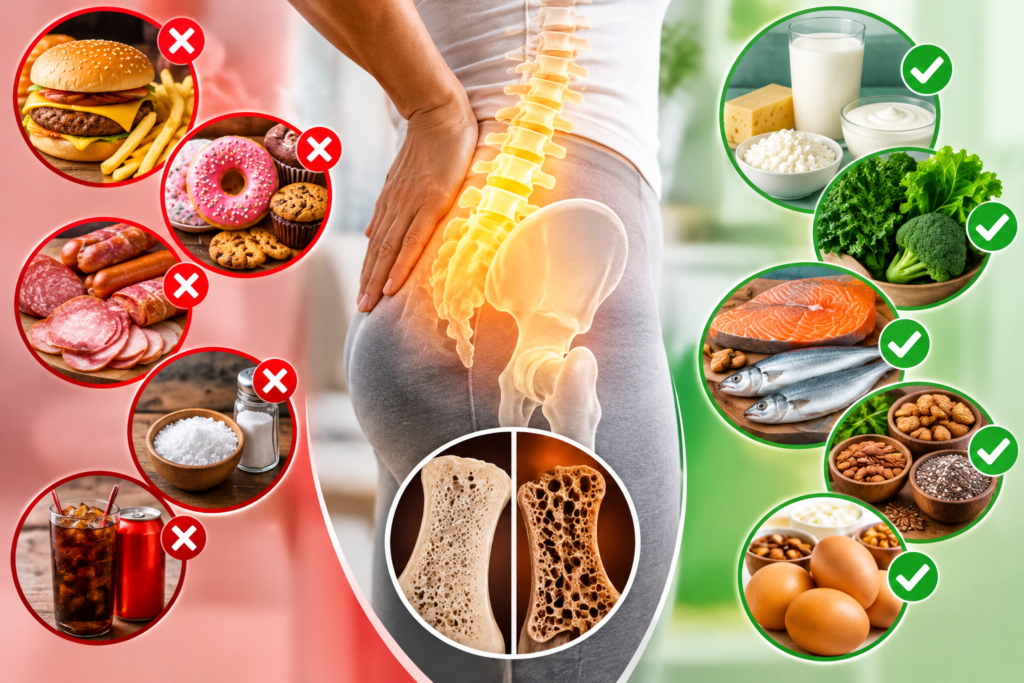
To Prevent Osteoporosis, It’s Important to Limit These 5 Types of Products
Some foods, when consumed in excess, can interfere with calcium absorption or speed up bone loss. Here’s what deserves your attention:
1. Excess Salt
High sodium intake increases calcium loss through urine. That means the more salt in your diet, the more calcium your body “loses” over time. Watch out for ultra-processed foods, cured meats, and ready-made seasonings, which are usually the biggest sodium culprits.
2. Cola-Based Soft Drinks
These soft drinks contain high levels of phosphorus, which, in excess, can interfere with calcium balance in the body. Frequent, heavy consumption has been linked to lower bone density in some studies.
3. Excess Alcohol
Alcohol, when consumed in large amounts, can interfere with calcium and vitamin D absorption, as well as disrupt the formation of new bone tissue. Moderate consumption is the safer path for anyone looking to protect their bones.
4. Excess Caffeine
Coffee, black tea, and energy drinks, when consumed in very high amounts, can slightly increase calcium loss through urine. This doesn’t mean you need to cut out your daily cup of coffee — just moderate very high doses (more than 3–4 cups a day).
5. Ultra-Processed Foods High in Phosphorus
Many processed products (chips, cured meats, ready-made meals) contain phosphorus-based additives. In excess, this mineral can throw off the calcium-phosphorus balance in the body, harming bone health over the long term.
💡 Practical tip: you don’t need to cut these items out completely — the key is moderation, balanced with a diet rich in bone-strengthening nutrients, which we’ll cover next.
What to Include in Your Diet to Strengthen Your Bones
Now that you know what to limit, let’s get to what really matters: the foods that help build and maintain strong bones.
Calcium-Rich Foods
- Milk, yogurt, and cheese (choose lower-fat versions if needed);
- Dark green vegetables, like kale, broccoli, and spinach;
- Sardines and other small fish eaten with the bones;
- Calcium-fortified plant-based drinks (like fortified almond or soy milk).
Vitamin D-Rich Foods
Vitamin D is essential for your body to absorb calcium efficiently. Good sources include:
- Moderate, regular sun exposure;
- Fatty fish, like salmon and tuna;
- Egg yolks;
- Vitamin D-fortified foods.
Other Nutrients That Make a Difference
- Vitamin K: found in dark green vegetables, it helps bind calcium into the bones;
- Magnesium: found in nuts, seeds, and whole grains, it also plays a role in bone formation;
- High-quality protein: lean meats, eggs, legumes, and fish help maintain bone structure.
Small Habits That Make a Big Difference
Beyond diet, a few simple habits go a long way in protecting your bones:
- Doing weight-bearing activities, like walking, strength training, or dancing;
- Avoiding smoking, which also harms bone density;
- Getting periodic bone density scans, especially after age 50 or as recommended by your doctor;
- Talking to a nutritionist to tailor your diet to your individual needs.
Final Thoughts
Taking care of your bones is a long-term investment — and the good news is that small dietary changes can make a real difference in preventing osteoporosis. Moderating your intake of salt, soft drinks, alcohol, caffeine, and ultra-processed foods, while prioritizing calcium, vitamin D, and other key nutrients, is a simple and effective path forward.
If you’d like more personalized guidance, it’s worth talking to a doctor or nutritionist to build a diet plan tailored to you. Your bones will thank you today — and in the future. 💪
This article is for informational purposes only and is not a substitute for medical or nutritional advice. Always consult a qualified healthcare professional for guidance specific to your situation.
Leave a Reply