
Have you heard of the banana diet and wondered if it actually works for weight loss?
This trend has gone viral more than once on social media, promising fast results with a simple proposal: replacing breakfast with bananas. But is this strategy actually effective — and, more importantly, safe?
In this article, you’ll learn how the banana diet started, what it proposes, and, most importantly, what nutritionists and doctors say about its real effectiveness. Let’s go through this with clear information and no exaggerated promises.
What the Banana Diet Really Is
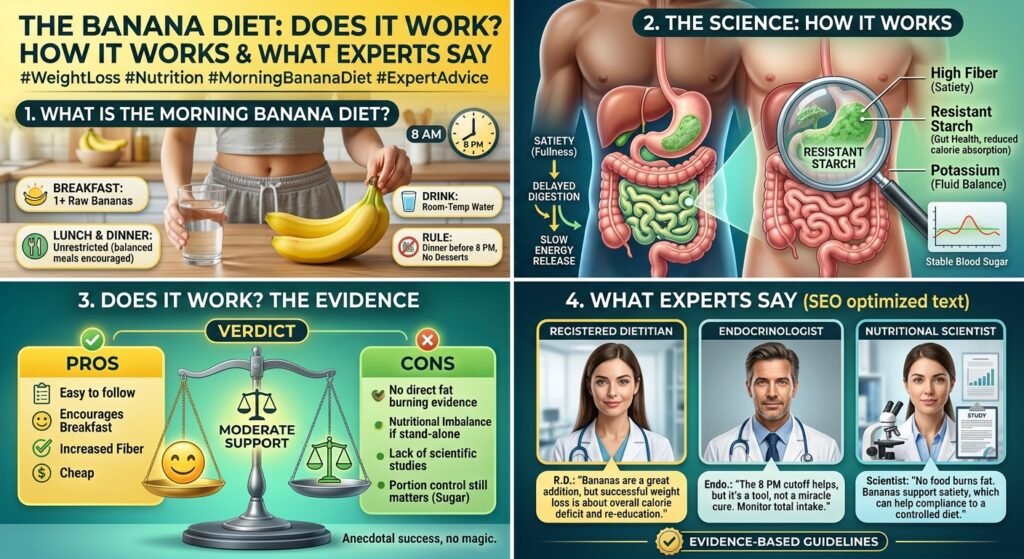
The banana diet originated in Japan in 2008, created by pharmacist Sumiko Watanabe, a specialist in preventive medicine. The original proposal involves replacing breakfast with raw bananas, eaten naturally without cooking, followed by room-temperature water.
For the rest of the day’s meals, the general guidance is to eat in moderation, without strict restrictions — which is why the diet became known more as a “dietary re-education” than an extremely restrictive meal plan.
Important: this content is for informational purposes and is not intended to recommend or encourage restrictive diets without professional guidance.
Why the Banana Diet Became Popular
The idea behind the proposal is that bananas, being rich in fiber, would form a kind of gel in the stomach, slowing digestion and extending the feeling of fullness.
The fruit also has genuinely relevant nutritional benefits:
- Rich in potassium, magnesium, and B vitamins
- A good source of dietary fiber
- Contains tryptophan, an amino acid related to serotonin production
- Has antioxidant and anti-inflammatory properties
These benefits explain why bananas are considered a nutritious food — but that doesn’t necessarily mean basing a diet mostly around them is the best strategy for weight loss.
What Experts Say About the Diet’s Effectiveness
According to physician and nutrologist Jefferson Alexandre, the banana diet proposal has important limitations worth paying attention to.
According to the specialist, overconsumption of the fruit can actually make weight loss harder, since bananas are high in carbohydrates, which increases a meal’s calorie content when eaten in excess.
Another point highlighted by experts is that effective eating plans need to account for each person’s energy expenditure and individual metabolic rate, with proper nutrient distribution throughout the day — something the banana diet, being a generic model, doesn’t account for.
Important Risks and Contraindications
Besides not necessarily being effective for everyone, the banana diet also carries specific risks for certain groups:
- People with chronic kidney disease should avoid high potassium intake, which is present in large amounts in bananas.
- People with diabetes need to control their carbohydrate and sugar intake, making this diet unsuitable without specialized guidance.
- The plan’s low nutritional variety can lead to a lack of energy for daily activities.
Note: restrictive diets or diets based on a single food are not recommended without guidance from a nutritionist or doctor, especially for people with specific health conditions.
Why Single-Food Diets Tend to Be Limited
Generally speaking, strategies that restrict eating to a single specific food tend to share common challenges:
- Low nutritional variety, increasing the risk of deficiencies.
- Difficulty maintaining it long-term, since rigid restrictions tend to be unsustainable.
- Results that don’t last once previous eating habits return.
- Lack of personalization, since every body has different nutritional needs.
What to Consider Before Following Any Trendy Diet
Before adopting any dietary trend, a few points are worth considering:
- Is the strategy sustainable long-term, or just a temporary fix?
- Does it cover all the food groups needed for nutritional balance?
- Is there professional guidance involved, or is it a generic formula applied to everyone?
- Is the focus on health and well-being, or just on fast results on the scale?
What Actually Works Better for Healthy Weight Loss
Instead of relying on a single food, experts recommend more balanced, sustainable approaches, such as:
- A varied diet, rich in fruits, vegetables, protein, and whole grains
- Regular physical activity
- Adequate hydration throughout the day
- Quality sleep
- Personalized nutritional guidance
Practical tip: including bananas in your diet can indeed bring benefits — but as part of a balanced diet, not as an isolated substitute for full meals.
Is It Worth Seeking Professional Guidance?
As the experts consulted point out, a truly effective eating plan needs to be individualized, taking into account factors like energy expenditure, metabolism, and each person’s specific goals.
If you’re looking to lose weight in a healthy, sustainable way, it’s much more worthwhile to rely on guidance from a nutritionist or doctor, who can build a strategy suited to your reality.
Conclusion: Yes to Bananas, But as Part of a Balanced Diet
Bananas are, without a doubt, a nutritious and health-beneficial food. But turning them into the foundation of a restrictive diet isn’t the strategy experts recommend for healthy, lasting weight loss.
Include the fruit in your diet in a balanced way, and seek professional guidance to build an eating routine that actually works for you.
Enjoyed this content? Share it with someone who also has questions about trendy diets, and keep following the blog for more trustworthy content on nutrition and health.
Leave a Reply