
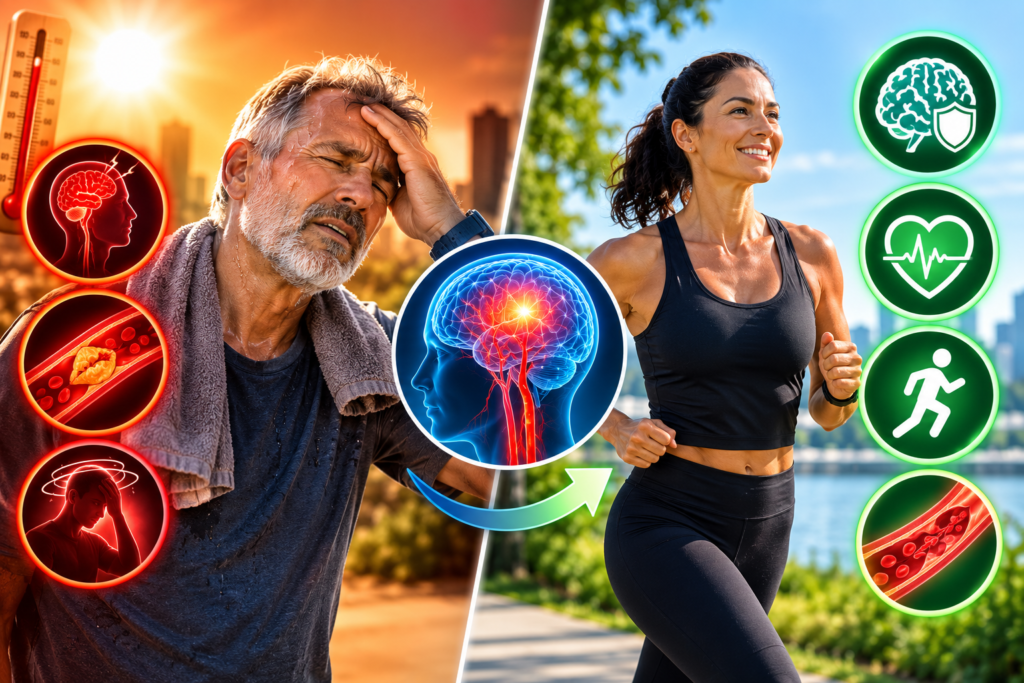
Did you know that extreme heat days can pose a real risk to cardiovascular health, including stroke risk?
As temperatures rise around the world, this is a topic that’s getting increasing attention from the scientific community.
In this article, you’ll learn about the link between extreme heat and stroke risk, why it happens, and how regular exercise can help protect your body even on hotter days.
What Science Says About Extreme Heat and Stroke
Several recent studies have found an association between very high temperatures and increased stroke risk, especially in older adults and people with pre-existing cardiovascular conditions.
One study found that the risk of ischemic stroke was nearly twice as high on days with temperatures around 92°F (33°C), compared to milder days, with the risk highest in the first hours after heat exposure.
Another study, conducted in Germany over 15 years, linked unusually hot nights to a noticeable increase in stroke risk — a particularly relevant finding, since nighttime temperatures have been rising even faster than daytime temperatures in many regions.
Important: experts note that while the association is consistent, direct causality is still being studied. Heat appears to act as an additional stressor on a cardiovascular system that may already be vulnerable.
Why Extreme Heat Increases This Risk
1. Dehydration and Thicker Blood
Intense heat increases fluid loss through sweating. This can make blood thicker and more prone to clotting — one of the main mechanisms linked to ischemic stroke.
2. Extra Strain on the Cardiovascular System
The body has to work harder to dissipate heat, redirecting blood flow to the skin and increasing the demand on the heart and blood vessels.
3. Blood Pressure Fluctuations
Extreme heat can cause sudden swings in blood pressure, which represents an additional risk factor, especially for people with hypertension.
Who’s Most Vulnerable
Some groups face a higher risk during heat waves:
- Older adults, especially women
- People with pre-existing cardiovascular disease
- Individuals with low fitness levels
- People taking certain medications that affect the body’s temperature regulation
How Regular Exercise Can Protect You
Here’s some encouraging news: maintaining good fitness throughout life is linked to a greater ability of the body to handle extreme heat.
1. Improves Heat Dissipation
People with good cardiovascular fitness sweat more efficiently and have better blood flow to the skin, which helps the body cool down more effectively.
2. Builds Cardiovascular Reserve
Regular training improves the heart’s ability to sustain the extra effort demanded by heat, reducing strain on the cardiovascular system during heat waves.
3. Slows Age-Related Decline in Thermoregulation
Studies show that staying physically active throughout life helps preserve the body’s ability to regulate internal temperature, even as we age.
4. Reduces Associated Risk Factors
Regular exercise also helps control cardiovascular risk factors like hypertension, obesity, and insulin resistance — all linked to a higher risk of complications during heat exposure.
Important to note: the benefit comes from fitness built up over time, not from training during the peak of extreme heat itself, which requires specific precautions (see below).
How to Exercise Safely on Hot Days
If you already train regularly, a few precautions are essential on very hot days:
- Avoid peak heat hours (generally between 11 a.m. and 4 p.m.)
- Prioritize air-conditioned or shaded environments on the most extreme days
- Increase water intake before, during, and after exercise
- Reduce workout intensity during extreme heat
- Watch for warning signs, like dizziness, mental confusion, nausea, or a sudden stop in sweating
Warning Signs That Need Immediate Attention
Seek emergency medical help right away if you notice signs like:
- Sudden weakness on one side of the body
- Sudden difficulty speaking or understanding speech
- Abrupt mental confusion
- Sudden, severe headache
- Severe dizziness or loss of balance
These are stroke warning signs and require immediate medical attention, regardless of the outside temperature.
Conclusion: Prevention Is the Best Protection
Extreme heat poses a real risk to cardiovascular health, but maintaining an active lifestyle throughout life is one of the most effective ways to protect your body against these effects.
This doesn’t mean training during peak heat — it means consistently and safely building a fitness base that helps your body handle extreme temperatures better.
Do you usually take precautions on days of intense heat? Let us know in the comments!
If this helped you better understand this risk and how to protect yourself, share it with someone who needs to know this too, especially those more vulnerable to heat. 🌡️❤️
This content is for informational purposes only, is based on current scientific research, and does not replace guidance from a doctor. If you experience symptoms suggestive of a stroke, seek emergency medical care immediately.
Leave a Reply