
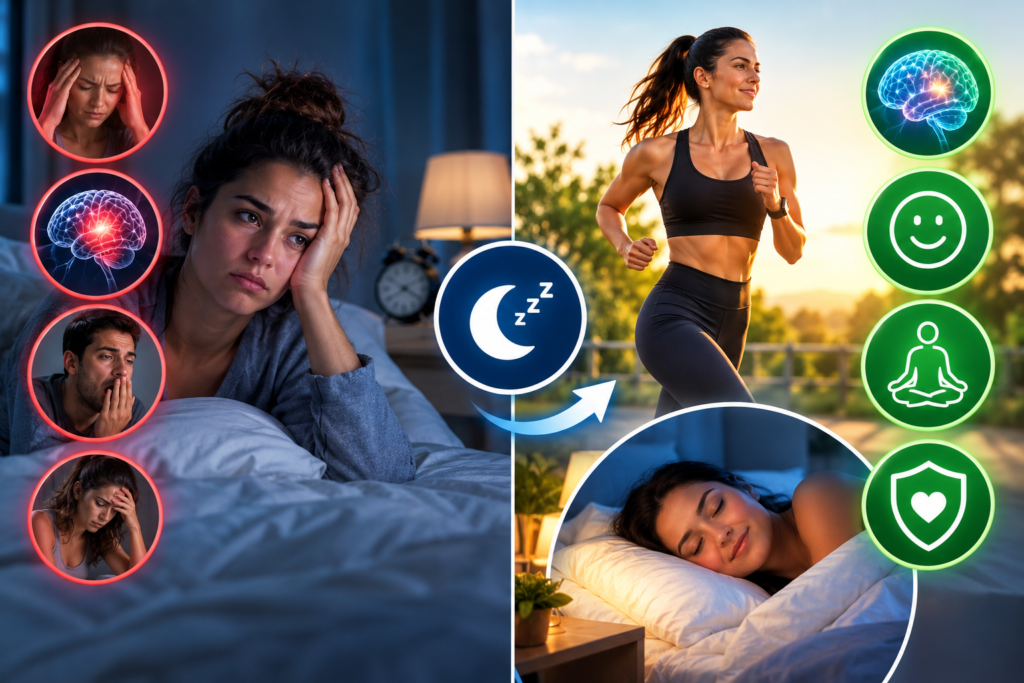
Do you wake up tired even after “sleeping the whole night”? Or do you constantly feel like your sleep is broken up and never quite enough?
Poor sleep affects a lot more than how you feel the next day — it directly impacts your physical health, mental health, and even your results at the gym.
In this article, you’ll learn about the real effects of poor sleep quality on the body, and discover how exercise can be one of the most effective allies for sleeping better.
What Really Happens in Your Body When You Sleep Poorly
Sleep isn’t just a period of “shutting down.” It’s during this time that the body carries out essential physical and mental recovery processes.
When sleep is insufficient or poor quality, it directly affects:
- Hormonal regulation
- Muscle recovery
- Cognitive function
- Emotional balance
The Main Health Impacts of Poor Sleep
1. Increased Stress and Anxiety
Sleep deprivation raises cortisol levels, the hormone linked to stress, making the body more emotionally reactive throughout the day.
2. Impaired Muscle Recovery
It’s during deep sleep that the body releases hormones essential for muscle repair, like growth hormone (GH). Poor sleep directly compromises this process, even if your workout was perfect.
3. Decline in Physical and Mental Performance
Inadequate sleep is linked to reduced strength, endurance, reaction time, and concentration.
4. Changes in Appetite
Sleep deprivation affects the hormones that regulate appetite (ghrelin and leptin), increasing cravings for high-calorie foods and making weight control harder.
5. Higher Risk of Cardiovascular and Metabolic Issues
Studies link poor sleep quality, over the long term, to a higher risk of high blood pressure, insulin resistance, and other metabolic conditions.
How Exercise Can Improve Your Sleep
The good news is there’s a two-way relationship between sleep and exercise: just as good sleep improves your performance at the gym, proper exercise also improves your sleep quality.
1. Regulates Your Circadian Rhythm
Regular exercise helps sync the body’s internal clock, making it easier to feel sleepy at the right time.
2. Reduces Stress and Anxiety Levels
Exercise releases endorphins and lowers cortisol, promoting the relaxation needed to fall asleep more easily.
3. Increases Deep Sleep
Research shows that regular physical activity is linked to increased time spent in deep sleep, the stage essential for the body’s recovery.
4. Creates Healthy Physical Tiredness
The energy expenditure from training contributes to a natural feeling of physical tiredness, making it easier to fall asleep.
Precautions So Training Doesn’t Hurt Your Sleep
Not every time of day or type of workout is a good idea right before bed. A few precautions help avoid the opposite effect:
- Avoid intense workouts too close to bedtime (ideally finish at least 2 to 3 hours before)
- Prioritize lighter activities at night, like stretching or walking, if an intense workout isn’t possible at another time
- Keep a consistent training schedule, which helps reinforce the body’s internal rhythm
Habits That Boost Sleep Quality
Besides exercise, a few habits complement this effort:
- Cut down on screen time before bed
- Avoid caffeine in the afternoon and evening
- Keep consistent sleep and wake times
- Create a dark, quiet, and comfortable sleep environment
- Practice relaxation techniques, like deep breathing
Conclusion: Taking Care of Sleep Means Taking Care of Your Overall Health
Poor sleep affects a lot more than how you feel — it compromises muscle recovery, emotional balance, and even your workout results.
The good news is that exercise, when done strategically, can be one of the biggest allies for improving your sleep quality.
Do you feel like you sleep well, or have you noticed sleep affecting your workouts and energy levels? Let us know in the comments!
If this helped you better understand this relationship, share it with someone who also needs to sleep (and train) better. 😴💪
This content is for informational purposes only and does not replace guidance from a doctor or healthcare professional. Always consult a specialist if you experience persistent sleep difficulties
Leave a Reply