
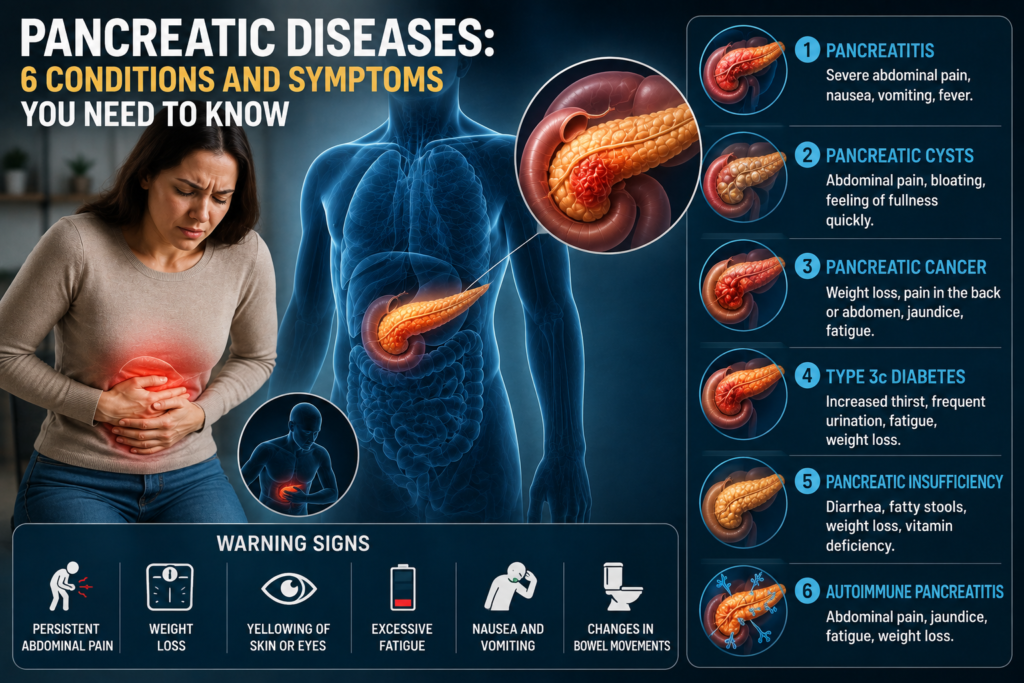
Did you know that the pancreas, despite its small size, is responsible for essential functions in your body?
This organ sits deep in the abdomen, and because of that, diseases affecting it tend to be silent in their early stages — by the time symptoms appear, the organ is often already compromised. That’s why knowing the warning signs matters so much.
In this article, you’ll learn about the main conditions that affect the pancreas, their most common symptoms, and why paying attention to these signs makes all the difference. Let’s get straight to the point.
Why Knowing About Pancreas Diseases Matters
The pancreas sits behind the stomach and has two main functions: producing enzymes and digestive juices that help metabolize sugars, fats, and proteins, and producing hormones like insulin and glucagon, which help the body use sugar.
When this balance is disrupted, both digestion and metabolism can be affected, impacting health in a broad way.
Important: this content is for educational purposes and does not replace medical evaluation. Diagnoses should always be made by a qualified healthcare professional.
1. Acute Pancreatitis
Acute pancreatitis is a sudden inflammation of the pancreas that usually requires immediate medical attention.
It can be caused, among other factors, by gallstones blocking the bile ducts and interrupting the flow of pancreatic secretions, triggering an intense inflammatory process.
Common symptoms include:
- Intense abdominal pain
- Nausea and vomiting
- Diarrhea
- Weight loss
- Fever
2. Chronic Pancreatitis
Unlike the acute form, chronic pancreatitis develops progressively, causing permanent damage to the organ over time.
It’s often the result of long-term alcohol use or autoimmune conditions. Common symptoms include recurring abdominal pain, persistent diarrhea, weight loss, and digestive discomfort.
Over time, chronic pancreatitis can also affect insulin production, increasing the risk of developing diabetes.
3. Pancreatic Cancer
Pancreatic cancer is considered one of the more aggressive conditions related to this organ, largely because it tends to be diagnosed at advanced stages.
In its early stages, it often progresses without specific symptoms. When they do appear, they can include abdominal pain, unexplained weight loss, jaundice (yellowing of the skin and eyes), and fatigue.
Key risk factors include smoking, excessive alcohol consumption, obesity, diabetes, and chronic pancreatitis, along with family history and inherited genetic mutations.
4. Pancreas-Related Diabetes
The pancreas plays a central role in producing insulin, the hormone responsible for regulating blood sugar. When this function is compromised, the risk of diabetes increases.
Main symptoms include frequent urination, increased hunger and thirst, weight loss, excessive sleepiness and fatigue, along with sudden mood changes and a higher chance of developing infections.
5. Pancreatic Cysts
Pancreatic cysts are among the more common conditions that can affect this organ. They can vary in size and characteristics, which is why medical follow-up is essential to evaluate each case individually.
In many cases, cysts don’t cause symptoms and are found during routine exams — which reinforces, once again, the importance of preventive checkups.
6. Pancreatic Insufficiency
Pancreatic insufficiency is another relevant condition related to the organ, often associated with pancreatitis, that compromises the pancreas’s ability to carry out its functions efficiently.
This can impact both nutrient digestion and the body’s metabolic balance.
Warning Signs Worth Paying Attention To
Some symptoms are common across different pancreatic conditions and deserve attention, such as persistent abdominal pain in the upper abdomen that may radiate to the back, along with frequent nausea and vomiting with no clear cause.
It’s important to remember that these symptoms can be associated with several different conditions, not just pancreatic diseases — which is why medical evaluation is essential to identify the correct cause.
How to Reduce the Risk of Pancreas Problems
While not every condition can be prevented, some habits help reduce risks related to pancreas health:
- Maintain a balanced diet, avoiding excess high-fat foods.
- Moderate alcohol consumption, since excessive intake is directly linked to several pancreatic conditions.
- Avoid smoking, one of the main risk factors associated with pancreas diseases.
- Exercise regularly, helping maintain a healthy weight.
- Get regular medical checkups, especially if you have a family history of these conditions.
Practical tip: taking care of pancreas health is closely tied to overall health habits — diet, physical activity, and medical follow-up all work together.
When to See a Doctor
Signs like persistent abdominal pain, unexplained weight loss, frequent digestive changes, or jaundice should always be evaluated by a healthcare professional. Early diagnosis is one of the most important factors in properly managing these conditions.
Conclusion: Knowledge Is the First Step Toward Care
Knowing the main pancreas diseases and their symptoms helps you recognize warning signs and seek medical help at the right time.
Take care of your health with attention: small daily habits make a difference in prevention, and regular medical follow-up remains the safest way to protect this essential organ.
Enjoyed this content? Share it with someone who also needs to learn more about pancreas health, and keep following the blog for more practical, trustworthy health content.
Leave a Reply