
Have you ever felt a sudden dizziness, like everything around you is spinning, without quite understanding why?
This symptom is often popularly associated with labyrinthitis, a condition that raises a lot of questions — and also a lot of misinformation.
In this article, you’ll understand what labyrinthitis really is, what its main causes are, and why seeking medical evaluation is essential when these symptoms appear. Let’s get straight to the point.
What Labyrinthitis Really Is
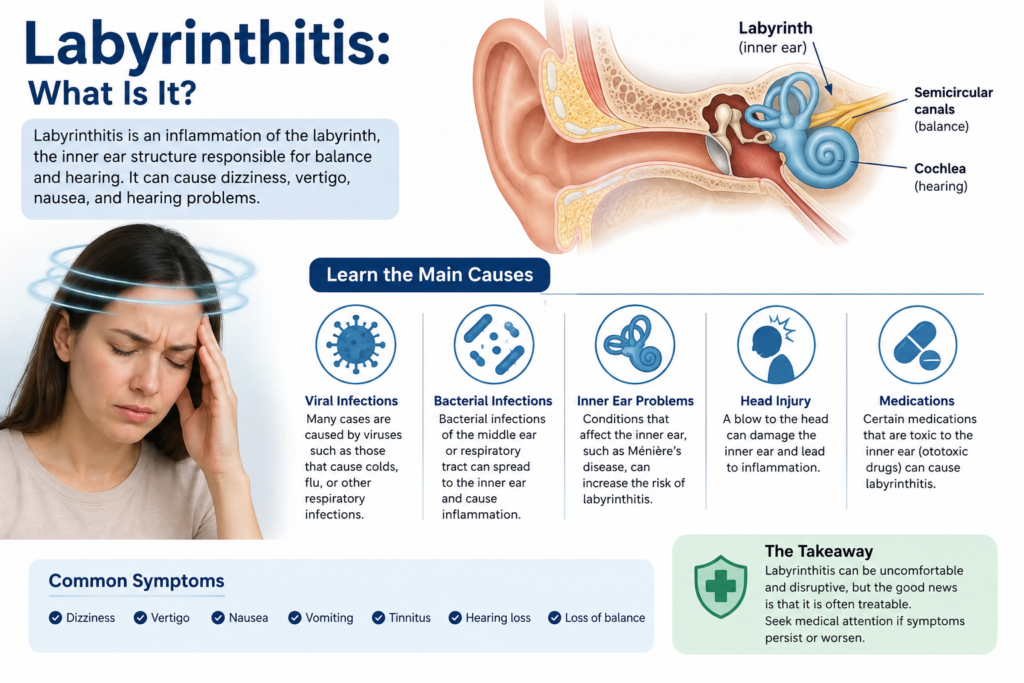
Labyrinthitis is an inflammation that affects the labyrinth, a structure located in the inner ear responsible for balance and hearing.
The term is popularly used to describe several conditions that affect this part of the ear, causing sudden dizziness, balance problems, and often nausea and vomiting.
However, it’s important to understand a relevant point:
It’s estimated that less than 1% of dizziness and vertigo cases are actually caused by true labyrinthitis. This means that, most of the time, dizziness has other causes — which is why a correct medical diagnosis is essential.
Why Labyrinthitis Happens
The labyrinth’s main function is to help maintain balance, and it connects to the brain through a nerve called the vestibulocochlear nerve. Since the labyrinth is present in both ears, a change in just one of them is enough to trigger the characteristic symptoms.
When this structure is affected by inflammation, both balance and hearing can be compromised, leading to the condition’s typical symptoms.
Main Causes of Labyrinthitis
Now let’s get to what you came here for: understanding the main factors that can trigger this condition.
1. Viral Infections
Several viruses can cause labyrinthitis, including those responsible for colds and flu. Cases related to rubella, mumps, and measles viruses have also been observed.
2. Bacterial Infections
Bacteria can reach the labyrinth from a severe middle ear infection, meningitis, or even through the bloodstream, leading to intense inflammation with the risk of more serious complications, such as permanent hearing loss.
3. Autoimmune Diseases
Autoimmune conditions are also among the factors that can trigger labyrinthitis.
4. Allergic Reactions
Allergic reactions can contribute to the inflammatory process in the labyrinth.
5. Use of Ototoxic Medications
Some medications, known as ototoxic, can affect the structure of the inner ear and contribute to the condition.
6. Stress and Anxiety
Moments of stress and anxiety can also act as triggers for episodes.
Risk Factors Worth Paying Attention To
Beyond direct causes, some factors can increase the likelihood of developing labyrinthitis:
Ear infections, allergies, use of certain medications, smoking, excessive alcohol or caffeine consumption, and a family history of balance or ear problems are among the main risk factors associated with the condition.
Labyrinthitis can affect people of any age, but it tends to be more common in adults over 40.
Symptoms That Often Accompany the Condition
Since it affects both hearing and balance, the most characteristic symptoms are vertigo — a spinning, off-balance sensation — and hearing changes, such as ringing or muffled hearing.
Other commonly associated symptoms include:
- Nausea and vomiting
- Difficulty walking
- A feeling of pressure in the ear
- Partial hearing loss, in some cases
Important: this content is for educational purposes. Only a doctor can confirm whether the symptoms presented actually correspond to labyrinthitis or another balance-related condition.
What to Do When Symptoms Appear
During an episode, it’s best to stay calm, try to rest, avoid driving, and seek medical care as soon as possible to investigate the cause.
Since the risk of falls is high during these episodes, it’s recommended to avoid sudden movements, move slowly, and ask for help when feeling off-balance.
Diagnosis: Why Medical Evaluation Is Essential
Diagnosis should be made by an ear, nose, and throat specialist (ENT) or a general practitioner, who assesses the patient’s medical history, performs a physical exam, and may order additional tests to identify the correct cause.
Since several conditions can cause similar symptoms, this investigation process is essential to guide proper treatment.
How to Reduce Risks in Everyday Life
While not every cause can be prevented, some habits help reduce risk factors associated with labyrinthitis:
- Treat ear infections properly, with medical follow-up.
- Moderate alcohol and caffeine consumption.
- Avoid smoking.
- Manage stress, since it can be a trigger for episodes.
- Seek medical evaluation for recurring dizziness symptoms.
Conclusion: Pay Attention to Your Body’s Signals
Labyrinthitis is a condition that, despite causing significant discomfort, has specific causes and targeted treatment when properly diagnosed.
If you experience frequent dizziness or any balance-related symptoms, don’t ignore it: seek medical guidance to understand the real cause and take care of your health the right way.
Enjoyed this content? Share it with someone who also has questions about labyrinthitis, and keep following the blog for more trustworthy content on health and well-being.
Leave a Reply