
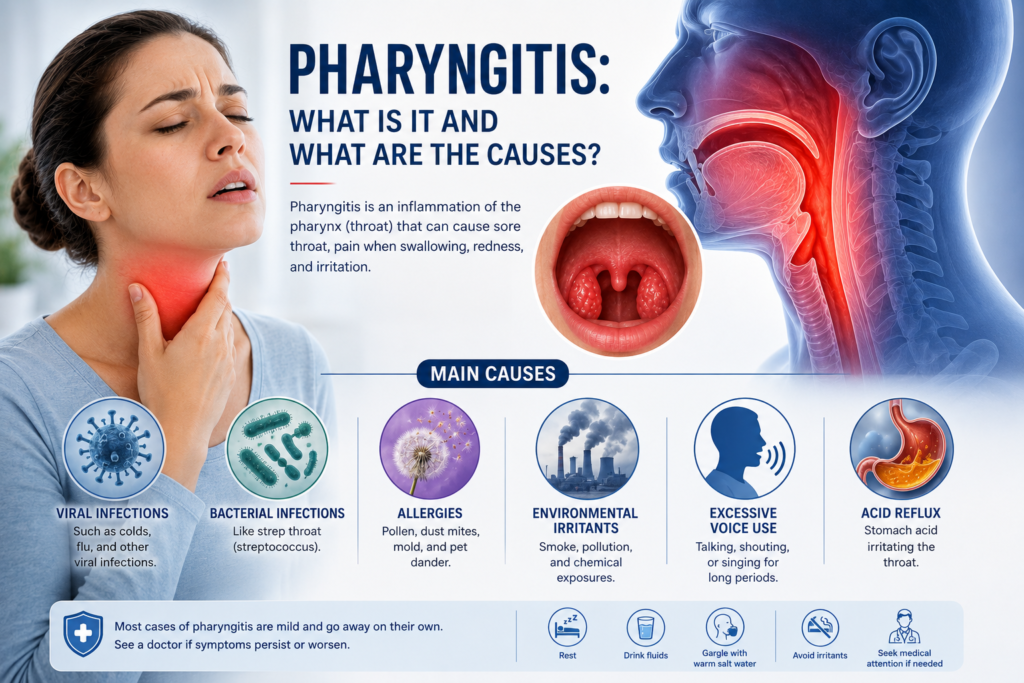
Is your throat dry, sore, and making it hard to swallow?
These symptoms are usually associated with pharyngitis, one of the most common throat conditions — one that practically everyone has experienced at least once in their life.
In this article, you’ll understand what pharyngitis is, what its main causes are, and how to recognize the most common symptoms of this condition. Let’s get straight to the point.
What Pharyngitis Really Is
Pharyngitis is the inflammation of the pharynx, a muscular passage located behind the nose, mouth, and larynx, connecting these structures to the esophagus.
This inflammation causes symptoms like pain, burning, and discomfort in the throat, making it hard to swallow and, in some cases, to speak. The condition can affect people of any age and is quite common, especially during seasonal changes.
Important: this content is for educational purposes. Diagnosis and treatment of pharyngitis should always be handled by a doctor, usually an ear, nose, and throat specialist (in adults) or a pediatrician (in children).
Acute vs. Chronic Pharyngitis
Before we talk about the causes, it’s worth understanding an important distinction:
- Acute pharyngitis: usually lasts about 10 days in adults, and is the most common type.
- Chronic pharyngitis: persists longer, generally associated with ongoing irritation or prolonged exposure to irritants.
Main Causes of Pharyngitis
Now let’s get to what you came here for: understanding the main factors that can cause this inflammation.
1. Viral Infections
The most common cause of pharyngitis is viral, usually associated with colds and the flu. In these cases, symptoms tend to be milder and come along with a runny nose, cough, sneezing, and general malaise.
2. Bacterial Infections
Bacterial pharyngitis, frequently caused by the bacterium Streptococcus pyogenes, tends to be more intense. It’s associated with stronger pain, high fever, white patches on the throat, and swollen lymph nodes in the neck. This type requires medical evaluation, since it may need antibiotic treatment.
3. Allergies
Seasonal or persistent allergies, caused by exposure to pollen, dust, mold, or animal dander, can also trigger an inflammatory process in the pharynx, even without involving an infection.
4. Gastroesophageal Reflux
Stomach acid reflux can irritate the walls of the pharynx, causing symptoms like persistent sore throat, a burning sensation, and hoarseness.
5. Exposure to Irritants
Factors such as smoking (active or secondhand), air pollution, and chemical products in the environment can also contribute to the development of pharyngitis, especially the chronic form.
6. Excessive Voice Use
People who use their voice a lot in daily life, such as teachers, singers, and speakers, have a higher risk of developing chronic inflammation in the pharynx.
Most Common Symptoms of Pharyngitis
Symptoms can vary depending on the cause, but generally include:
- Sore throat
- Difficulty or pain swallowing
- A scratchy or burning sensation in the throat
- Hoarseness
- Redness in the throat
- Fever, in some cases
- Swollen lymph nodes in the neck
In bacterial pharyngitis, white patches on the throat and higher fever are also common.
When to Seek Medical Help
While most cases of pharyngitis are mild and improve within a few days, some signs indicate the need for immediate medical evaluation:
- Intense symptoms or symptoms that persist for a long time
- Difficulty breathing
- High, persistent fever
- Very intense pain when swallowing
If you experience any of these signs, seek medical care as soon as possible.
How Treatment Works
Pharyngitis treatment varies depending on its cause:
- Viral pharyngitis: the focus is on relieving symptoms, with rest, good hydration, and, if needed, pain relievers recommended by a doctor.
- Bacterial pharyngitis: usually requires antibiotics prescribed by a professional, always following medical guidance on dosage and treatment duration.
- Allergic or reflux-related pharyngitis: treatment is directed at the underlying cause, such as managing the allergy or the reflux.
Important: never start taking antibiotics on your own. Only a doctor can determine the appropriate treatment after an evaluation.
How to Reduce the Risk of Pharyngitis
Some simple habits can help reduce the risk of developing pharyngitis:
- Stay hydrated, especially on dry days or with frequent air conditioning use.
- Avoid smoking, active or secondhand.
- Reduce exposure to allergens, when possible.
- Wash your hands frequently, preventing viral and bacterial infections.
- Rest your voice, especially if you use it heavily at work.
Conclusion: Pay Attention to Your Throat’s Signals
Pharyngitis is a common condition, but one that deserves attention, especially when symptoms are intense or persistent.
Knowing its main causes helps you recognize warning signs and seek the right treatment at the right time, avoiding unnecessary complications.
Enjoyed this content? Share it with someone who also needs to learn more about throat health, and keep following the blog for more trustworthy health content.
Leave a Reply